
Category: BPD
PolyCystic Ovarian Syndrome PCOS
September 04, 2018 9:58 am
PolyCystic Ovarian Syndrome PCOS is a complex condition. The exact cause of PCOS is unknown however, it involves hormones imbalance and multiple ovarian cysts, irregular menses, and infertility. In some cases, PCOS can be compounded by diabetes, hypertension and other metabolic conditions. PCOS has been shown to effect approximately 10% of women of childbearing age with symptoms of menstrual abnormalities, poly cystic ovaries, and excess androgen (male sex hormone). PCOS should be diagnosed by ensuring there are no other underlying endocrine issues. There are several associated disease processes that seem to be related to PCOS. These related disease processes are Type 2 Diabetes, higher depression and anxiety, increased cardiovascular risks, stroke, hyperlipidemia, sleep apnea, overall inflammation, and endometrial cancer.
Anatomically, numerous cysts are found on the ovaries. These are usually diagnosed by ultrasound, blood levels of hormones, and symptoms described above.
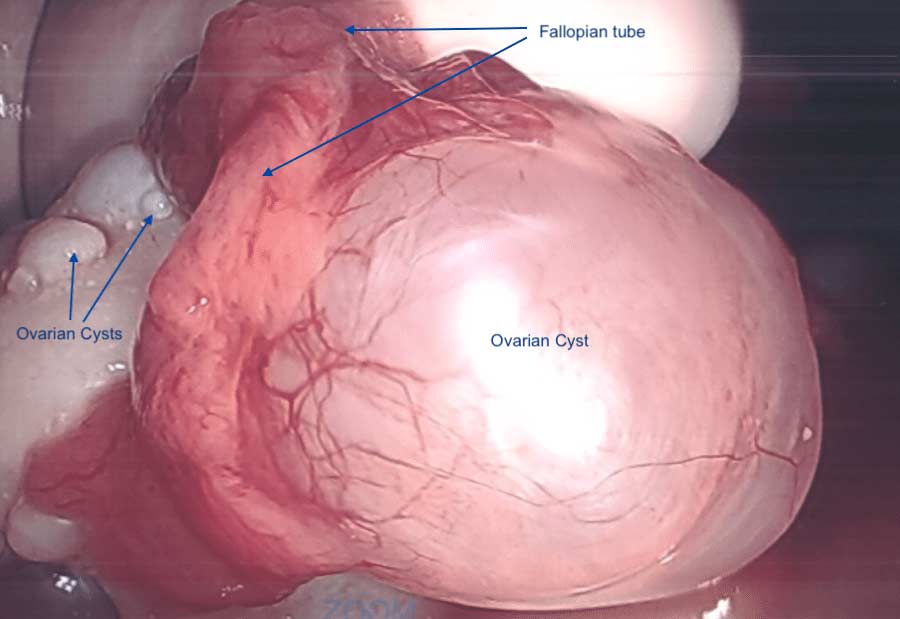
Bariatric Surgery and PolyCystic Ovarian Syndrome PCOS
Bariatric Surgery can improve PCOS in those individuals with Type 2 Diabetes Mellitus. Further information on weight loss surgery and its effect on PCOS here.
Parathyroid Scan
July 09, 2018 11:48 am
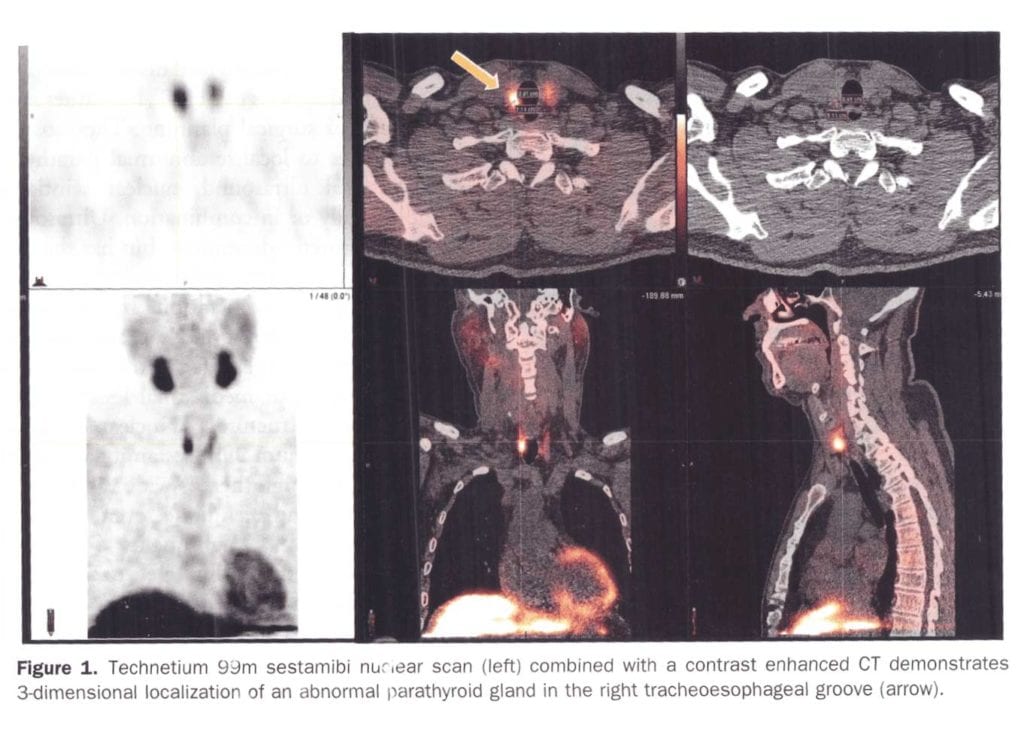
A Parathyroid scan or Sestamibi scan may be needed if the typical weight loss surgical reasons for elevated PTH levels have been addressed. Sestamibi is a small protein which is labeled with the radio-pharmaceutical technetium-99. This very mild and safe radioactive agent is injected into the veins of a patient with overactive parathyroid and is absorbed by the overactive parathyroid gland. If the parathyroid is normal it will not absorb the agent. The scan below shows the uptake of the agent.
Calcium, Vitamin D and Parathyroid hormone are routinely measured on yearly follow up for most post weight loss surgical (WLS) patients. Elevated parathyroid hormone (PTH) may be caused by Vitamin D deficiency or calcium deficiency (most common in post WLS) or by over active parathyroid gland(s). In the latter case, if one of the four glands is overactive then this is knows as a parathyroid Adenoma. If all 4 are over active and are secreting too much PTH, this is known as hyperplasia. Ultrasound of the neck, may identify an enraged parathyroid gland (adenoma) which is located behind the thyroid gland. Given the large area where the parathyroid gland may be located, additional tests are needed to not only identify the location of the gland(s) but also to distinguish between single gland (adenoma) or multiple glands (hyperplasia) cause for the elevated PTH. It is important to investigate all avenues and testing in parathyroid hormone elevation and in some cases, not to rely on one test for your diagnosis. It is also imperative that weight loss surgical patients take their supplements routinely and consistently and have their laboratory studies followed at least yearly.
Calcium Lab Results
June 05, 2018 3:26 pm
Calcium is measured to evaluate function and adequacy of a physiologic processes. Calcium plays a critical role in several body functions such as, coagulation pathways, bone health, nerve conduction, and other functions. It is important whenever you are evaluating laboratory results that you look at the whole picture of the person, including medications, other laboratory studies and health history. One value is not a stand alone result. There are many factors that effect calcium results.
Factors that effect calcium results: (not an all inclusive list)
pH
Albumin
Lactate
Heparin
Anticonvulsants
Renal Disease
Pancreatitis
The two most common issues following Weight loss Surgery or Duodenal Switch may be albumin level and Vitamin D level. Please see past blogs on Vitamin D. Magnesium may also play a role in a Duodenal Switch patient.
The most common calcium result drawn is the total calcium level. Laboratory results may not explicitly label it as such, however, it measures the calcium that is bound to protein. Ionized calcium is the free calcium that is representative of the true total calcium. Ionized Calcium can be measured by ordering specific lab. Alternatively, the Ionized calcium can be calculated by the following formula: Corrected calcium mg/dL = (0.8 * (Normal Albumin – Pt’s Albumin)) + Serum Ca ) or use the calculator at the bottom of this post.
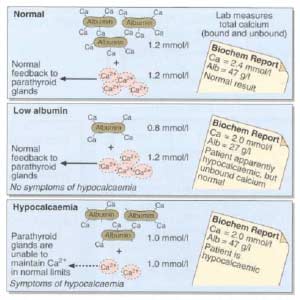
The low Albumin level accounts for the low calcium level. This may be the reason for a patient with a low albumin/protein level, also having their calcium level reported as low. However, when adjusted for the protein deficiency the corrected calcium comes into normal range. Video of Trouseau’s sign of a patient with calcium deficiency.
The first step in a patient who has low calcium reported, is to make sure their protein and albumin levels are normal, along with Vitamin D.
Calcium levels are managed by two processes major regularly hormones and influencing hormones. Controlling or major regulatory hormones include PTH, calcitonin, and vitamin D. In the kidney, vitamin D and PTH stimulate the activity of the epithelial calcium channel and the calcium-binding protein (ie, calbindin) to increase calcium absorption. Influencing hormones include thyroid hormones, growth hormone, and adrenal and gonadal steroids.
Further information on protein.
Further information on calcium.
Videos/Webinars on several of the above topics.
Corrected calcium = 0.8 * (4.0 – serum albumin) + serum calcium
Compounding Pharmacies
January 22, 2018 2:38 pm
New FDA regulations for compounding pharmacies has spurred changes in our pricing and ability to provide injectable Vitamin A and Vitamin D. The compounding pharmacies are no longer compounding injectable Vitamin A and there is a nationwide shortage of the national brand of injectable Vitamin A. We have a tentative date of February 2018 when we may be able to obtain injectable Vitamin A. We won’t be able to quote pricing on Vitamin A injections until we are able to orders.
We are able to obtain and supply our patients with injectable Vitamin D but with a price increase.
The following is the letter we received from our compounding pharmacy.
“The healthcare industry has continuously undergone changes in regulations and legislation. The compounding industry is no exception and has faced rigorous regulatory requirements this past year such as new testing specifications and compliance standards.
We are set on facing these demanding challenges by meeting and exceeding these new regulatory requirements. We want to assure you we will continue to provide the best products on the market for you and your patients. Quality and safety remain a top priority. We understand that our pharmacy plays a vital role in providing care to your patients. The increase in pricing is a reflection of the additional cost in producing and testing the product based on regulatory specifications.”
Vitamin A injections
October 25, 2017 10:31 am
Unfortunately, we have been informed that the company we order our Vitamin A injections from will no longer have Vitamin A available. We have contacted several other companies and they also do not have it available. The manufacturer of Vitamin A states that there is a nationwide shortage of injectable Vitamin A and it may be available next year.
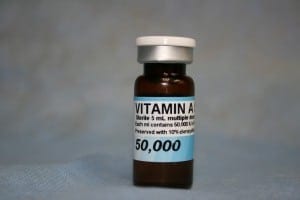
Our office has a few vials left and we are hoping that we can get to as many people as possible before we are completely out. We will continue to look for a source of Vitamin A injections. We will let you know when it is no longer available and when we receive a new shipment. Thank you for your understanding and we apologize for this issue.
Information on Vitamin A deficiency here.
You can find our list of recommended supplements here.
Just as a reminder, we have no financial interest in any of the vendors that are recommended on our website. Also, please note that this is not in ANY form or fashion a substitute for the evaluation by your surgeon or primary care physician. This is informational only and is not to be taken as a recommendation for any patients’ condition.
Compounding Pharmacy
March 22, 2017 7:40 pm
We have received notice that the FDA and the compounding pharmacy have changed their regulations for several medications. Unfortunately, this affects our office and Duodenal Switch patients in regards to injectable Vitamin D and Vitamin A. In the past, we have been able to have injectable Vitamin A and injectable Vitamin D in bulk in our office. The new regulations require that a patient be assigned to the medication, so we will be unable to have it on hand in our office. This is out of our hands and control.
We are requesting that if you are anticipating the need for injectable vitamins that you have your laboratory results in our office at least 3 weeks prior to your office visit. This will give our staff adequate time to order your injectable vitamins to be available at your visit.
Injectable Vitamin D may be needed in some cases of Vitamin D deficiency or inability to increase Vitamin D level with oral supplements. Vitamin D is a fat soluble vitamin. It plays an important role in bone metabolism and structure. It has also been found to affect the immune regulation, control off- inflammatory reactions, and also be involved in a number of broad cellular functions throughout the body.
Research and information regarding Injectable Vitamin D.
Thank you for your understanding in this manner.
Weight Loss Surgery Effects On Iron Absorption
June 06, 2016 9:40 am
Anemia is a condition in which a person doesn’t have enough healthy red blood cells. Red blood cells (RBCs) function in carrying oxygen to the tissues and they are produced in the bone marrow. Iron deficiency anemia, the most common form of anemia, develops when the body is unable to produce sufficient hemoglobin because of an iron deficiency. To read more about iron deficiency anemia, please refer to our previous blog post here.
Iron is an essential mineral that is a critical component of hemoglobin. Hemoglobin (Hg) is a four protein molecule that carries oxygen from the lung
s to the tissues. It is also important in maintaining RBC shape for proper blood flow. Each of the four globulin chains in Hemoglobin contain an iron compound called a heme. An iron atom is fixed within the heme group to give the red blood color and transport oxygen and carbon dioxide. If the body does not have enough iron, the bone marrow will not produce enough Hemoglobin which results in unhealthy RBCs.
Iron is exposed to acids in the stomach, which alters the form into a configuration that allows absorption. The Duodenum of the small intestines is the main site of iron absorption. The ileum, found at the end of the small intestinal tract, is the site of secondary absorption. Once absorbed, each plasma protein transferrin transports two atoms of iron to the liver, spleen, and bone marrow (2).
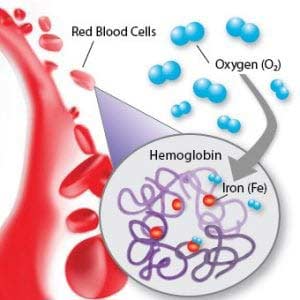
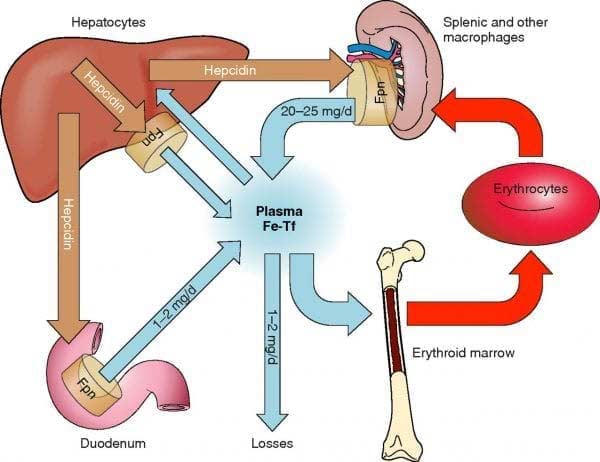
Anemia is common among patients who have undergone surgical weight loss procedures. Some weight loss procedures change the anatomy of the small intestinal tract result in malabsorption due to the restriction of food and nutrient intake. In Roux-en-Y gastric bypass (RYGB), the stomach and duodenum are completely bypassed thereby increasing the risk of iron deficiency. In the Duodenal Switch a small portion of post pyloric Duodenum is left intact to aid in iron absorption, however this may not be adequate for every individual. By redirecting the small intestinal tract in Duodenal Switch, only a small segment of the ileum is able to absorb the necessary nutrients. In both procedures however, blood tests find that patients can become iron deficient (1,3) and require oral iron supplementation or intravenous iron infusions if oral supplementation is inadequate to maintain iron levels.
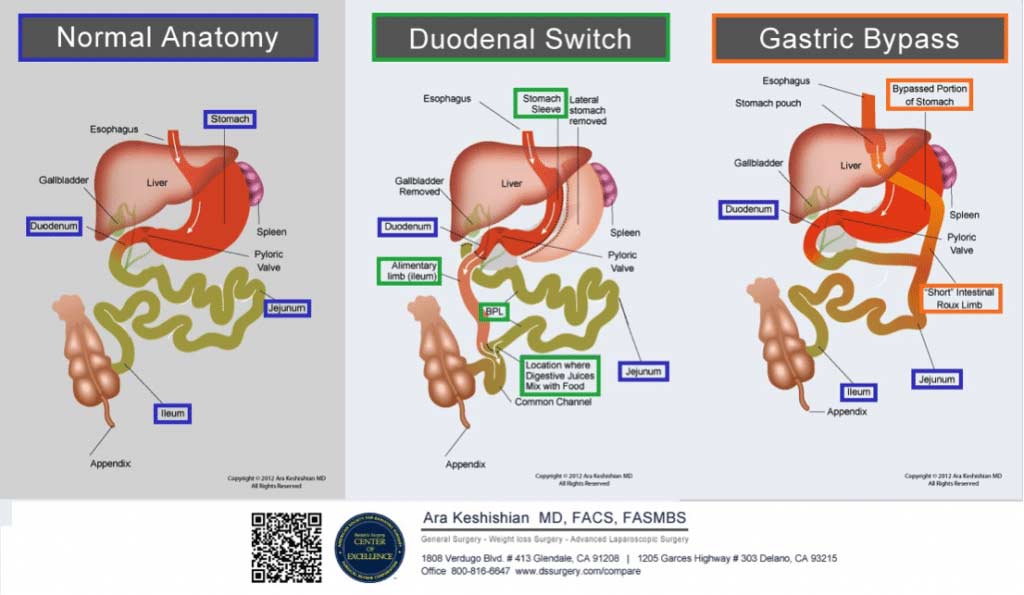
Inadequate iron levels can be treated by taking iron salt supplements, especially along with vitamin C pills that help the body absorb more iron. Other types of supplements are Heme and chelated oral iron that are well tolerated without gastrointestinal upset of iron salts. For some WLS patients there may not be enough capacity for iron absorption via the GI tract and those patients may need Intravenous Iron infusions periodically. Dietary iron sources are important as a surgical weight loss patient as they are usually also high in protein (blog). Ie: Poultry, red meat, pork, seafood, eggs, beans, and green leafy vegetables are also a good source of iron.
In addition to supplementation of iron, it is important to identify any contributing factors to blood loss or decreased iron absorption such as gastrointestinal bleeding, heavy menses, surgery, pregnancy, medications or combination of supplements, infection or dietary issues. Identifying, advanced planning and/or correcting any contributing factors may reduce the iron demand for WLS patients.
In summary, iron absorption will be affected by altering the anatomy of the small intestinal tract. Although it takes a great deal of time to restore iron levels, reversing deficiency will help avoid symptoms and maintain proper blood, brain, and heart health.
Colored Coded Diagrams of where nutrients, vitamins and minerals are absorbed:
Please note this article and these diagrams are Member Exclusive Only. They are available for use by our patients ONLY. Please review your terms of use of our Member Exclusive Area.
Diagram of normal anatomy absorption here [Download not found].
Diagram of DS anatomy absorption here [Download not found].
Diagram of RNY anatomy absorption here [Download not found]
Written by: Mariam Michelle Gyulnazaryan & Dr. Ara Keshishian
References
- Fincannon J. Iron deficiency after gastric bypass surgery. University of Rochester Medical Center. 2016.
- Forth W, Rummer W. Iron absorption. Physiological Revies. 1973; 53(3) 724-792.
- Sawaya RA, Jaffe J, Friedenberg L, Fridenberg FK. Vitamin, mineral, and drug absorption following bariatric surgery. Curr Drug Metab. 2012; 13(9) 1345-1355.
- Von Drygalski A, Andris DA. Anemia after bariatric surgery: more than just iron deficiency. Nutr Clin Pract. 2009; 24(2) 217-226.
Magnesium Questions
May 11, 2016 6:07 am
Since our Webinar on Magnesium, I have received several Magnesium Questions recently regarding Magnesium deficiency. There is some evidence that calcium deficiency can not be corrected with an underlying magnesium deficiency. This may be due to the fact that magnesium is essential to converting Vitamin D to it’s active form and more information here. The active form of Vitamin D is needed to actively transport Calcium within the cell. This may be the confusion that calcium absorption needs magnesium. It is not needed directly but rather indirectly via Vitamin D.
Other cofactors needed in Vitamin D metabolism are:
Zinc (high doses antagonist with Magnesium and Copper)
Boron (raises Magnesium blood levels)
Vitamin K2
Vitamin A in small amounts
Further information regarding bone health and nutrients here.

Some important facts about Magnesium are:
- It is Absorbed in the distal Jejunum and Ileum (small intestines) and to some degree the colon.
- Plays an important role in Parathyroid Hormone synthesis which is also acted upon by Vitamin D
- Vitamin D increases Magnesium absorption
- All enzymes that metabolize Vitamin D require Magnesium
- Magnesium has a positive effect on Vitamin D deficiency.
- Magnesium and calcium are antagonist to each other on a cellular level (work against each other) They use an overlapping transport system for reabsorption within the kidneys and thereby compete with each other. Magnesium may also bind to calcium binding sites and intracellular protein binding sites due to their similarity.
- Calcium supplements can decrease Magnesium absorption.
- It Activates digestive enzymes for protein, fat and carbohydrate metabolism.
- Essential for protein synthesis
- Stores and moves energy acquired from digestion.
- Regulates Calcium via Vitamin D and increasing urinary excretion of calcium
Factors inhibiting Magnesium absorption:
- PPI
- Fiber
- Phytates
- Excessive unabsorbed fatty acids
- Calcium
- Phosphorus
- Protein

In summary, post Bariatric patients are at risk for magnesium deficiency and it plays an important role in overall health and bone health. Our practice recommends Magnesium Glycinate as the form for supplementation in at least a 2:1 ration with calcium. An example is: Calcium 2000mg daily to Magnesium Glycinate 1000mg daily. (Supplement based on your laboratory studies) We hope that this blog has answered some of your Magnesium Questions.
Fluids and Electrolytes After Weight Loss Surgery
January 29, 2016 7:06 am
Fluids and Electrolytes after weight loss surgery are an important part of recovery and lifestyle after undergoing a weight loss surgical procedure. Potassium is an important electrolyte found in higher concentrations within the fluid of the cells. It is important in muscle contraction, heart rhythm, nerve function and co-enzyme function.
Fluids and Electrolytes
The following webinar (link) discusses the balance of fluids and electrolytes with particular attention to post weight loss surgery concerns. Deficiencies can cause heart arrhythmias, muscle weakness and cramping, intestinal paralysis, and neurological deficits.
The Daily Recommended Amount for Potassium is 4,700mg
Here is a list of Lower-carb potassium sources: This is not meant to be in inclusive list. There are many higher carb sources of potassium also.
- Beet Greens- 1/2C 655 mg
- Trout 3oz – 375 mg
- Salmon 719 mg per average filet
- Halibut or Yellowfin Tuna 3oz – 500mg
- Clams 3oz- 534 mg
- Avocados 1 whole- 974 mg
- Squash 1C- 325mg
- Broccoli 1 cup 475m
- Watermelon Radish 3 oz – 233mg
- Sweet Potatoes- one potato 694mg
- Yogurt 1C – 579mg
- Tomato paste 1/4C – 342 mg
- Whole milk 1C – 366 mg
- Chicken breast meat 1 cup chopped – 358 mg
- Cauliflower 1 cup raw– 303 mg
- Peanut butter 2 T – 208 mg
- Asparagus spears 6 – 194 m
- Daikon Radish – 3″ – 280 mg
- Nuts 100-300 mg per 30g / 1 oz serving, depending on the type
- Dark leafy greens 160 mg per cup of raw, 840 mg per cooked
- Kohlrabi 3oz- 98mg
- Mushrooms 1 C- 273 mg
- Spinach – 1 cup 167 mg Potassium
- Walnuts 2 oz-250 mg
2016 Back on Track Giveaway!Exclusive Member Content
January 16, 2016 1:43 pm