
Tag: supplements
Parathyroid Scan
July 09, 2018 11:48 am
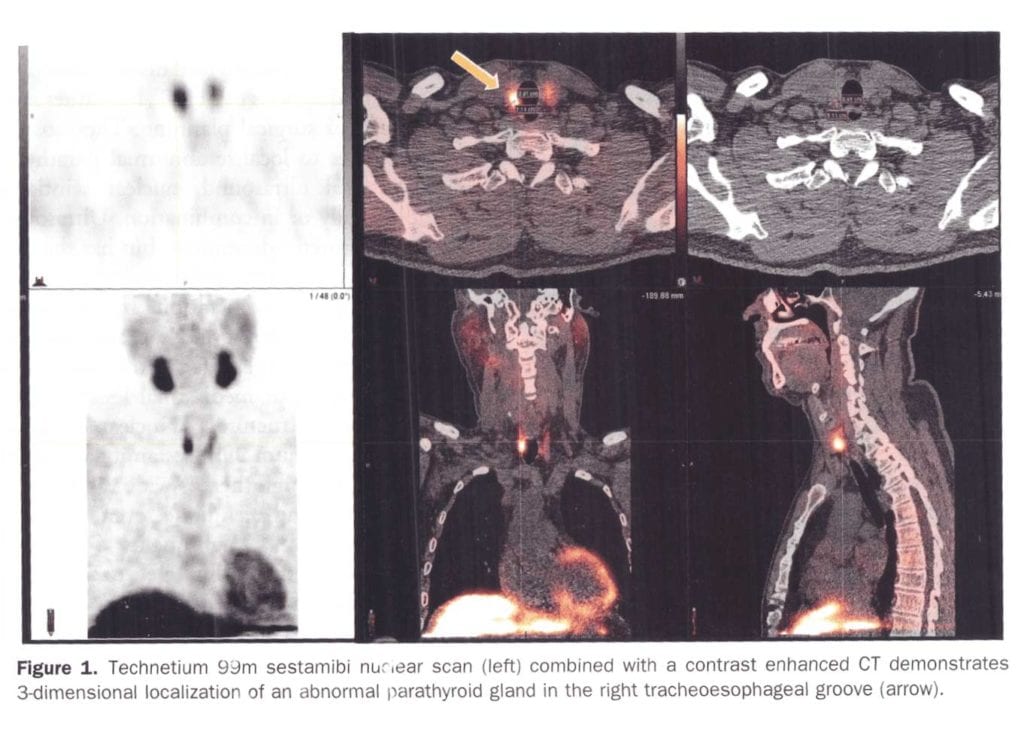
A Parathyroid scan or Sestamibi scan may be needed if the typical weight loss surgical reasons for elevated PTH levels have been addressed. Sestamibi is a small protein which is labeled with the radio-pharmaceutical technetium-99. This very mild and safe radioactive agent is injected into the veins of a patient with overactive parathyroid and is absorbed by the overactive parathyroid gland. If the parathyroid is normal it will not absorb the agent. The scan below shows the uptake of the agent.
Calcium, Vitamin D and Parathyroid hormone are routinely measured on yearly follow up for most post weight loss surgical (WLS) patients. Elevated parathyroid hormone (PTH) may be caused by Vitamin D deficiency or calcium deficiency (most common in post WLS) or by over active parathyroid gland(s). In the latter case, if one of the four glands is overactive then this is knows as a parathyroid Adenoma. If all 4 are over active and are secreting too much PTH, this is known as hyperplasia. Ultrasound of the neck, may identify an enraged parathyroid gland (adenoma) which is located behind the thyroid gland. Given the large area where the parathyroid gland may be located, additional tests are needed to not only identify the location of the gland(s) but also to distinguish between single gland (adenoma) or multiple glands (hyperplasia) cause for the elevated PTH. It is important to investigate all avenues and testing in parathyroid hormone elevation and in some cases, not to rely on one test for your diagnosis. It is also imperative that weight loss surgical patients take their supplements routinely and consistently and have their laboratory studies followed at least yearly.
2018 Back on Track
January 28, 2018 11:38 am
Join our 2018 Back on Track challenge and let’s get back on track for 2018! The holidays were wonderful but if you find yourself with a few extra souvenirs don’t feel alone. The average American gains between 1-8 pounds during the holiday season and I am no exception. Let’s get back on track 2018 together.
Time to clear out the kitchen! Disposing of temptations and high trigger foods is the first step to getting back on track. Throw it all away and don’t allow them back in. If foods are difficult to acquired then they are less likely to be consumed.
Stock up on high protein and whole, unprocessed foods that are low carbohydrate and nutrient dense. When quality foods are easily available we are more likely to stay on track with the types of foods we should be eating. Simple sugars/carbohydrates are the biggest culprit of holiday weight gain. We need to go back to the basics of hydration, high protein, low carbohydrate/sugar, vitamin/mineral supplements and exercise. Simple sugars and carbohydrates are easy for our bodies to use and absorb. Cutting them out can jump start your weight loss. Each individual needs to identify the daily carbohydrate intake that works for them. Some people stay under 50 grams of carbohydrates daily and some can tolerate more daily grams. You may also need to look at your protein and fat intake. All excess nutrients absorbed have the potential to turn into fat mass and inhibit weight loss. Metabolism video.
Hydration is an important ways to start getting back on track. Water is essential to life functions. The brain is 85% water, blood is 80% and muscle is about 70% water. Hydration aids in digestion, eliminating waste, byproducts and toxins. It also can decrease the feeling of hunger. Lack of hydration can increase fatigue which can lead to craving high carbohydrate foods to increase energy.
Protein’s importance in almost every bodily function and muscle mass can not be ignored. High quality complete Protein sustains muscle mass during weight loss, aids immunity, antioxidant function, and enhances leptin and insulin function. Filling up on protein first will help with carbohydrate carvings and give a sustained satisfied feeling. A prior blog post gives additional information on the importance of protein and the effects of protein malnutrition. WLS makes daily protein intake important but especially after Duodenal Switch, protein is a necessity of daily life.
Vitamins, minerals and supplements will ensure the body has the nutrients it needs to function adequately and can keep cravings at bay. Deficiencies in vitamins and minerals can cause cravings for foods. Vitamin and minerals are essential to muscle function, red blood cell production, bone health, and numerous other physiologic functions. We may all slack off on our supplements occasionally but now is the time to get back into the habit of daily vitamins and mineral supplements. A daily vitamin, mineral, and supplement routine is a lifetime commitment after Duodenal Switch or any WLS. Here is a list of commonly used supplements. If you haven’t kept up with your minimum yearly laboratory studies, now is the time to be seen and have your labs done.
Exercise can increase weight loss, overall well being, mental well being, mood, alertness, improve digestion, improve sleep, and increases energy levels. Exercise does not have to be a daunting task. Simply adding 15-30 minutes of activity can give added benefits. Yoga, walking, dancing, lifting weights, hiking, and sports activities can be included or added to more traditional forms of exercise. There are many free online videos for all types of exercise available. This year we are teamed up with The Kinesis Centre to offer a 4 week training program that can be accessed from anywhere. A 4 week training program will be included in our 2018 Back On Track Grand prize.
Finding a new hobby can keep both your hands and mind busy, curbing the unconscious eating of foods that are high in sugar and carbohydrates. Adult coloring books, drawing, painting, knitting, crocheting, sewing, dance lessons, gardening, learning to play an instrument and many others are great ways to use your time and expand your quality of life and brain function. New hobbies can also help establish new coping skills. Our previous post on Coping Skills After Bariatric Surgery can be found here. There are a whole host of online videos for “how to” on new hobbies.

Teaming up with others can also help increase weight loss and compliance. Support from friends, family and other groups will assist you. There is a whole gamut of support group online and in person. If you have fallen out of the habit of attending our support group or webinars get back to them. You can find our schedule and announcements regarding webinars here. Our Central Valley Bariatric Facebook page also gives daily inspirational messages, protein recipes and articles and any new information or research available. There is also our Duodenal Switch Facebook Group. Anything that increases accountability is a benefit and motivates us to stay on track.
Experiment with new recipes and flavors that are bariatric friendly and within your dietary needs. There are so many options for quick and easy meals that are whole foods, high protein, and low carbohydrate. We have several recipes on our page for all stages following weight loss surgery and Duodenal Switch. However, there are endless option on the internet in Paleo, low carb, and high protein type recipes.
In the spirit of new starts and getting back on track 2018, we are having a giveaway with the basics to get back into the swing of things. This year we are looking for before and after weight loss surgical journeys for our Grand Prize. Share your weight loss journey! Don’t be shy, your journey can inspire others and/or motivate yourself. To enter the Back on Track 2018 Giveaway, please submit your weight loss surgical journey with before and after pictures to [email protected] or you can also post your before and after pictures on our Facebook page. You will also need to sign a release for the use of your story on our website. We will draw 2 names from those that enter by announcing it on our FaceBook page or by e-mail on February 14, 2018. You must submit your mailing information to [email protected] in order to claim the prize. You must be a verifiable patient of Dr. Ara Keshishian.
We are also doing 3 prizes of a 4 week training with the Kinesis Centre if you share an achievement picture on our FaceBook page . This achievement picture can be a milestone in your journey, something you’ve haven’t done before, a non-scale victory, a goal that you reached, anything that you are proud of achieving. Let’s do this 2018 Back on Track challenge!
Please remember that medications, health status, age, bowel motility, genetics, and diet all play a role in weight and weight maintenance. Please have a physician review your health history and medications.
*NOTE: Giveaway items may or may not be identical to the pictured items.
We are not affiliated with any of the products nor do we endorse any one type of product. There is no cash value to the prizes.
Compounding Pharmacies
January 22, 2018 2:38 pm
New FDA regulations for compounding pharmacies has spurred changes in our pricing and ability to provide injectable Vitamin A and Vitamin D. The compounding pharmacies are no longer compounding injectable Vitamin A and there is a nationwide shortage of the national brand of injectable Vitamin A. We have a tentative date of February 2018 when we may be able to obtain injectable Vitamin A. We won’t be able to quote pricing on Vitamin A injections until we are able to orders.
We are able to obtain and supply our patients with injectable Vitamin D but with a price increase.
The following is the letter we received from our compounding pharmacy.
“The healthcare industry has continuously undergone changes in regulations and legislation. The compounding industry is no exception and has faced rigorous regulatory requirements this past year such as new testing specifications and compliance standards.
We are set on facing these demanding challenges by meeting and exceeding these new regulatory requirements. We want to assure you we will continue to provide the best products on the market for you and your patients. Quality and safety remain a top priority. We understand that our pharmacy plays a vital role in providing care to your patients. The increase in pricing is a reflection of the additional cost in producing and testing the product based on regulatory specifications.”
Vitamin A injections
October 25, 2017 10:31 am
Unfortunately, we have been informed that the company we order our Vitamin A injections from will no longer have Vitamin A available. We have contacted several other companies and they also do not have it available. The manufacturer of Vitamin A states that there is a nationwide shortage of injectable Vitamin A and it may be available next year.
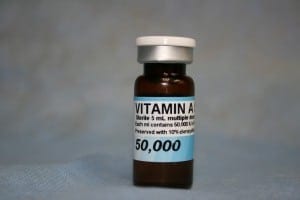
Our office has a few vials left and we are hoping that we can get to as many people as possible before we are completely out. We will continue to look for a source of Vitamin A injections. We will let you know when it is no longer available and when we receive a new shipment. Thank you for your understanding and we apologize for this issue.
Information on Vitamin A deficiency here.
You can find our list of recommended supplements here.
Just as a reminder, we have no financial interest in any of the vendors that are recommended on our website. Also, please note that this is not in ANY form or fashion a substitute for the evaluation by your surgeon or primary care physician. This is informational only and is not to be taken as a recommendation for any patients’ condition.
Gas (Flatuence) GI upset
July 27, 2017 7:32 am
Following the Duodenal Switch operation, patients will have more frequent flatulence. The problem can get worse with specific dietary choices. A very simple way of looking at this would be that, in general, Carbohydrates contribute to gas and the fat contributes to causing loose bowel movements. Carbohydrate or gluten sensitivity can also increase stool production.There is a significant overlap of the effects of carbohydrates and fat intake and one has to remember that the symptoms of gas and loose stool can often accompany each other.
Metabolic Processes In Different TissuesExclusive Member Content
February 11, 2016 8:29 am
Fluids and Electrolytes After Weight Loss Surgery
January 29, 2016 7:06 am
Fluids and Electrolytes after weight loss surgery are an important part of recovery and lifestyle after undergoing a weight loss surgical procedure. Potassium is an important electrolyte found in higher concentrations within the fluid of the cells. It is important in muscle contraction, heart rhythm, nerve function and co-enzyme function.
Fluids and Electrolytes
The following webinar (link) discusses the balance of fluids and electrolytes with particular attention to post weight loss surgery concerns. Deficiencies can cause heart arrhythmias, muscle weakness and cramping, intestinal paralysis, and neurological deficits.
The Daily Recommended Amount for Potassium is 4,700mg
Here is a list of Lower-carb potassium sources: This is not meant to be in inclusive list. There are many higher carb sources of potassium also.
- Beet Greens- 1/2C 655 mg
- Trout 3oz – 375 mg
- Salmon 719 mg per average filet
- Halibut or Yellowfin Tuna 3oz – 500mg
- Clams 3oz- 534 mg
- Avocados 1 whole- 974 mg
- Squash 1C- 325mg
- Broccoli 1 cup 475m
- Watermelon Radish 3 oz – 233mg
- Sweet Potatoes- one potato 694mg
- Yogurt 1C – 579mg
- Tomato paste 1/4C – 342 mg
- Whole milk 1C – 366 mg
- Chicken breast meat 1 cup chopped – 358 mg
- Cauliflower 1 cup raw– 303 mg
- Peanut butter 2 T – 208 mg
- Asparagus spears 6 – 194 m
- Daikon Radish – 3″ – 280 mg
- Nuts 100-300 mg per 30g / 1 oz serving, depending on the type
- Dark leafy greens 160 mg per cup of raw, 840 mg per cooked
- Kohlrabi 3oz- 98mg
- Mushrooms 1 C- 273 mg
- Spinach – 1 cup 167 mg Potassium
- Walnuts 2 oz-250 mg
Dr. Caya’s Yogurt RecipeExclusive Member Content
December 09, 2015 10:01 am
Pregnancy And Weight Loss Surgery
November 21, 2015 5:34 pm
This is not a substitution for formal medical advise that should be given to any patient by their bariatric surgeon and and OB/GYN familiar and experienced in the care of female patients with history of weight loss surgery. This is information that we provide our patients when we are notified of their pregnancy.
We recommend and instruct to take all precautions to avoid getting pregnant within the first 18 to 24 months following weight loss surgery. There is a significant amount of information about preferable birth controls, those to avoid, and additional pertinent information on our website.
Women who become pregnant after Weight Loss Surgery (WLS) should receive specific attention from their obstetrician because of the high risk nature of their pregnancy. Please make sure that you share this information with your OB/GYN. Many patients have become pregnant and delivered health babies after Duodenal switch (DS) without difficulty, but you do need to be watched more closely. The scientific study favor patients getting pregnant after DS when their weight loss , and nutritional markers have stabilized (18 months or longer) and not before. You also need to make sure you are taking all necessary vitamins, minerals and protein.
The first trimester is a very important time in the development of the fetus. Most organs and structures of the fetus are formed in the first trimester and therefore it is imperative that you pay close attention to your nutrition and your nutritional supplements.
You should continue to take your general multivitamins, other vitamins, minerals and your calcium as you were taking prior to getting pregnant. In addition, you should also take what will be prescribed by your OB/GYN. Do not substitute your prenatal vitamin and any other supplements that you are prescribed by your OB/GYN with what you were prescribed by our office. Each patient’s situation is individualized and additional changes or supplementations may be needed based on the advice of your surgeon and OB/GYN. Multiple fetus pregnancies require additional vitamin, mineral and protein needs.
A good prenatal vitamin should contain these:
Vitamin C – is essential for tissue repair, wound and bone healing and increases the body’s resistance to infection. For mother and baby this vitamin is essential daily as it is the agent that holds newly formed cells together. Helps baby to grow and builds strong bones and teeth. It is also instrumental in the body’s ability to absorb iron.
Vitamin D – promotes general growth. It maintains proper levels of calcium and phosphorus thus helping to build baby’s bones and teeth.
B Vitamins (thiamine, vitamin B6, riboflavin) – Thiamine converts carbohydrates into energy for mother and baby and is essential for baby’s brain development. It also aids in normal functioning of the nervous system and heart. If deficient during pregnancy, a baby is at risk for beriberi, a serious heart ailment. Vitamin B6 is also vital to develop your baby’s brain and nervous system. Riboflavin helps the body to produce energy. It promotes growth, good vision and healthy skin for mom and is important for the development of the baby’s bone, muscle and nervous system.
Folic Acid – is one of the B Vitamins that is needed to produce red blood cells. It helps synthesize DNA, is conducive to normal brain functions and is a critical part of spinal fluid, thus making it one of the few nutrients known to prevent neural tube defects such as spina bifida.
Calcium – your developing baby needs this mineral to grow strong bones and teeth, healthy nerves and muscles and to develop normal heart rhythm and blood clotting.
Potassium – is a mineral that helps maintain fluid balance in the body. This mineral helps regulate blood pressure, nerve impulses and muscle contractions.
Vitamin A – is important for cell growth, healthy skin and mucous membranes, and resistance to infections. It benefits red blood cell production in both mother and baby. This vitamin is essential for postpartum tissue repair.
Copper – a trace mineral found in all plant and animal tissues; it’s essential for forming red blood cells-a key process during pregnancy, when your blood supply doubles. Copper also aids tissue growth, glucose metabolism, and growth of healthy hair. It also helps form a baby’s heart, skeletal and nervous systems, arteries, and blood vessels.
Pantothenic Acid – is a trace mineral that regulates the body’s adrenal activity, antibody production, and the growth and metabolism of protein and fats. If you are deficient in this vitamin during pregnancy your baby’s growth may be slowed. This trace mineral is required for many essential functions, including growth, appetite regulation, digestion, wound healing, and the maintenance of collagen and elastin which may explain why some doctors think it may also help prevent stretch marks, one of the banes of pregnancy.
Iron – makes red blood cells, supplies oxygen to cells for energy and growth and builds bones and teeth. In pregnancy this mineral is so crucial because the body must produce extra blood to support the growing baby. During pregnancy you will need double the recommended daily allowance of iron to insure your health and that of your baby’s.
More often than not, many expectant mothers find taking a prenatal vitamin increases nausea in early pregnancy and sometimes beyond. If this happens, ask your doctor or midwife to change your formula or it may help to change how and when you take your vitamin. It is sometimes helpful to take your prenatal vitamins before you go to bed at night. If swallowing a large pill is difficult, cut it in half. In any event just like your mother said all those years, don’t forget to take your vitamin.
The following are important vitamin and nutritional components throughout the pregnancy but in particular the first trimester.
- Folic Acid: one of the B vitamins has been found to prevent neural tube defects (NTD). Increased intake of folic acid reduces the risk of NTDs such as anencephaly and spina bifida (open spine) by as much as 50 to 70% if women take enough before conception and in the early months of pregnancy. Take your general multivitamin and prenatal vitamin every day.
- Vitamin A: important to prevent blindness in the fetus. Vitamin A levels should be drawn and monitored prior to becoming pregnant and during the pregnancy to ensure adequate intake. You may need to take additional Vitamin A in a Dry water-soluble form such as Biotech Vitamin A 25. Please contact your surgeons office if your Vitamin A levels are below normal, or have not been drawn recently.
- Vitamin D: important for bone growth and formation. Vitamin D levels should be drawn prior to becoming pregnant and during the pregnancy to ensure adequate intake. Dry water-soluble form of Vitamin D3 such as Biotech D3 50. There is some research that adequate Vitamin D levels help protect against pre-term labor and an increase in preeclampsia risk.
- Protein: necessary in all structural formation of the fetus and the mother needs to increase protein intake by a minimum of 30 grams daily. Protein is need in nearly all fetal tissue formation.
The second and third trimesters are important in the growth, development and formation of bone structure and the overall growth of the fetus. It is important at this point to continue taking a minimum of 1500 mg Calcium (or what was prescribed by your surgeon), increased protein intake, your multivitamin, prenatal vitamin and any other supplements prescribed by your OB/GYN or surgeon. You may also need to increase your calorie intake with nutritious foods included in a healthy, well balance diet.
If you have any questions please contact your surgeon or the OBGYN. Your surgeon should also be willing to discuss any concerns that you or your OB/GYN may have with them.
Here is an discussion about the outcome of pregnancy after weight loss surgery.
In general we also advice against certain types of birth control because of the associated weight gain reported by the manufacturers. This is a decision that needs to be made after considering all potential side effects including the potential weight related issues. Ease of use should not be the only variable.
As indicated at the beginning of this blog, the information provided here is not a substitute for your nutritional evaluation by your bariatric surgeon or an experienced OB/GYN.
Calcium – Revisited !Exclusive Member Content
October 05, 2015 8:06 am