
Sucralose, best known by the brand name Splenda, is one of the most widely used artificial sweeteners in the world. It shows up in diet sodas, protein powders, flavored waters, sugar-free desserts, nutritional supplements and countless processed foods. The appeal is obvious: sweetness without the calories.
But is replacing sugar with sucralose actually better for your health? It is approved for use in food, yet research continues to ask questions about its effects on the gut microbiome and long-term health. Approval for consumption does not mean that heavy, habitual use is beneficial. Here is what the science currently shows.
What Is Sucralose?
Sucralose is a non-nutritive (zero-calorie) artificial sweetener made by chemically modifying sucrose, ordinary table sugar. Three of the sugar molecule’s hydroxyl groups are replaced with chlorine atoms, which makes it about 600 times sweeter than sugar.
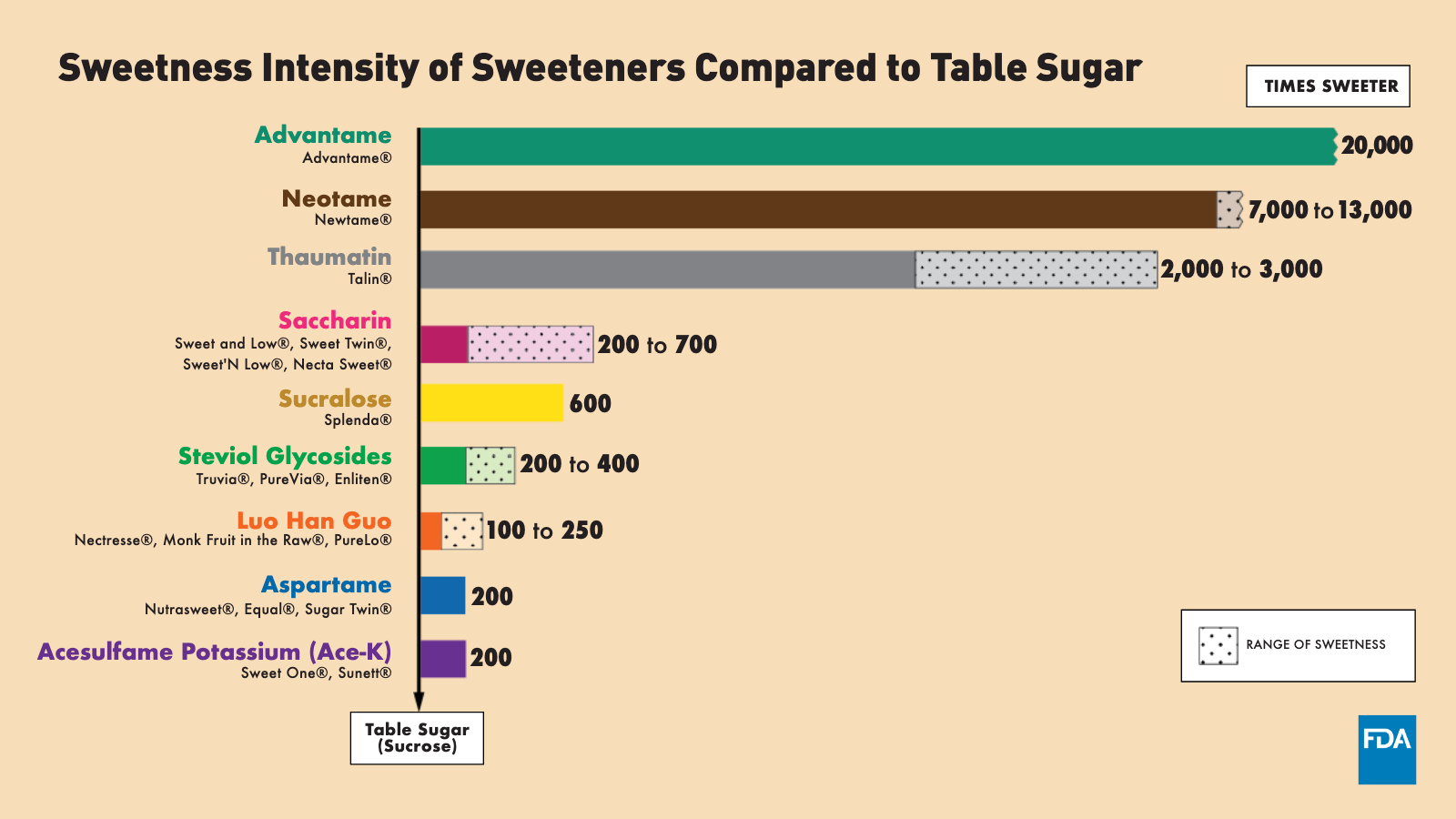
How sucralose compares with other sweeteners: about 600 times sweeter than table sugar. Source: U.S. Food and Drug Administration.
Most of what you swallow is not absorbed. Roughly 85% passes through the digestive tract unchanged and reaches the colon, which is why it adds almost no calories. However, “poorly absorbed” does not mean “biologically inactive.” Because so much of it reaches the intestine, this sweetener can interact with gut bacteria and the intestinal environment.
Sucralose and the Gut Microbiome
Your intestines contain trillions of microorganisms that help with:
- Digestion and nutrient absorption
- Vitamin production
- Immune system regulation
- Intestinal barrier function
- Control of inflammation
- Metabolic and hormonal signaling
Animal experiments and some human studies suggest that artificial sweeteners, including Splenda, may change the composition and activity of these bacteria. In theory, such changes could affect intestinal barrier integrity, production of beneficial short-chain fatty acids, inflammatory signaling and glucose metabolism. (For more on how gut bacteria influence weight, see our article on the gut biome and body fat, and our overview of probiotics and prebiotics.)
The human evidence, however, is not consistent. A 2026 systematic review and meta-analysis of randomized controlled trials found no statistically significant overall change in gut microbial diversity, fasting blood glucose or insulin resistance. Those trials were small and short, and the authors called for longer, better-designed studies.
Bottom line: short-term human trials have not shown clear harm to the gut microbiome, but the long-term effects of routine consumption remain incompletely understood.
Does Sucralose Cause Kidney Stones?
Because many people drink artificially sweetened beverages every day, kidney health comes up often. It is important to separate two questions: kidney injury and kidney stone formation.
At present, there is no good clinical evidence that sucralose causes kidney stones. Stones form through mechanisms such as:
- Increased urinary calcium
- Increased urinary oxalate
- Reduced urinary citrate
- Low urine volume and dehydration
- Changes in urine pH and supersaturation
No established mechanism shows that ordinary consumption of this sweetener causes these abnormalities. The European Food Safety Authority’s 2026 re-evaluation of sucralose found no safety concern at current use levels.
There are practical considerations, though. Many of these products are highly processed drinks and foods that may also contain acids, sodium or other ingredients that deserve attention on their own. For people prone to kidney stones, staying well hydrated and following dietary advice tailored to their specific stone type matter far more than the sweetener itself.
Does Sucralose Help With Weight Loss?
Weight control is one of the main reasons people use artificial sweeteners. Swapping a sugar-sweetened soda for a zero-calorie one does cut calories in the short term, but that does not necessarily lead to meaningful long-term weight loss.
In 2023, the World Health Organization issued a conditional recommendation against using non-sugar sweeteners as a long-term strategy for weight control or preventing diet-related chronic disease. The WHO cited a lack of convincing long-term benefit for body weight and possible associations with adverse health outcomes.
This does not mean Splenda causes obesity. It does challenge the assumption that replacing sugar with artificial sweeteners is an effective long-term solution. A better strategy is to reduce your overall preference for intensely sweet foods and drinks.
Other Potential Health Concerns
Digestive Symptoms
Some people report bloating, abdominal discomfort or changes in bowel habits after consuming artificially sweetened products. These symptoms may also come from other ingredients in the same products, such as sugar alcohols and certain additives. See our guide to bloating and excessive gas for other common causes.
Inflammation and Immune Effects
Changes in gut bacteria could theoretically influence immune signaling and inflammation. However, clinically significant inflammation or immune problems from ordinary intake have not been established in humans.
Cancer and Toxicity
Some public concern centers on the chlorine atoms in sucralose. The chlorine in this stable molecule should not be confused with free chlorine or other toxic chlorinated chemicals. Current regulatory assessments have not found that approved intake levels cause cancer in humans, and EFSA’s 2026 review found no genotoxicity concern.
Cooking and Baking With Sucralose
Heat is the area of greatest new concern. In its 2026 review, EFSA could not rule out the formation of potentially harmful chlorinated compounds when sucralose is heated to high temperatures for long periods, and it could not conclude on the safety of expanding its use in baked goods. Germany’s Federal Institute for Risk Assessment (BfR) recommends not heating foods containing it to baking, frying or roasting temperatures (above about 120°C / 248°F), and adding sucralose only after cooking. A sweetener that is fine in a cold drink is not automatically a good choice for the oven.
Is Sucralose Safe Because the FDA Approved It?
The U.S. Food and Drug Administration has set an acceptable daily intake (ADI) for sucralose of 5 mg per kilogram of body weight per day. For a 70-kg (154-lb) adult, that is 350 mg a day. EFSA’s ADI is higher, at 15 mg/kg per day, and was left unchanged in 2026.
The ADI is an estimate of the amount a person can consume daily over a lifetime without appreciable health risk, based on available toxicology data. But regulatory approval and nutritional benefit are two different things. A substance can be acceptable to consume without offering any nutritional advantage. The goal should not simply be to stay under a regulatory limit; it should be a dietary pattern that supports long-term health.
Healthier Alternatives to Artificial Sweeteners
Rather than replacing every source of sugar with an artificial sweetener, try gradually lowering the overall amount of added sweetness in your diet:
- Drink water or sparkling water without added sweeteners.
- Choose unsweetened tea and coffee.
- Eat whole fruit, which delivers fiber, vitamins and minerals along with natural sweetness.
- Try plain yogurt topped with fresh berries.
- Cut back the sweetener you add to drinks a little at a time.
- Choose minimally processed foods over products marketed as “sugar-free.”
Frequently Asked Questions About Sucralose
Is sucralose bad for you?
At approved intake levels, regulators in the U.S. and Europe consider it safe. However, it offers no nutritional benefit, its long-term effects on gut and metabolic health are still being studied, and it should not be heated to high temperatures.
Can sucralose cause kidney stones?
There is no good clinical evidence that sucralose causes kidney stones. Hydration and a diet suited to your stone type are far more important.
Is Splenda good for weight loss?
It can reduce calories in the short term, but the WHO advises against relying on non-sugar sweeteners for long-term weight control.
Can you bake with sucralose?
European food safety authorities advise caution. Heating it above roughly 120°C (248°F) may produce potentially harmful chlorinated compounds, so it is best added after cooking.
Medical disclaimer: This article is for educational purposes only and does not replace individualized medical advice. Please talk with your physician about your specific health needs.
References
- World Health Organization. Use of Non-Sugar Sweeteners: WHO Guideline. Geneva: WHO; 2023.
- EFSA Panel on Food Additives and Flavourings. Re-evaluation of sucralose (E 955) as a food additive. EFSA Journal. 2026;24(2):e9854.
- Wulandari DT, et al. Effect of Sucralose Consumption on Gut Microbiota: A Systematic Review and Meta-Analysis of Randomized Controlled Trials. International Journal of Molecular Sciences. 2026;27(18):8377.
- Effect of sucralose and aspartame on glucose metabolism and gut hormones. Nutrition Reviews. 2020;78(9):725-746.
- German Federal Institute for Risk Assessment (BfR). Sucralose: Heating above 120°C can produce substances that are harmful to health. Communication 15/2026.
- U.S. Food and Drug Administration. Sweetness Intensity of Sweeteners Compared to Table Sugar (chart); see also Aspartame and Other Sweeteners in Food.
Leave a Reply