
Tag: revisional weight loss surgery
Back on Track 2017 Giveaway
January 10, 2017 10:03 am

Let’s get back on track 2017 after the holiday season! The holidays were wonderful but if you find yourself with a few extra souvenirs don’t feel alone. The average American gains between 1-8 pounds during the holiday season and I am no exception. Let’s get back on track 2017 together.
Time to clear out the kitchen! Disposing of temptations and high trigger foods is the first step to getting back on track. If the food isn’t easily acquired then it is less likely to be consumed.
Stock up on high protein and whole, unprocessed foods that are low carbohydrate and nutrient dense. When quality foods are easily available we are more likely to stay on track with the types of foods we should be eating. Simple sugars/carbohydrates are the biggest culprit of holiday weight gain. We need to go back to the basics of hydration, high protein, low carbohydrate/sugar, vitamin/mineral supplements and exercise. Simple sugars and carbohydrates are easy for our bodies to use and absorb and cutting them back can jump start your weight loss. Each individual needs to identify the daily carbohydrate intake that works for them. Some people stay under 50 grams of carbohydrates daily. You may also need to look at your protein and fat intake. All excess nutrients absorbed have the potential to turn into fat mass and inhibit weight loss. Metabolism video.
Hydration is an important ways to start getting back on track. Water is essential to life functions. The brain is 85% water, blood is 80% and muscle is about 70% water. Hydration aids in digestion, eliminating waste, byproducts and toxins. It also can decrease the feeling of hunger. Lack of hydration can increase fatigue which can lead to craving high carbohydrate foods to increase energy.
Protein’s importance in almost every bodily function and muscle mass can not be ignored. High quality complete Protein sustains muscle mass during weight loss, aids immunity, antioxidant function, and enhances leptin and insulin function. Filling up on protein first will help with carbohydrate carvings and give a sustained satisfied feeling. A prior blog post gives additional information on the importance of protein and the effects of protein malnutrition. WLS makes daily protein intake important but especially after Duodenal Switch, protein is a necessity of daily life.
Vitamins, minerals and supplements will ensure the body has the nutrients it needs to function adequately and can keep cravings at bay. Deficiencies in vitamins and minerals can cause cravings for foods. Vitamin and minerals are essential to muscle function, red blood cell production, bone health, and numerous other physiologic functions. We may all slack off on our supplements occasionally but now is the time to get back into the habit of daily vitamins and mineral supplements. A daily vitamin, mineral, and supplement routine is a lifetime commitment after Duodenal Switch or any WLS. Here is a list of commonly used supplements.
Exercise can increase weight loss, overall well being, mental well being, mood, alertness, improve digestion, improve sleep, and increases energy levels. Exercise does not have to be a daunting task. Simply adding 15-30 minutes of activity can give added benefits. Yoga, walking, dancing, lifting weights, hiking, and sports activities can be included or added to more traditional forms of exercise. There are many free online videos for all types of exercise available.
Finding a new hobby can keep both your hands and mind busy, curbing the unconscious eating of foods that are high in sugar and carbohydrates. Adult coloring books, drawing, painting, knitting, crocheting, sewing, dance lessons, gardening, learning to play an instrument and many others are great ways to use your time and expand your quality of life and brain function. New hobbies can also help establish new coping skills. Our previous post on Coping Skills After Bariatric Surgery can be found here. There are a whole host of online videos for “how to” on new hobbies.
Teaming up with others can also help increase weight loss and compliance. Support from friends, family and other groups will assist you. There is a whole gamut of support group online and in person. If you have fallen out of the habit of attending our support group or webinars get back to them. You can find our schedule and announcements regarding webinars here. Our Central Valley Bariatric Facebook page also gives daily inspirational messages, protein recipes and articles and any new information or research available. There is also our Duodenal Switch Facebook Group. Anything that increases accountability is a benefit and motivates us to stay on track.
Experiment with new recipes and flavors that are bariatric friendly and within your dietary needs. There are so many options for quick and easy meals. We have several recipes on our page for all stages following weight loss surgery and Duodenal Switch. However, there are endless option on the internet in Paleo, low carb, and high protein type recipes.
In the spirit of new starts and getting back on track 2017, we are having a giveaway with the basics to get back into the swing of things. This year we are looking for before and after weight loss surgical journeys. Share your weight loss journey! Don’t be shy, your journey can inspire others and/or motivate yourself. To enter the Back on Track 2017 Giveaway, please submit your weight loss surgical journey with before and after pictures to [email protected] or you can also post your before and after pictures on our Facebook page. You will also need to sign a release for the use of your story on our website. We will draw 2 names from those that enter by announcing it on our FaceBook page or by e-mail on January 31, 2017. You must submit your mailing information to [email protected] in order to claim the prize.

Weight Gain after Gastric Bypass
January 04, 2017 9:12 am
Weight loss surgical procedures have different long term results and some procedures have more dramatic weight loss than others. Some procedures also result in much more sustained and long term weight loss. Unfortunately, what may be not obvious is that the patient has very little control over the outcome of the surgery in most cases. IT is very easy to blame the patient for weight regain after weight loss surgery. However, it is important to remind ourselves that the long term data reporting outcomes of the surgical procedures in most cases, includes all patient population. All these studies include the most compliant and not so compliant patients. Comparison chart of outcomes of weight loss surgical procedures.

A larger percentage of gastric bypass patients will require revision for weight regain, or other problems. There is no evidence that the size of the pouch or the anastomosis between the pouch and the small bowel changes the weight regain outcomes. Yet, quite frequently I will see patient who have had gastric bypass revision for weight regain, by reducing the size of the pouch or the anastomosis. Here are some publications that support the notion that other than extreme dilation, the size of the pouch and the size anastomosis does not predict the outcome of the surgery. There is some correlation with the site of the pouch, anatsmosis and weight loss, but there is no correlation between the size of the pooch, the opening and the failure rate. This means that patient with smaller pouch do not have better long term outcome that the ones with larger pouch, only that the patient with smaller pouch or anatsmaosis will loose more weight.
“Influence of pouch and stoma size on weight loss after gastric bypass”
Weight regain after RNY Gastric Bypass may also be caused by a Gastro-gastric fistula, which is a new connection between the pouch and the remnant stomach. Here is further information on Weight Loss Surgery Revisions.
When considering a primary weight loss surgical procedure, be informed. Investigate all your options and consider the long term outcomes. This may mean investigating different weight loss surgical procedures on your own.
Standard Common Channel In Duodenal Switch Will Result In Weight Regain.
December 16, 2016 1:57 pm
Stéfane Lebel, M.D.*, Geneviève Dion, M.D., Simon Marceau, M.D., Simon Biron, M.D., M.Sc., Maud Robert, M.D., Laurent Biertho, M.D. earlier this year released a research article comparing patients undergoing standard common channel of 100cm and standard common channel 200cm. The conclusion of this article was: “In this population, BPD-DS with a 200-cm common channel offered similar remission rate of co-morbidities compared with standard BPD-DS. It was associated with similar weight loss at nadir, followed by a more significant weight regain. It might yield a lower rate of nutritional complications. Long-term randomized data are needed to detect other potential advantages.”
Our Experience:
One of the most dreaded outcomes of any weight loss surgical procedure is weight regain. This is assuming that initial adequate weight was lost to result in resolution of the co-morbidities in the first place. As the weight loss surgical field has changed over the years so has been the cases of regain that we have seen.
There was a time when Lap bands were being revised for inadequate weight loss and weight regain. Not to mention the complications of reflux, difficulty swallowing and persistent Nausea and vomiting. Then as more Gastric bypass procedures “aged” the number of patients that started looking for revision for weight regain increased. The latest fad is the Vertical Sleeve Gastrectomy that are done with false sense of expectation and results. The long term outcome of Vertical Sleeve Gastrectomy is no where close to that of the Duodenal Switch, independent of the size of the sleeve. In fact, more surgeons are trying to get a little more weight loss by making the sleeve too tight. All they are doing is creating a significant and debilitating set of problems such as reflux, nausea, and solid intolerance.
The ideal revisional procedure for these patients should be the Duodenal Switch. Some surgeons, however, have started advocating “single anastomosis” knock off the duodenal switch. Others do “standard length common channel” rather than a Hess method Duodenal Switch. I have always performed a traditional Hess method Duodenal Switch. The Hess method Duodenal Switch has held the largest and longest excess weight loss maintenance for 28 years, going into 29 years. Here is a past blog regarding small bowel length.
The predetermined standard common channel results in weight regain. Study
Importance of ProteinExclusive Member Content
September 08, 2016 2:43 pm
Top Tips for Your First Weeks at HomeExclusive Member Content
September 08, 2016 10:51 am
Review & Update Giveaway!
August 31, 2016 6:27 pm

The Prize winners are Jo and Kimberly! Congratulations ladies and enjoy the Obesity Help National Conference! Thank you to all that participated in the Giveaway!
We are holding a review and update giveaway for two different prizes! Thank you for your
participation!
One Prize and One Grand Prize
Prize: two tickets to Obestiy Help National Conference Sept. 30-Oct 1, 2016
Grand Prize: two tickets to Obesity Help National Conference and one night
hotel stay October 1, 2016
Conference: 11999 Harbor Boulevard Garden Grove, California 92840 Event link here
Hotel Prize: SHERATON GARDEN GROVE – ANAHEIM SOUTH HOTEL
12221 Harbor Boulevard
Garden Grove, California
Official Rules:
How to Enter and eligibility: All entrants and winners must be 18 years of age or older at the time of entry. Up to 5 entries per person.
- Write a review of Dr. Ara Keshishian on one or all of the sites below or do an update on your profile on Obesity Help between now and Sept. 8, 2016 at 5:00 PM
2. Take a screen shot of the review or update with your username and date.
3. E-mail the screenshot to [email protected] with your contact information (name, phone number, e-mail, and mailing address )
4. Entries must be a verifiable patient of Dr. Ara Keshishian in Glendale, CA.
Promotion Timing:
The Review & Update Giveaway begins September 1, 2016 and ends September 8, 2016 at 5:00pm PST
How Winners are Chosen:
Winners will be chosen by random draw. Odds of winning vary upon the number of entries received for the giveaway.
Winner Notification and the Claiming of Prizes:
Winners will be notified via the email provided at time of entry and also published on our blog comments www.dssurgery.com/blog and on our FaceBook page. The winner will have 72 hours to respond to the winning notification email or the prize will be forfeited. The prizes have no cash value. The prizes are non-transferable and must be accepted as awarded. No changes may be made to the prizes. There is no cash value for the prizes.
General Conditions:
By entering the Giveaway, entrants agree to abide by and be bound by these Official Rules and the decisions of the Sponsor, which are final and binding in all matters relating to the Giveaway, and release and hold harmless Sponsor and its affiliates, directors, officers, employees and assigns from and against any liability, claims, lawsuits, judgments, losses, damages of any kind, injuries, death, property damage, costs and expenses, arising from, resulting from or in connection with the Giveaway, the participation in the Giveaway, or the receipt, possession, use or misuse of any prize. Sponsor is not responsible for lost, late, incomplete, inaccurate, stolen, delayed, misdirected, undelivered or illegible entries or for lost or stolen entry boxes or other errors or difficulties of any kind whether human, mechanical, electronic, typographical, printing or otherwise relating to or in connection with the Giveaway, including, without limitation, errors or difficulties which may occur in connection with the administration of the Giveaway, the processing of entries, the announcement of the prizes, or in any Giveaway-related materials. Sponsor is not responsible for technical, hardware, software or telephone malfunctions of any kind, lost or unavailable network connections, or failed, incorrect, incomplete, inaccurate, garbled or delayed electronic communications caused by the user or by any of the equipment or programming associated with or utilized in the Giveaway. Persons who tamper with or abuse any aspect of the Giveaway or who are in violation of these Official Rules, as solely determined by Sponsor, will be disqualified and all associated entries will be void. The Sponsor reserves the right, at its sole discretion, to cancel, terminate, modify or suspend the Giveaway if, in Sponsor’s opinion, it is not capable of running as planned, including, but not limited to, due to tampering, unauthorized intervention, fraud, technical or phone line failures or any other problems beyond the control of the Sponsor, and select the winners for affected drawing(s) from among all eligible entries timely received for such affected drawing(s) prior to cancellation.
Duodenal Switch
August 24, 2016 5:45 am
Buyer Beware ! There are a lot of look alike and counterfeit “Duodenal Switch” procedure being performed. A recent online chat discussion clearly demonstrates the point that just because a patient is told that they had the duodenal switch operation this is not necessarily the case.
In our practice, we always warn our patients of not comparing notes and their outcome to others. I perform the Duodenal Switch procedure the way it was described by Dr. Hess, making the common and alimentary lengths as a percentage of the total length of small bowel. This is why our patient population has very little nutritional, and gastrointestinal issues compared to others. Unfortunately when a patient is given a disproportionately long Common channel and/or Alimentary channel the patient will have inadequate weight loss. Alternatively, when patients are given a shorter alimentary channel in proportion to the total bowel length, significant nutritional deficiencies can arise. In a shorter alimentary channel situation patients have to consume higher doses of vitamins and nutrients to keep their laboratory values normal.
I have repeatedly raised the issues to clearly distinguish the single anastomosis procedures from Duodenal Switch operation.
One of the unfortunate problems is the lack of clear guidance given to the patients. It is not uncommon, when I do second opinion consultation with patient who were given generic gastric bypass post op protocol and instructions after their duodenal switch operation. This clearly shows lack of fundamental understanding of the practice performing these procedures and it is carried onto the patient.
Let’s Chat
August 22, 2016 8:46 pm

We are planning on using this blog post to hold routine sessions called “Let’s Chat!” where Dr. Keshishian is available to answer questions online.
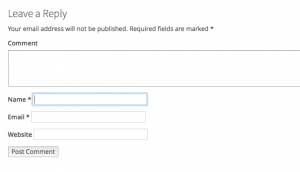
This will be more private than some of the social media sites and give more people an opportunity to ask questions. We will announce when we are going to hold these Let’s Chat sessions on social media, however, the actual chat will take place here on the blog. You will just need to post your comment or question, provide a name (can be initials if you require more privacy) and an e-mail (which is not posted with your question to provide more privacy). If you scroll to the bottom of this page there is a reply box. Type in your question or comment, enter the other information and click the post comment icon. Your post will not be visible until it is approved by the host.
The Let’s Chat session will be similar to our FaceBook chats. Here is an example of one of our FaceBook chats.
Don’t lose your Pyloric Valve over a Failed Gastric Sleeve
June 22, 2016 9:32 am
In my opinion, there are very few reasons to lose your Pyloric Valve after sleeve gastrectomy. Recently, I am hearing of people who have had regain due to a failed Sleeve Gastrectomy being revised to Gastric Bypass RNY and then seeking a Duodenal Switch due to regain from Gastric Bypass RNY. A better option is to go from Sleeve Gastrectomy to Duodenal Switch, due to the long term excess weight loss maintenance of Duodenal Switch. The benefit of the pyloric valve can not be taken lightly.
Let’s start by reminding ourselves as to how the Sleeve Gastrectomy has gained popularity. In the quest for a simple solution to the complex problem of obesity, adjustable gastric banding gained popularity only fail to deliver anything close with the results that were promoted and heavily marketed. The focus was then changed to another seemingly simple procedure, laparoscopic sleeve gastrectomy. For some surgeons this is a new procedure. Surgeons that had been doing the duodenal switch operation for decades, sleeve gastrectomy has not been a new procedure. Surgeons that just started doing sleeve gastrectomy as a stand alone procedure started experiencing complications of the sleeve gastrectomy, such as regain and are now looking for another option for these patients. This complication are even more frequent when they’re done following a failed adjustable gastric band procedures due to the metabolic issues after revising one weight loss surgery to another. A similar short sighted approach is also being promoted with SIPS/SADI procedures, which is significantly simpler to perform than the duodenal switch operation.
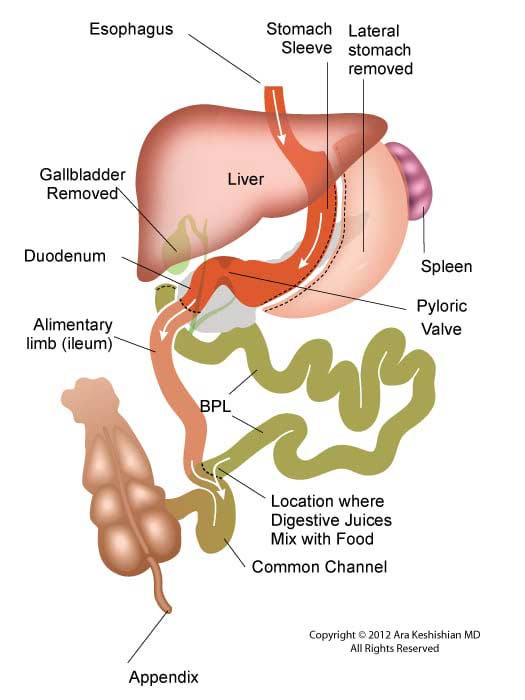
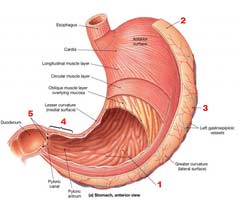
Laparoscopic sleeve gastrectomy has a predictable profile for weight loss. It will not have as good on the long-term success rate as a duodenal switch operation. Complications of the sleeve gastrectomy including reflux, stricture, fistula, inadequate weight loss which may warrant evaluation and possible intervention. In my opinion, as a surgeon who does the duodenal switch operation routinely, a sleeve gastrectomy requiring revision should almost never be revised to a gastric bypass. I have seen number of patient’s who have had an adjustable gastric banding which was revised to the sleeve gastrectomy then to a gastric bypass. We are contacted for a possible revision to Duodenal Switch operation because of the weight regain. One can argue that the patient should not have had the sleeve gastrectomy or gastric bypass. It is critical that the complexity of the disease of the obesity is clearly appreciated that it purely restrictive procedure will not yield the desirable outcome long-term.
Benefits of the Pyloric Valve:
The pylorus is the valve located at the end of the stomach. It controls the release of the liquid mixture of food from the stomach into the small intestine.
The body naturally regulates the passage of food, so food will stay in the stomach for a certain period of time. We believe it is very important to continue that feeling of fullness in between meals. As a result, one of the principle functions of the pyloric valve is to regulate the amount of food products released into the small intestine where they are absorbed. This helps prevent dumping syndrome and ulceration.
The bodies natural diameter of stomach, pyloric valve and small intestine is left intact. This elevates stretching of the stomas created by RNY Gastric Bypass.
Summary
These failed Sleeve Gastrectomies should be revised to Duodenal Switch unless there are overwhelming health issues that would require another option. I always suggest several opinions from different Bariatric Surgeon’s who do a variety of Weight Loss Surgeries before deciding which type of revision to proceed with.
Is Weight Loss Important Before Weight loss Surgery?
June 21, 2016 7:52 am
The question of “Is a pre operative diet and weight loss important?” No. This is the short answer. In a previous blog, “Weight Loss Before Weight Loss Surgery?” I have gone into further detail about why I don’t require a pre operative diet and weight loss program.
More recently there has been a concerted effort by a number of major health plans to require 3-6 months documented pre operative diet attempt prior to authorization for weight loss surgery. Furthermore, there are surgeons who would mandate a 10% weight loss as a precondition for the patient to have a weight loss surgery, laparoscopic sleeve gastrectomy for example. The overwhelming scientific literature fails to support any direct correlation between preoperative weight loss and the outcome of the weight loss surgery.
Some surgeons require preoperative weight loss as a way to reduce the size of the liver. I’ve personally have never met a liver I couldn’t work around unless it was severely diseased.
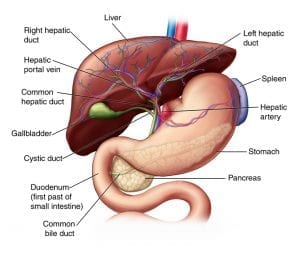
There is some literature to support this position. However, one has to critically look at all the studies. Almost all the studies have very specific population and procedures that are being looked at. Most often the recommendations had been made for adjustable gastric banding procedures. There are also some that are recommending the same for Lap Sleeve cases only siting the reduction of the liver size as a reason for the Very Low Energy Diet as a precondition to surgery. It is, however, important to remind ourselves that there is no long term studies whatsoever that show any relationship between the preoperative weight loss and the outcome of any weight loss surgery.