
Category: GRDS
Standard Common Channel In Duodenal Switch Will Result In Weight Regain.
December 16, 2016 1:57 pm
Stéfane Lebel, M.D.*, Geneviève Dion, M.D., Simon Marceau, M.D., Simon Biron, M.D., M.Sc., Maud Robert, M.D., Laurent Biertho, M.D. earlier this year released a research article comparing patients undergoing standard common channel of 100cm and standard common channel 200cm. The conclusion of this article was: “In this population, BPD-DS with a 200-cm common channel offered similar remission rate of co-morbidities compared with standard BPD-DS. It was associated with similar weight loss at nadir, followed by a more significant weight regain. It might yield a lower rate of nutritional complications. Long-term randomized data are needed to detect other potential advantages.”
Our Experience:
One of the most dreaded outcomes of any weight loss surgical procedure is weight regain. This is assuming that initial adequate weight was lost to result in resolution of the co-morbidities in the first place. As the weight loss surgical field has changed over the years so has been the cases of regain that we have seen.
There was a time when Lap bands were being revised for inadequate weight loss and weight regain. Not to mention the complications of reflux, difficulty swallowing and persistent Nausea and vomiting. Then as more Gastric bypass procedures “aged” the number of patients that started looking for revision for weight regain increased. The latest fad is the Vertical Sleeve Gastrectomy that are done with false sense of expectation and results. The long term outcome of Vertical Sleeve Gastrectomy is no where close to that of the Duodenal Switch, independent of the size of the sleeve. In fact, more surgeons are trying to get a little more weight loss by making the sleeve too tight. All they are doing is creating a significant and debilitating set of problems such as reflux, nausea, and solid intolerance.
The ideal revisional procedure for these patients should be the Duodenal Switch. Some surgeons, however, have started advocating “single anastomosis” knock off the duodenal switch. Others do “standard length common channel” rather than a Hess method Duodenal Switch. I have always performed a traditional Hess method Duodenal Switch. The Hess method Duodenal Switch has held the largest and longest excess weight loss maintenance for 28 years, going into 29 years. Here is a past blog regarding small bowel length.
The predetermined standard common channel results in weight regain. Study
Importance of ProteinExclusive Member Content
September 08, 2016 2:43 pm
Review & Update Giveaway!
August 31, 2016 6:27 pm

The Prize winners are Jo and Kimberly! Congratulations ladies and enjoy the Obesity Help National Conference! Thank you to all that participated in the Giveaway!
We are holding a review and update giveaway for two different prizes! Thank you for your
participation!
One Prize and One Grand Prize
Prize: two tickets to Obestiy Help National Conference Sept. 30-Oct 1, 2016
Grand Prize: two tickets to Obesity Help National Conference and one night
hotel stay October 1, 2016
Conference: 11999 Harbor Boulevard Garden Grove, California 92840 Event link here
Hotel Prize: SHERATON GARDEN GROVE – ANAHEIM SOUTH HOTEL
12221 Harbor Boulevard
Garden Grove, California
Official Rules:
How to Enter and eligibility: All entrants and winners must be 18 years of age or older at the time of entry. Up to 5 entries per person.
- Write a review of Dr. Ara Keshishian on one or all of the sites below or do an update on your profile on Obesity Help between now and Sept. 8, 2016 at 5:00 PM
2. Take a screen shot of the review or update with your username and date.
3. E-mail the screenshot to [email protected] with your contact information (name, phone number, e-mail, and mailing address )
4. Entries must be a verifiable patient of Dr. Ara Keshishian in Glendale, CA.
Promotion Timing:
The Review & Update Giveaway begins September 1, 2016 and ends September 8, 2016 at 5:00pm PST
How Winners are Chosen:
Winners will be chosen by random draw. Odds of winning vary upon the number of entries received for the giveaway.
Winner Notification and the Claiming of Prizes:
Winners will be notified via the email provided at time of entry and also published on our blog comments www.dssurgery.com/blog and on our FaceBook page. The winner will have 72 hours to respond to the winning notification email or the prize will be forfeited. The prizes have no cash value. The prizes are non-transferable and must be accepted as awarded. No changes may be made to the prizes. There is no cash value for the prizes.
General Conditions:
By entering the Giveaway, entrants agree to abide by and be bound by these Official Rules and the decisions of the Sponsor, which are final and binding in all matters relating to the Giveaway, and release and hold harmless Sponsor and its affiliates, directors, officers, employees and assigns from and against any liability, claims, lawsuits, judgments, losses, damages of any kind, injuries, death, property damage, costs and expenses, arising from, resulting from or in connection with the Giveaway, the participation in the Giveaway, or the receipt, possession, use or misuse of any prize. Sponsor is not responsible for lost, late, incomplete, inaccurate, stolen, delayed, misdirected, undelivered or illegible entries or for lost or stolen entry boxes or other errors or difficulties of any kind whether human, mechanical, electronic, typographical, printing or otherwise relating to or in connection with the Giveaway, including, without limitation, errors or difficulties which may occur in connection with the administration of the Giveaway, the processing of entries, the announcement of the prizes, or in any Giveaway-related materials. Sponsor is not responsible for technical, hardware, software or telephone malfunctions of any kind, lost or unavailable network connections, or failed, incorrect, incomplete, inaccurate, garbled or delayed electronic communications caused by the user or by any of the equipment or programming associated with or utilized in the Giveaway. Persons who tamper with or abuse any aspect of the Giveaway or who are in violation of these Official Rules, as solely determined by Sponsor, will be disqualified and all associated entries will be void. The Sponsor reserves the right, at its sole discretion, to cancel, terminate, modify or suspend the Giveaway if, in Sponsor’s opinion, it is not capable of running as planned, including, but not limited to, due to tampering, unauthorized intervention, fraud, technical or phone line failures or any other problems beyond the control of the Sponsor, and select the winners for affected drawing(s) from among all eligible entries timely received for such affected drawing(s) prior to cancellation.
Ulcer and Stricture
August 29, 2016 5:21 am
A patient was referred to us for second opinion who was experiencing nausea, vomiting, GERD. The patient had Duodenal Switch procedure many years ago but more recently had developed significant nausea, worsening reflux and solid intolerance. The patient had an endoscopy a few months ago and was only found to have a stricture within the Duodenum, no definitive treatment was offered at the time to the patient. On second examination of this patient with a second EGD the result was development of diffuse Duodenal ulcers and stricture.
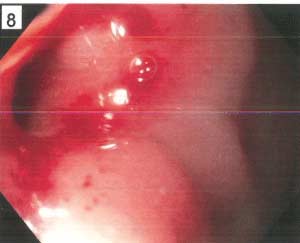
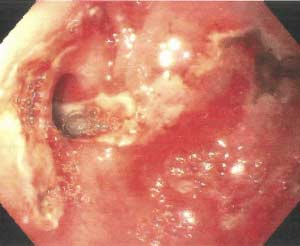
Note that these images are nearly identical positioning showing the stricture at 9 position. The image on the right also shows patchy ulcers.
Any changes in GERD, nausea, vomiting, gastric pain or discomfort after weight loss surgery should always be evaluated, treated, and followed. In a previous blog, the effects of GERD have been described.
Duodenal Switch
August 24, 2016 5:45 am
Buyer Beware ! There are a lot of look alike and counterfeit “Duodenal Switch” procedure being performed. A recent online chat discussion clearly demonstrates the point that just because a patient is told that they had the duodenal switch operation this is not necessarily the case.
In our practice, we always warn our patients of not comparing notes and their outcome to others. I perform the Duodenal Switch procedure the way it was described by Dr. Hess, making the common and alimentary lengths as a percentage of the total length of small bowel. This is why our patient population has very little nutritional, and gastrointestinal issues compared to others. Unfortunately when a patient is given a disproportionately long Common channel and/or Alimentary channel the patient will have inadequate weight loss. Alternatively, when patients are given a shorter alimentary channel in proportion to the total bowel length, significant nutritional deficiencies can arise. In a shorter alimentary channel situation patients have to consume higher doses of vitamins and nutrients to keep their laboratory values normal.
I have repeatedly raised the issues to clearly distinguish the single anastomosis procedures from Duodenal Switch operation.
One of the unfortunate problems is the lack of clear guidance given to the patients. It is not uncommon, when I do second opinion consultation with patient who were given generic gastric bypass post op protocol and instructions after their duodenal switch operation. This clearly shows lack of fundamental understanding of the practice performing these procedures and it is carried onto the patient.
Weight Loss Surgery Effects On Iron Absorption
June 06, 2016 9:40 am
Anemia is a condition in which a person doesn’t have enough healthy red blood cells. Red blood cells (RBCs) function in carrying oxygen to the tissues and they are produced in the bone marrow. Iron deficiency anemia, the most common form of anemia, develops when the body is unable to produce sufficient hemoglobin because of an iron deficiency. To read more about iron deficiency anemia, please refer to our previous blog post here.
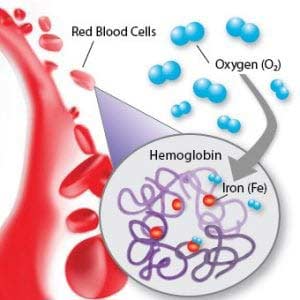
Iron is an essential mineral that is a critical component of hemoglobin. Hemoglobin (Hg) is a four protein molecule that carries oxygen from the lung
s to the tissues. It is also important in maintaining RBC shape for proper blood flow. Each of the four globulin chains in Hemoglobin contain an iron compound called a heme. An iron atom is fixed within the heme group to give the red blood color and transport oxygen and carbon dioxide. If the body does not have enough iron, the bone marrow will not produce enough Hemoglobin which results in unhealthy RBCs.
Iron is exposed to acids in the stomach, which alters the form into a configuration that allows absorption. The Duodenum of the small intestines is the main site of iron absorption. The ileum, found at the end of the small intestinal tract, is the site of secondary absorption. Once absorbed, each plasma protein transferrin transports two atoms of iron to the liver, spleen, and bone marrow (2).
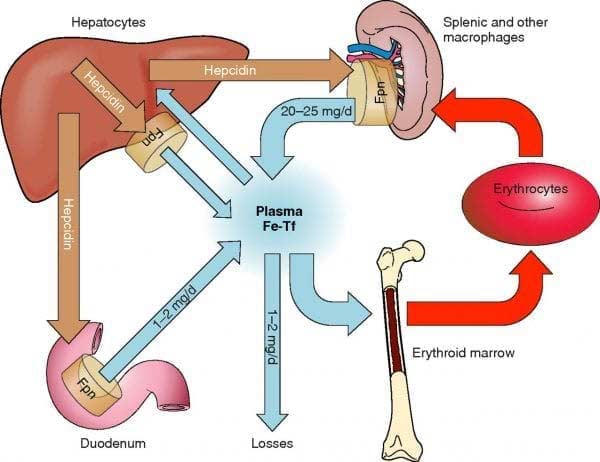
Anemia is common among patients who have undergone surgical weight loss procedures. Some weight loss procedures change the anatomy of the small intestinal tract result in malabsorption due to the restriction of food and nutrient intake. In Roux-en-Y gastric bypass (RYGB), the stomach and duodenum are completely bypassed thereby increasing the risk of iron deficiency. In the Duodenal Switch a small portion of post pyloric Duodenum is left intact to aid in iron absorption, however this may not be adequate for every individual. By redirecting the small intestinal tract in Duodenal Switch, only a small segment of the ileum is able to absorb the necessary nutrients. In both procedures however, blood tests find that patients can become iron deficient (1,3) and require oral iron supplementation or intravenous iron infusions if oral supplementation is inadequate to maintain iron levels.
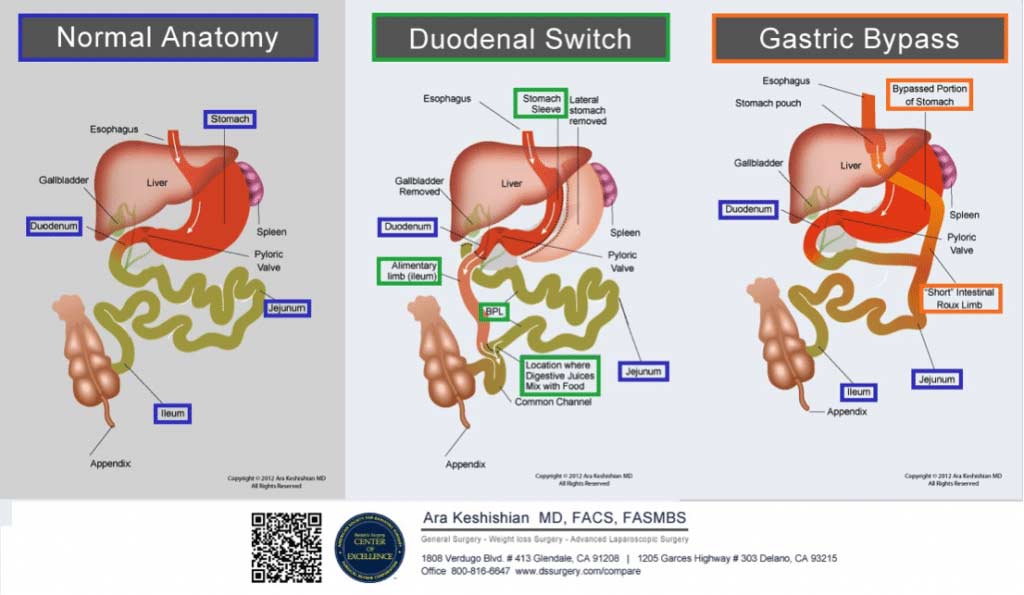
Inadequate iron levels can be treated by taking iron salt supplements, especially along with vitamin C pills that help the body absorb more iron. Other types of supplements are Heme and chelated oral iron that are well tolerated without gastrointestinal upset of iron salts. For some WLS patients there may not be enough capacity for iron absorption via the GI tract and those patients may need Intravenous Iron infusions periodically. Dietary iron sources are important as a surgical weight loss patient as they are usually also high in protein (blog). Ie: Poultry, red meat, pork, seafood, eggs, beans, and green leafy vegetables are also a good source of iron.
In addition to supplementation of iron, it is important to identify any contributing factors to blood loss or decreased iron absorption such as gastrointestinal bleeding, heavy menses, surgery, pregnancy, medications or combination of supplements, infection or dietary issues. Identifying, advanced planning and/or correcting any contributing factors may reduce the iron demand for WLS patients.
In summary, iron absorption will be affected by altering the anatomy of the small intestinal tract. Although it takes a great deal of time to restore iron levels, reversing deficiency will help avoid symptoms and maintain proper blood, brain, and heart health.
Colored Coded Diagrams of where nutrients, vitamins and minerals are absorbed:
Please note this article and these diagrams are Member Exclusive Only. They are available for use by our patients ONLY. Please review your terms of use of our Member Exclusive Area.
Diagram of normal anatomy absorption here [Download not found].
Diagram of DS anatomy absorption here [Download not found].
Diagram of RNY anatomy absorption here [Download not found]
Written by: Mariam Michelle Gyulnazaryan & Dr. Ara Keshishian
References
- Fincannon J. Iron deficiency after gastric bypass surgery. University of Rochester Medical Center. 2016.
- Forth W, Rummer W. Iron absorption. Physiological Revies. 1973; 53(3) 724-792.
- Sawaya RA, Jaffe J, Friedenberg L, Fridenberg FK. Vitamin, mineral, and drug absorption following bariatric surgery. Curr Drug Metab. 2012; 13(9) 1345-1355.
- Von Drygalski A, Andris DA. Anemia after bariatric surgery: more than just iron deficiency. Nutr Clin Pract. 2009; 24(2) 217-226.
Magnesium Questions
May 11, 2016 6:07 am
Since our Webinar on Magnesium, I have received several Magnesium Questions recently regarding Magnesium deficiency. There is some evidence that calcium deficiency can not be corrected with an underlying magnesium deficiency. This may be due to the fact that magnesium is essential to converting Vitamin D to it’s active form and more information here. The active form of Vitamin D is needed to actively transport Calcium within the cell. This may be the confusion that calcium absorption needs magnesium. It is not needed directly but rather indirectly via Vitamin D.
Other cofactors needed in Vitamin D metabolism are:
Zinc (high doses antagonist with Magnesium and Copper)
Boron (raises Magnesium blood levels)
Vitamin K2
Vitamin A in small amounts
Further information regarding bone health and nutrients here.

Some important facts about Magnesium are:
- It is Absorbed in the distal Jejunum and Ileum (small intestines) and to some degree the colon.
- Plays an important role in Parathyroid Hormone synthesis which is also acted upon by Vitamin D
- Vitamin D increases Magnesium absorption
- All enzymes that metabolize Vitamin D require Magnesium
- Magnesium has a positive effect on Vitamin D deficiency.
- Magnesium and calcium are antagonist to each other on a cellular level (work against each other) They use an overlapping transport system for reabsorption within the kidneys and thereby compete with each other. Magnesium may also bind to calcium binding sites and intracellular protein binding sites due to their similarity.
- Calcium supplements can decrease Magnesium absorption.
- It Activates digestive enzymes for protein, fat and carbohydrate metabolism.
- Essential for protein synthesis
- Stores and moves energy acquired from digestion.
- Regulates Calcium via Vitamin D and increasing urinary excretion of calcium
Factors inhibiting Magnesium absorption:
- PPI
- Fiber
- Phytates
- Excessive unabsorbed fatty acids
- Calcium
- Phosphorus
- Protein

In summary, post Bariatric patients are at risk for magnesium deficiency and it plays an important role in overall health and bone health. Our practice recommends Magnesium Glycinate as the form for supplementation in at least a 2:1 ration with calcium. An example is: Calcium 2000mg daily to Magnesium Glycinate 1000mg daily. (Supplement based on your laboratory studies) We hope that this blog has answered some of your Magnesium Questions.
NSAIDS Use After Duodenal SwitchExclusive Member Content
January 30, 2016 9:19 am
Fluids and Electrolytes After Weight Loss Surgery
January 29, 2016 7:06 am
Fluids and Electrolytes after weight loss surgery are an important part of recovery and lifestyle after undergoing a weight loss surgical procedure. Potassium is an important electrolyte found in higher concentrations within the fluid of the cells. It is important in muscle contraction, heart rhythm, nerve function and co-enzyme function.
Fluids and Electrolytes
The following webinar (link) discusses the balance of fluids and electrolytes with particular attention to post weight loss surgery concerns. Deficiencies can cause heart arrhythmias, muscle weakness and cramping, intestinal paralysis, and neurological deficits.
The Daily Recommended Amount for Potassium is 4,700mg
Here is a list of Lower-carb potassium sources: This is not meant to be in inclusive list. There are many higher carb sources of potassium also.
- Beet Greens- 1/2C 655 mg
- Trout 3oz – 375 mg
- Salmon 719 mg per average filet
- Halibut or Yellowfin Tuna 3oz – 500mg
- Clams 3oz- 534 mg
- Avocados 1 whole- 974 mg
- Squash 1C- 325mg
- Broccoli 1 cup 475m
- Watermelon Radish 3 oz – 233mg
- Sweet Potatoes- one potato 694mg
- Yogurt 1C – 579mg
- Tomato paste 1/4C – 342 mg
- Whole milk 1C – 366 mg
- Chicken breast meat 1 cup chopped – 358 mg
- Cauliflower 1 cup raw– 303 mg
- Peanut butter 2 T – 208 mg
- Asparagus spears 6 – 194 m
- Daikon Radish – 3″ – 280 mg
- Nuts 100-300 mg per 30g / 1 oz serving, depending on the type
- Dark leafy greens 160 mg per cup of raw, 840 mg per cooked
- Kohlrabi 3oz- 98mg
- Mushrooms 1 C- 273 mg
- Spinach – 1 cup 167 mg Potassium
- Walnuts 2 oz-250 mg
2016 Back on Track Giveaway!Exclusive Member Content
January 16, 2016 1:43 pm