
Let’s Chat
August 22, 2016 8:46 pm

We are planning on using this blog post to hold routine sessions called “Let’s Chat!” where Dr. Keshishian is available to answer questions online.
This will be more private than some of the social media sites and give more people an opportunity to ask questions. We will announce when we are going to hold these Let’s Chat sessions on social media, however, the actual chat will take place here on the blog. You will just need to post your comment or question, provide a name (can be initials if you require more privacy) and an e-mail (which is not posted with your question to provide more privacy). If you scroll to the bottom of this page there is a reply box. Type in your question or comment, enter the other information and click the post comment icon. Your post will not be visible until it is approved by the host.
The Let’s Chat session will be similar to our FaceBook chats. Here is an example of one of our FaceBook chats.

Exercise Benefits & Events
August 09, 2016 2:25 pm
Exercise and it’s benefits for body, mind and weight loss can’t be over emphasized. Everyone can benefit from some form of exercise whether it be a brisk walk, chair exercises, exercise bands, aquatics, running, hiking or biking. As a family we try to exercise often and attempt to participate in at least one event a month or so. These types of events tend to keep us more accountable and motivated. The group atmosphere, energy and vibe only add to the experience. Listed below are some of our favorite exercise events. We will update this list and add to it.
Physical Benefits:
- Weight loss and maintenance can be a benefit of exercise. It also improves muscle function and strength.
- Improves Type 2 Diabetes and Metabolic Syndrome
- Reduces some Cancer Risk
- Improved Cardiovascular Health
- Improved “Good” cholesterol
- Strengthens and improves Bone Health
- Living longer
- Improved Sleep
Mental Health Benefits:
- Reduce Stress
- Boosts Endorphins
- Helps with Anxiety
- Improved Self Confidence
- Being in the Great Outdoors and Sunlight (increases Vitamin D)
- Prevent Cognitive Decline
- Sharpen Memory and Cognitive Function
- Help with Addiction
- Increase Relaxation
One important key note is to pay close attention to hydration with exercise, not only with fluids but electrolytes as well. Exercise increases fluid loss due to sweat and increase circulation to muscle. You need to increase fluid intake to compensate for these losses.
Exercise events by the month:
June
The Los Angels River Ride is one of our families favorites. Great ride for a great cause.
August
Luau 5K walk and fun run This is a fun family activity as they have a kids run and lots of activities. It is also in Griffith Park which is a beautiful and treasured location.
September
The Prudential 401K Run is to promote saving for retirement and is a FREE event at the beautiful Rose Bowl
October
The Aloha Run brings a little Hawaiian feel to the fall.
JDRF One Walk fighting Type I Diabetes
November
City of Hope’s Walk for Hope
December
Santa to the Sea (must bring a gift for a child)
Varying months depending on location:
Get your Rear in Gear to fight Colon Cancer
CicLAvia a Los Angeles area quarterly biking event.
Vitamin D status for Infertility Treatment
August 03, 2016 8:02 pm
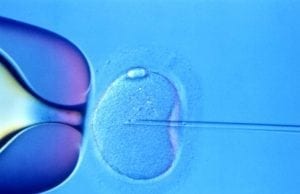
Many people with obesity face infertility issues and seek infertility treatment or procedures. A recent article linked Vitamin D status to improved success rate of IVF (in-vito fertilization) & ICSI (interacytoplasmic sperm injection) in The Journal of Maternal-Fetal & Neonatal Medicine. It is important to check Vitamin D status for infertility treatment.
Here are the researchers results:
- Of the 252 females that completed the ICSI cycle, 42% became pregnant (n = 108).
- The mean vitamin D status was significantly higher in the pregnant group compared to the non-pregnant group (17.74 ng/ml vs 9 ng/ml, respectively; p = < 0.01).
- Vitamin D status was positively associated with both pregnancy (p = 0.001) and endometrial thickness (p < 0.01).
- Higher vitamin D levels was associated with a 21% increase odds of clinical pregnancy (p < 0.05).
The researchers concluded,
“Deficiency of 25-OHD in females hinders the accomplishment of optimal endometrial thickness required for implantation of embryo after ICSI.”
Following weight loss surgery (WLS) there can be improvement of fertility and for that reason we recommend two forms of birth control methods during the first 18-24 months following WLS or until weight loss has stabilized for several months. This helps to ensure the best outcome and health for the mother and infant.
In our office we continue to stress the importance of Vitamin D3 for bone and dental health, pregnancy, breastfeeding and several auto-immune diseases. Vitamin D has also been shown to reduce pre-term birth Duodenal Switch patients require a dry water miscible form of Vitamin D3 due to the fat malabsorption of the DS procedure. There are several past blog posts on the topic of Vitamin D and it’s associated nutrients.
BMI Threshold for Ventral Hernia Repair
July 21, 2016 2:48 pm
“After Ventral Hernia Repair (VHR), complications are most likely to occur in patients with BMI ≥ 40 kg/m2. This subset of patients also had a significantly higher risk of undergoing surgery for a recurrent hernia, suggesting that this group of patients is likely to experience adverse outcomes after VHR and should be counseled to consider bariatric surgery prior to attempts at VHR.” Information on Bariatric Surgery here.
Read more of the original article here….
A hernia is present when part of an internal organ or tissue bulges through a defect or weak area in the belly wall (fascia). The type of hernia you have depends on where it is and how it occurs. Ventral Hernias are named after the location in the body they occur. A ventral hernia is a bulging of the abdominal wall anteriorly. When the hernia is located at the site of a pervious surgical scar then it is called an incisional hernia. A hernia can occur at any location of the abdominal wall however. Further information regarding incisional hernia here.
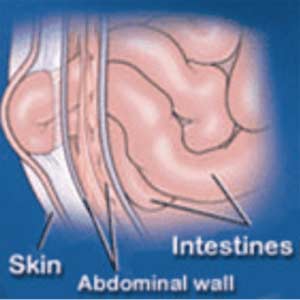
A Ventral Hernia can develop due to straining, lifting or increased abdominal pressure and is a weakening of the abdominal wall. Usually fat and internal organs bulge outside the facsia that holds the internal organs within the abdominal cavity. This type of hernia can be asymptomatic or cause pain with pressure or exertion. If left untreated, they can become larger or become incarcerated requiring emergent surgical intervention. Dr. Ara Keshishian performs ventral hernia repairs using a laparoscopic technique that may or may not require mesh repair. Mesh is place behind the defect in the abdomonial wall and extends past the hernia edges. Mesh is used to re-enforce the abdominal wall and allowing the healing tissue to form a sturdy foundation to help prevent reoccurrence of the hernia. Videos of Ventral Hernia Repairs here.
Grandfather’s Obesity May Affect Grandchild’s Health
July 21, 2016 2:36 pm
A father’s metabolic health can be passed from generation to generation, affecting not only his children but more importantly his grandchildren, suggests a study. According to the study published in the journal Molecular Metabolism, parental obesity can have harmful effects on future generations. “A baby’s health has long been considered the mother’s responsibility as soon as she falls pregnant. Now, we’ve found powerful evidence, in a mouse model, that father’s nutrition and metabolic health can influence his sons and even his grandsons,” said Catherine Suter, Associate Professor, Victor Chang Institute. Read more…
Original research article here.

Less Invasive, Easier?
July 20, 2016 11:02 am
There is a continuous desire for a “less invasive”, “easier” procedure for the treatment of obesity and its associated co-morbidities. We have been very clear when discussing the benefits and long term outcome of the procedures. Let’s remind ourselves that “less invasive” does not mean a better option. In almost all cases a less invasive weight loss surgery means less weight loss, lower incidence of resolution of co-morbidities, and in some cases higher complications rate. Have we forgotten the adjustable gastric banding that was advocated to be the cure all for all obesity? All we hear now are the complications, the long term sequel of the reflux, hiatal hernia, irreversible esophageal injury, in addition to inadequate weight loss or weight regain.
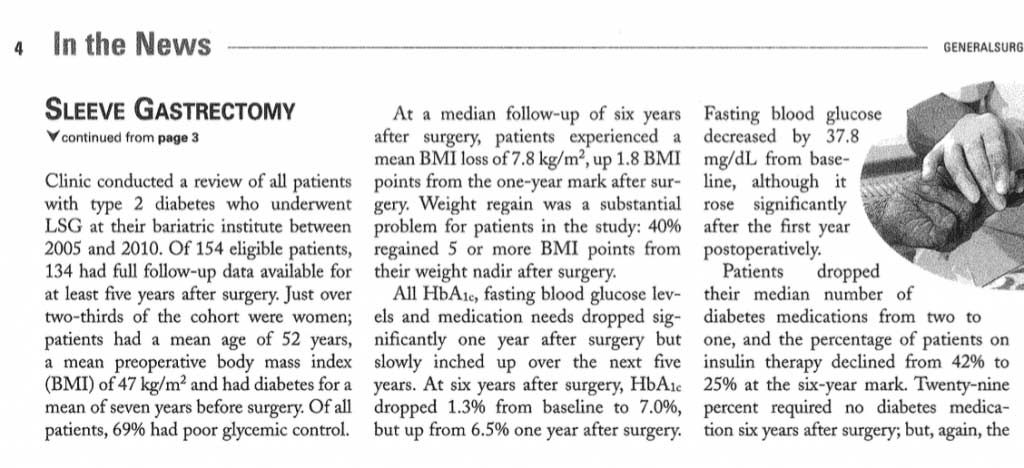
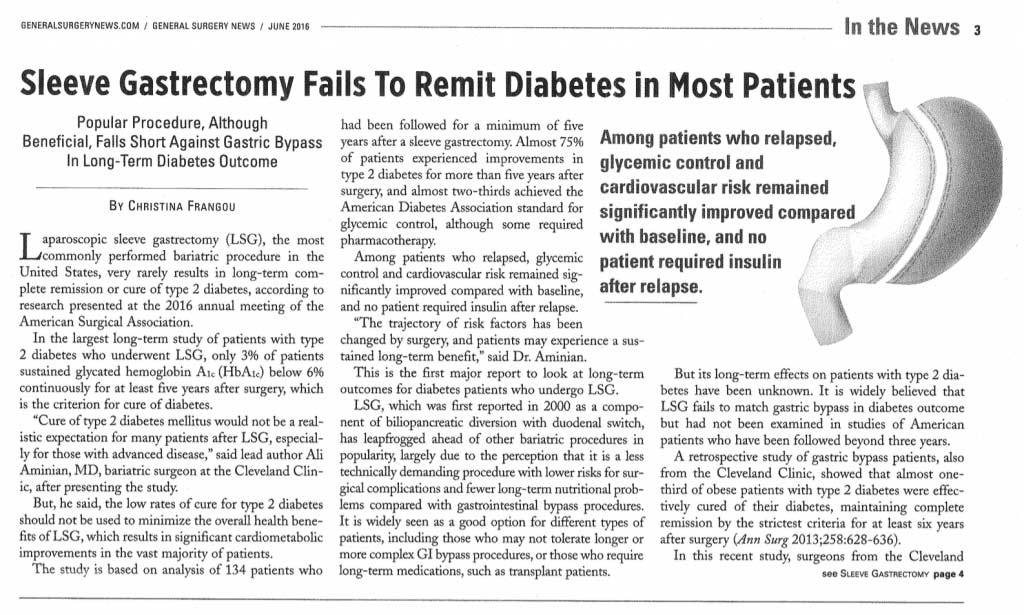
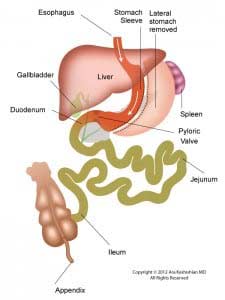
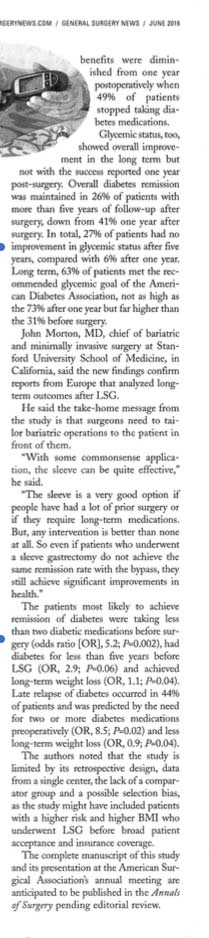
Unfortunately, the same is to be said about the Sleeve Gastrectomy. We have said, as supported by the scientific literature, that the long term outcome of the sleeve gastrectomy is not as good as that of the Duodenal Switch procedure. This is true for the amount of weight loss as well as the resolution of the co-morbidities. We see quite a few patients who have gained their weight back after sleeve, never lost enough weight, and/or did not achieve resolution of their co-morbidities, such as diabetes, and are having their procedure revised to Duodenal Switch procedure.
Here is a recent publication that discusses this.
Along with the same argument, this is why I caution patients when having the SIPS or SADI procedures. There is a chance that when the long term data for SIPS/SADI is available there may be some benefits procedure. However, as it stands at this point in time, these procedures are not the same as the Duodenal Switch procedure. So in short, less invasive, easier isn’t better.
Hydration IdeasExclusive Member Content
July 07, 2016 2:22 pm
Intestinal Peristalsis
June 24, 2016 6:32 pm
The following video is an example of intestinal peristalsis, the rthymic contraction and relaxation of the intestinal muscles to propel digested food through the intestinal tract. This process starts after food product is swallowed into the esophagus. It continues once the food is emptied through the pyloric valve into the small intestine. This motion allows for absorption of nutrients from the food product. Peristalsis continues throughout the small intestine and into the colon (large intestine) until defecation.
Click the following to view the Video of Intestinal Peristalsis
Peristalsis also happens within the tubes connecting the kidneys and bladder and also the tubes between the gallbladder and duodenum
Don’t lose your Pyloric Valve over a Failed Gastric Sleeve
June 22, 2016 9:32 am
In my opinion, there are very few reasons to lose your Pyloric Valve after sleeve gastrectomy. Recently, I am hearing of people who have had regain due to a failed Sleeve Gastrectomy being revised to Gastric Bypass RNY and then seeking a Duodenal Switch due to regain from Gastric Bypass RNY. A better option is to go from Sleeve Gastrectomy to Duodenal Switch, due to the long term excess weight loss maintenance of Duodenal Switch. The benefit of the pyloric valve can not be taken lightly.
Let’s start by reminding ourselves as to how the Sleeve Gastrectomy has gained popularity. In the quest for a simple solution to the complex problem of obesity, adjustable gastric banding gained popularity only fail to deliver anything close with the results that were promoted and heavily marketed. The focus was then changed to another seemingly simple procedure, laparoscopic sleeve gastrectomy. For some surgeons this is a new procedure. Surgeons that had been doing the duodenal switch operation for decades, sleeve gastrectomy has not been a new procedure. Surgeons that just started doing sleeve gastrectomy as a stand alone procedure started experiencing complications of the sleeve gastrectomy, such as regain and are now looking for another option for these patients. This complication are even more frequent when they’re done following a failed adjustable gastric band procedures due to the metabolic issues after revising one weight loss surgery to another. A similar short sighted approach is also being promoted with SIPS/SADI procedures, which is significantly simpler to perform than the duodenal switch operation.
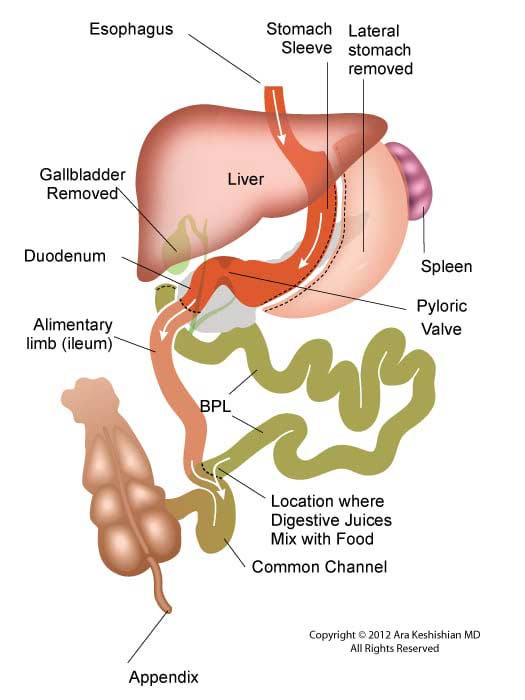
Laparoscopic sleeve gastrectomy has a predictable profile for weight loss. It will not have as good on the long-term success rate as a duodenal switch operation. Complications of the sleeve gastrectomy including reflux, stricture, fistula, inadequate weight loss which may warrant evaluation and possible intervention. In my opinion, as a surgeon who does the duodenal switch operation routinely, a sleeve gastrectomy requiring revision should almost never be revised to a gastric bypass. I have seen number of patient’s who have had an adjustable gastric banding which was revised to the sleeve gastrectomy then to a gastric bypass. We are contacted for a possible revision to Duodenal Switch operation because of the weight regain. One can argue that the patient should not have had the sleeve gastrectomy or gastric bypass. It is critical that the complexity of the disease of the obesity is clearly appreciated that it purely restrictive procedure will not yield the desirable outcome long-term.
Benefits of the Pyloric Valve:
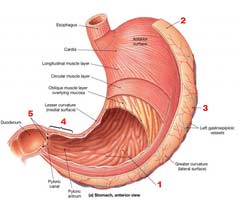
The pylorus is the valve located at the end of the stomach. It controls the release of the liquid mixture of food from the stomach into the small intestine.
The body naturally regulates the passage of food, so food will stay in the stomach for a certain period of time. We believe it is very important to continue that feeling of fullness in between meals. As a result, one of the principle functions of the pyloric valve is to regulate the amount of food products released into the small intestine where they are absorbed. This helps prevent dumping syndrome and ulceration.
The bodies natural diameter of stomach, pyloric valve and small intestine is left intact. This elevates stretching of the stomas created by RNY Gastric Bypass.
Summary
These failed Sleeve Gastrectomies should be revised to Duodenal Switch unless there are overwhelming health issues that would require another option. I always suggest several opinions from different Bariatric Surgeon’s who do a variety of Weight Loss Surgeries before deciding which type of revision to proceed with.
Is Weight Loss Important Before Weight loss Surgery?
June 21, 2016 7:52 am
The question of “Is a pre operative diet and weight loss important?” No. This is the short answer. In a previous blog, “Weight Loss Before Weight Loss Surgery?” I have gone into further detail about why I don’t require a pre operative diet and weight loss program.
More recently there has been a concerted effort by a number of major health plans to require 3-6 months documented pre operative diet attempt prior to authorization for weight loss surgery. Furthermore, there are surgeons who would mandate a 10% weight loss as a precondition for the patient to have a weight loss surgery, laparoscopic sleeve gastrectomy for example. The overwhelming scientific literature fails to support any direct correlation between preoperative weight loss and the outcome of the weight loss surgery.
Some surgeons require preoperative weight loss as a way to reduce the size of the liver. I’ve personally have never met a liver I couldn’t work around unless it was severely diseased.
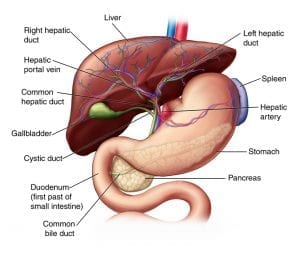
There is some literature to support this position. However, one has to critically look at all the studies. Almost all the studies have very specific population and procedures that are being looked at. Most often the recommendations had been made for adjustable gastric banding procedures. There are also some that are recommending the same for Lap Sleeve cases only siting the reduction of the liver size as a reason for the Very Low Energy Diet as a precondition to surgery. It is, however, important to remind ourselves that there is no long term studies whatsoever that show any relationship between the preoperative weight loss and the outcome of any weight loss surgery.