
Category: Uncategorized
Compounding Pharmacies
January 22, 2018 2:38 pm
New FDA regulations for compounding pharmacies has spurred changes in our pricing and ability to provide injectable Vitamin A and Vitamin D. The compounding pharmacies are no longer compounding injectable Vitamin A and there is a nationwide shortage of the national brand of injectable Vitamin A. We have a tentative date of February 2018 when we may be able to obtain injectable Vitamin A. We won’t be able to quote pricing on Vitamin A injections until we are able to orders.
We are able to obtain and supply our patients with injectable Vitamin D but with a price increase.
The following is the letter we received from our compounding pharmacy.
“The healthcare industry has continuously undergone changes in regulations and legislation. The compounding industry is no exception and has faced rigorous regulatory requirements this past year such as new testing specifications and compliance standards.
We are set on facing these demanding challenges by meeting and exceeding these new regulatory requirements. We want to assure you we will continue to provide the best products on the market for you and your patients. Quality and safety remain a top priority. We understand that our pharmacy plays a vital role in providing care to your patients. The increase in pricing is a reflection of the additional cost in producing and testing the product based on regulatory specifications.”
Revision from failed AGB to Duodenal Switch
January 10, 2018 2:10 pm
A few times a month during consultation for weight loss surgery , I’m ask as to why I do not offer the adjustable gastric banding as an alternative to the patients. As I have said over the years when a patient considers an weight loss surgery the totality of the risk should be considered. This includes the operative, immediate postoperative course, the maintenance and the follow-ups needed. The potential complications of the procedure in addition to the long-term success off each operation should also be taken into account.
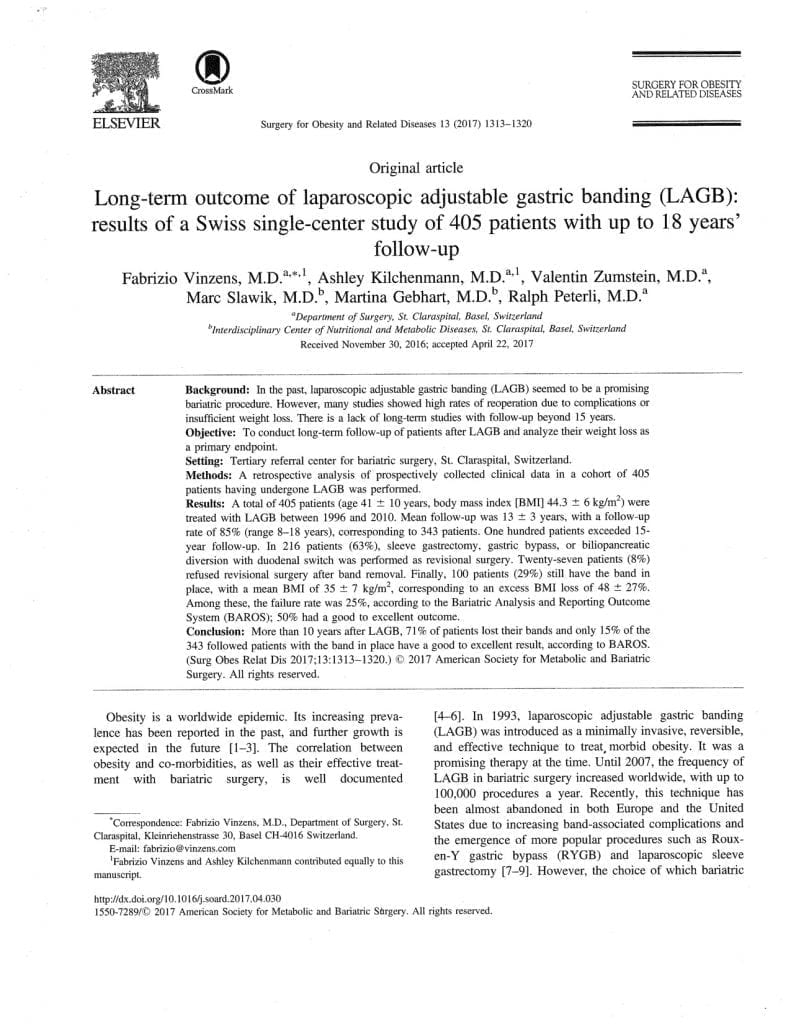
Unfortunately, some patients are led to believe that any perceived benefit in the short operative time and the ease of the adjustable gastric banding also translates to a better outcome. This is in fact the opposite of what the published data have shown, a recent study published in April 2017 by Vinzes et.al, shows that 71% of patient lost their band by 10 years out.
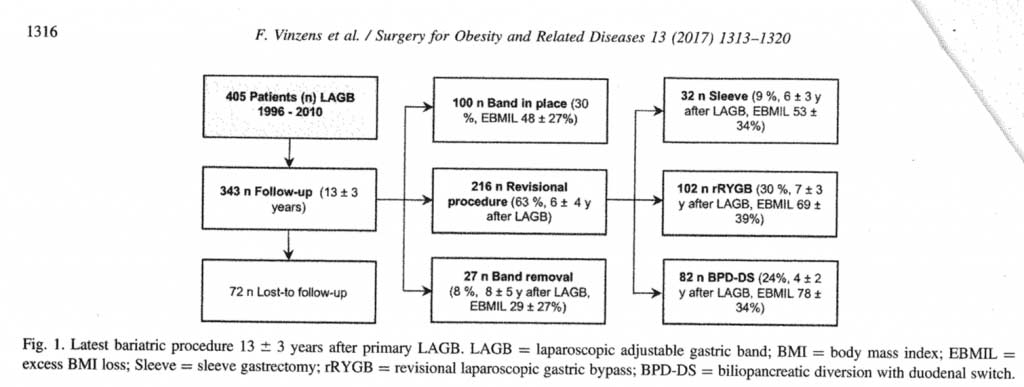
What is also interesting that more patients underwent revision from failed AGB to the duodenal switch than the sleeve gastrectomy (Fig 1.). This is what I also recommend.
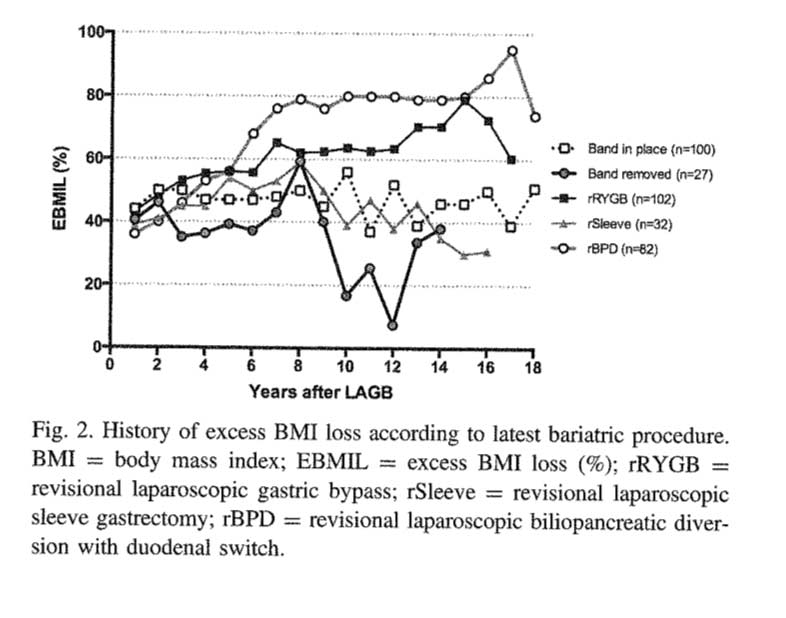
More importantly, The patients who underwent a revision from failed AGB to the duodenal switch operation had the best long term results of all patients (Fig 2.) note the “rBPD” line that is the highest of %EBMIL.
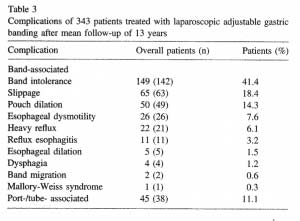
Complication’s were broad and frequent (Table 3.)
Further information on revision from failed AGB to Duodenal Switch or other failed weight loss surgeries can be found here.
Bile Reflux Gastritis
January 10, 2018 1:45 pm
Bile reflux gastritis has been recognized as a significant cause of dyspepsia in a subset of patients. This patient group set does not respond to the standard treatment (not expected to) and some get improvement with the treatment of H.Pylori infection if one is diagnosed at the time of upper endoscopy and biopsy.
Inflammation and Foveolar hyperplasia are some of the findings that can be seen endoscopically. This and other findings have all been documented in the literature. An article published in 2005, reported over 40% incidence of Foveolar hyperplasia in patient with bile relax.
It is been noted that bile causes the thickening of the mucosa lining of the GI track. This is called Foveolar hyperplasia when the mucosa of the stomach is noted to be thicker with more numerous and deeper folds.
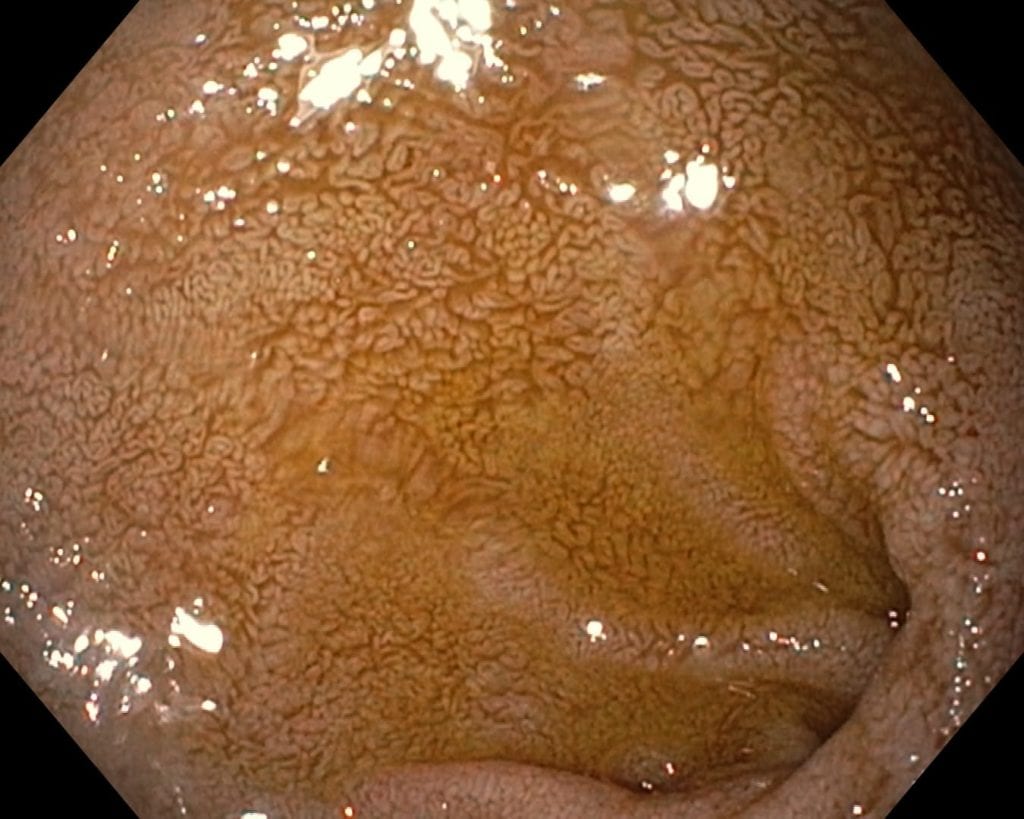
The treatment for this is reduction and prevention of bile reflux to the stomach, in some cases this can only achieved by surgical diversion of the bile from the stomach. Additional information on Bile Reflux and the surgical treatment can be found here.
Anemia FileExclusive Member Content
January 10, 2018 1:35 pm
Post-op Birth Control
October 23, 2017 3:29 am
Hair Loss
October 23, 2017 3:28 am
Hair Loss Prevention Program
Tips for Hair Loss:- Temporary hair loss is a very real side effect of surgery and it can be a disheartening problem. Hair loss happens due to the way hair follicles grow in cycles and because it takes several months for a hair follicle to grow. The shock of surgery, lower calorie & protein intake, and anesthesia cause the hair follicle to stop growing. Because this may happen any where in the growth cycle you often don’t see the hair loss right after surgery but a few months after surgery.
- Protein intake is extremely important for healing, hair growth and to prevent muscle wasting. After surgery you need 80 gm or more of protein every day. Again while you are going through the weight loss period your body does not care if it loses fat mass or muscle mass. The best way to enhance hair growth, fat mass loss and prevent muscle loss is to get 80 gm or more of protein daily and to exercise daily.
- Multivitamins with minerals every day are also an important supplement because if you are defiant in vitamins and minerals then your body takes the essential vitamins for the general running of your body and doesn’t give the unessential things like hair and nails what they need to grow.
- Nioxin shampoo has been traditionally used by cancer and chemo patients but some GRDS patients have had good luck with it also.
- Biotin tablets or powder are great for healthy hair, skin, and nails. 600-1000 mcg daily and can be found at most health food, vitamin or beauty supply store. Also assist the body in turning fat mass into usable energy.
- Folicure tablets and shampoo can also help. They can be found at Sally’s Beauty Supply.
- Zinc 50mg tablets every other day for no more than a month. Zinc blood levels can get too high after this period of time. Zinc can interfere with iron absorption at higher levels. Zinc helps with protein synthesis and collagen formation (both ingredients for hair growth). Inactivity can lower the body’s levels of zinc another reason why exercise is important.
Open vs Laparoscopic Surgery
October 23, 2017 2:57 am
- Less postoperative pain
- Shorter hospital stay-even though this may not be significant (0.75 day shorter stay!)
- Faster postoperative recovery with comparable efficacy and less need for narcotics.
- Fewer wound complications (wound infections, dehiscence, incisional hernias)
- Higher rates of postoperative bowel obstruction.
Duodenal Switch Risks and Complications
October 23, 2017 2:56 am
- Bleeding, sometimes requiring a blood transfusion.
- Possible injury to hollow or solid organs (Liver, Spleen, Esophagus, Large and small Bowel).
- Also, some cardiovascular complications can occur, such as a heart attack, and Pulmonary Embolism.
- Bleeding, sometimes requiring a blood Transfusion
- Deep-Vein Thrombosis (blood clot)
- Pulmonary Emboli (blood clot traveling to the lungs)
- Infection
- Abscess formation
- Bowel Obstruction
- Perforation involving small bowel, Duodenum, Stomach (leak)
- Pancreatitis
- Pneumonia
- Heart attack
- Hernia (incisional, and internal)
- Bowel Obstruction
- Excessive Weight Loss and malnutrition
- Mineral, trace element and vitamin deficiencies (anemia, Vitamin A, D deficiencies)
- Osteopenia/Osteoporosis
- Kidney Stones
- Malodorous bowel motions and flatus (stinky bowel movements and gas)
- Diarrhea (almost always associated with patient indiscretion with diet)
- Gastric leaks 0.7%
- Mortality 0.57%
- Reversal 0.61%
- Revisions 3.7% (22 were for excess weight loss and protein deficiency and 2 were for frequent diarrhea). In these cases the common channel and alimentary limb were lengthened. Seven revisions were for inadequate weight loss and the common channel was shortened.
Duodenal Switch Vs. SADI, SIPS, Loop DS
October 23, 2017 2:49 am
| Duodenal Switch | SADI-SIPS, Loop DS | |
| Proven Long term outcome | Yes, with over 20 years outcome- (reference) | No Long Term outcome. An Experimental procedure being studied (reference) |
| Technical ease | Hard | Easy |
| Laparoscopic | Yes | Yes |
| Bile Reflux | Not anatomically possible | Possible complication |
| Long term weight loss | Best outcome (reference) | No long-term data. The expectation would be that the weight loss will be much less than that of the Duodenal Switch with the potential of significant regain. |
| Potential nutritional deficiencies | Possible – (reference %) corrected with supplementation | Inadequate data |
| Individually tailored | Yes if the common and alimentary bowel lengths done as percentage of the total length (Hess Method) | Every patient gets the same operation |
| Diet for best outcome | Broad healthy non restrictive | No long term data |
| Variable a surgeon can adjust for the best outcome | 1-stomach size 2-Common Channel 3-Alimaentary channel | 1-stomach size 2-Common and Alimentary limb (are the same) |
| Selective Fat Malabsorption | Yes- negligible fat absorption in the Alimentary limb | No-The Alimentary the common channel are the same – no selective fat malabsorption |
| Selective nutrient absorption | Yes- The Alimentary and common channels are separate. | No-The Alimentary ad Common Channels are the same. Much higher increase in caloric absorption. |
Performing Duodenal Switch
October 23, 2017 2:30 am