
Category: GERD
Ulcer and Stricture
August 29, 2016 5:21 am
A patient was referred to us for second opinion who was experiencing nausea, vomiting, GERD. The patient had Duodenal Switch procedure many years ago but more recently had developed significant nausea, worsening reflux and solid intolerance. The patient had an endoscopy a few months ago and was only found to have a stricture within the Duodenum, no definitive treatment was offered at the time to the patient. On second examination of this patient with a second EGD the result was development of diffuse Duodenal ulcers and stricture.
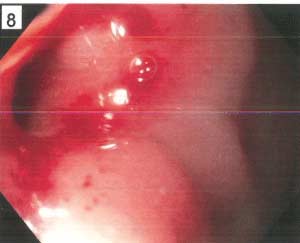
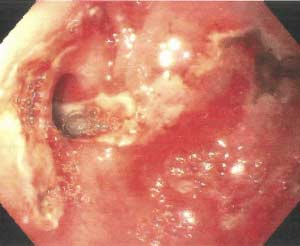
Note that these images are nearly identical positioning showing the stricture at 9 position. The image on the right also shows patchy ulcers.
Any changes in GERD, nausea, vomiting, gastric pain or discomfort after weight loss surgery should always be evaluated, treated, and followed. In a previous blog, the effects of GERD have been described.
Stricture after Sleeve Gastrectomy Duodenal Switch
May 01, 2016 9:45 pm
According to the American Society of Metabolic and Bariatric Surgery sleeve gastrectomy has become the most commonly performed operations in 2012. Sleeve gastrectomy became popular because of the high failure rate of the adjustable gastric banding and the issues with RNY pouch. The Sleeve Gastrectomy was performed many years prior to 2012 as a part of the Duodenal Switch procedure. Stricture is a complication occurring post Sleeve Gastrectomy and Duodenal Switch.
Stricture:
Sleeve gastrectomy may appear to be a simple procedure under the surface; however, it is fraught with very unique and challenging complications. These may include, but are not limited to, staple line failure resulting in leak, injury to the spleen, stricture, and even a rare and under diagnosed portal vein thrombosis. Technique is important in avoiding short and long-term complications. Strictures can be caused by making the sleeve stomach too narrow or by stapling in a fashion where the corkscrew stomach.
Some surgeons create a very narrow sleeved stomach in an attempt to maximize weight loss by increasing restriction. This can result in significant GERD in patient with no long-term benefit. Re-sleeving is another incidence were strictures can become an issue. These strictures are debilitating and almost all the time require surgical intervention. Balloon dilation by an endoscopy method is frequently unsuccessful. The patient who has a stricture should seek the attention of an experienced revision surgeon for surgical repair. Strictures are usually a short narrow segment of the stomach. The reason why sleeve gastrectomy strictures do not respond well to balloon dilatation is because of the staples line that is present on one side of the tube of the stomach that cannot be stretched.
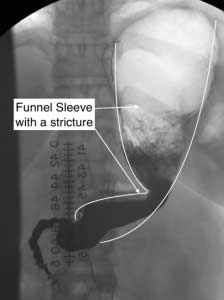
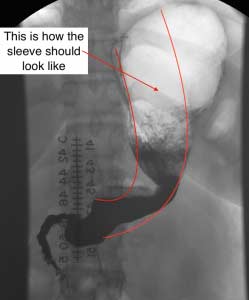
Some surgeons create a very narrow sleeved stomach in an attempt to maximize weight loss by increasing restriction. This can result in significant GERD in patient with no long-term benefit. Re-sleeving is another incidence were strictures can become an issue. These strictures are debilitating and almost all the time require surgical intervention. Balloon dilation by an endoscopy method is frequently unsuccessful. The patient who has a stricture should seek the attention of an experienced revision surgeon for surgical repair. Strictures are usually a short narrow segment of the stomach. The reason why sleeve gastrectomy strictures do not respond well to balloon dilatation is because of the staples line that is present on one side of the tube of the stomach that cannot be stretched.
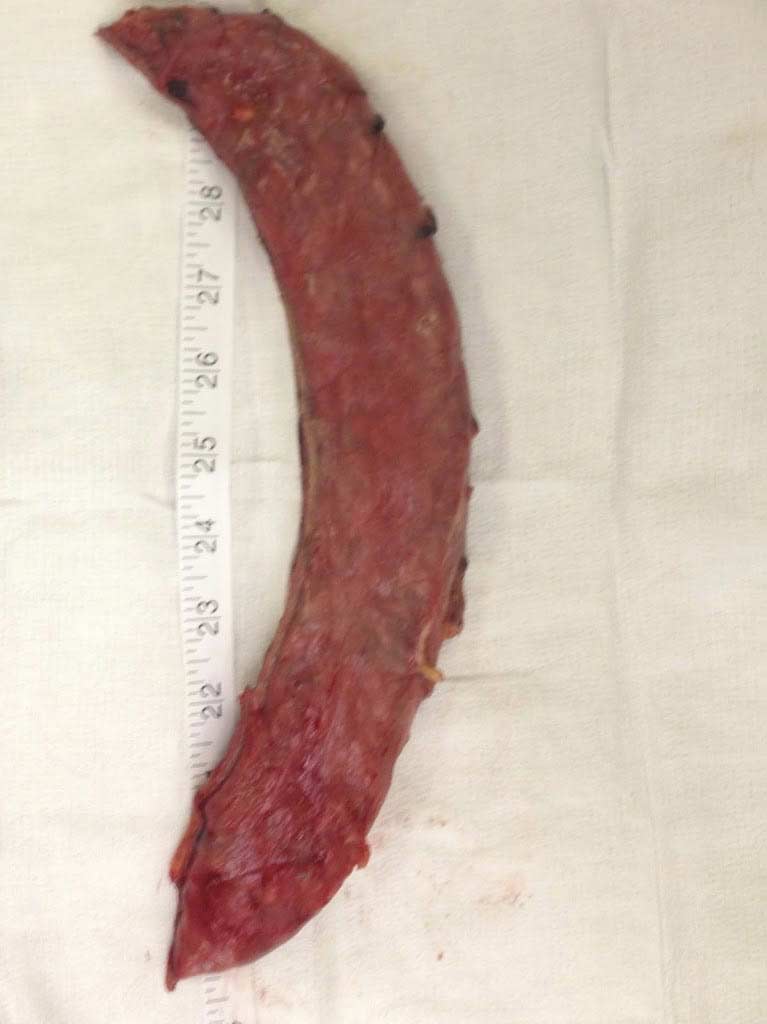
An increasingly more complicated problem is when the stricture is caused by a spiraling of the staple line. This is quite frequently seen where the stapling of the stomach was started on the greater curvature of the stomach and rotated anteriorly causing a corkscrew effect of the stomach. A long segment stricture of the stomach cannot be corrected by balloon angioplasty and would require surgical intervention.
I have been involved with numerous repairs of strictures on sleeve gastrectomies and Duodenal Switch stomach from other institutions. In my opinion, repeated endoscopy and balloon dilatation only complicate further care by compromising the tenuous tissue of a strictured stomach due to scaring and blood supply. As above-stated earlier it is critical that a patient who is experiencing significant reflux, changes in nausea and vomiting, suspected stricture or narrowing, or has a corkscrew stomach to be seen by an experienced surgeon for surgical repair. See the following Blog for health issues that can occur or progress with strictures.
Sleeve Gastrectomy specimen picture.
GERD, Nausea and Vomiting- Don’t ignore it!
April 28, 2015 11:30 am
Gastroesophageal Reflux Disease is a serious matter and should not be left untreated. It is know as heartburn or reflux and if you are experiencing more than twice a week you should be evaluated by a physician to investigate the cause. Listed below are some of the causes and end results of not treating GERD.
Esophagitis – An irritant that can be acid, bile, food and digestive enzymes coming back up the esophagus can cause irritation and swelling in the esophagus. If left untreated, it can damage the lining of the esophagus to the point of erosion and scarring. Bile Reflux may also be a cause of esophagitis and Duodenogastroesphogeal reflux (DGER). Bile Reflux information here.
Esophageal Stricture – Scar tissue can cause the lumen of the esophagus to become smaller and narrow. This stricture makes it difficult or painful to swallow foods. If a stricture is narrow enough food may become stuck and require intervention for removal and treatment. This can also put a person at risk for choking. The treatment includes ballon dilation with an endoscope and in cases where it recurs surgery may be required.
Esophageal Ulceration– If GERD is left untreated it can progress to actual ulcerations in the esophagus. Patients may cough up or vomit blood or see it in their stool as dark tarry or coffee ground type stool.
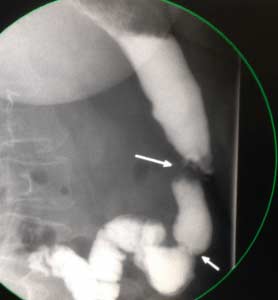
Gastric Stricture– After weight loss surgery such as sleeve gastrectomy, RNY Gastric Bypass, Duodenal Switch, SADI/Loop, Adjustable Gastric Banding, or other gastric surgeries a narrowing of the inner opening of the stomach can result from scar tissue forming. This will require a surgical procedure to rectify. The symptoms can be food intolerance, full feeling, nausea and/or vomiting. (See pictures below)
Hiatal Hernia– An anatomical weakening or enlargement of the opening of the diaphragm muscle where the esophagus meets the stomach. This defect can allow a portion of the stomach to slide or roll into the chest cavity. This then causes reflux of gastric juice and content. Hiatal Hernia’s can also form on weight loss surgical patients. There are several examples within this blog here.
Breathing Difficulties– The acid aspiration while sleeping can make asthma and other breathing difficulties worst and can cause coughing and other issues.
Dental Issues – The acid, food, digestive enzymes backing up into the esophagus and mouth can cause dental issues such as erosion and tooth decay. In regards to dental issues after weight loss surgery there are also other vitamin and mineral deficiencies that can cause oral health issues. Dental Issues after WLS here.
Lower Quality of Life– GERD can affect a person’s quality of life. If you are in discomfort from acid reflux or having food intolerance it can make life difficult. It can also alter food choices and impact nutrition.
Barrets Esophagus– Pre-cancerous changes in the bottom portion of the esophagus due to long term acid exposure from gastric reflux. Diagnosis requires and endoscopic procedure (EGD) and biopsy.
Esophageal Cancer– There is a significant rise in the western world in esophageal adenocarcinoma. The main risk factors are alcohol use, smoking, untreated GERD, and poor diet.
Reflux and difficulty with swallowing caused by stricture is not normal. These problems are quite frequently encountered as complication of Adjustable gastric banding, with slipped band or a band that is too tight and scarred in placed resulting is belt effect. This results in the esophagus not being able to empty and propel the food down. The end result is significant reflux, with difficulty swallowing, nausea, vomiting etc. Similar problems are seen with Gastric bypass where the anastomosis between the stomach pouch and the small bowel RNY limb is too narrow. In Gastric Sleeve and Duodenal Switch operations, is the sleeve is made too narrow, or misshaped (hour glass, funnel, cork screw) it will result in the patient having reflux and symptoms of stricture. One specific problem with the new operation of SADI is the concern for risk of bile reflux, similar to the BillRoth I procedure.
Gastric bypass patient with stricture at the gastro-jejunostomy before and after balloon dilation. Fig A
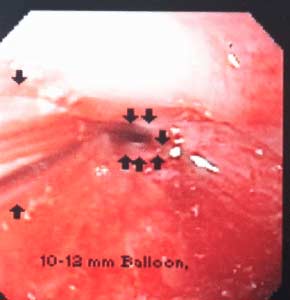
After balloon dilation. Fig B
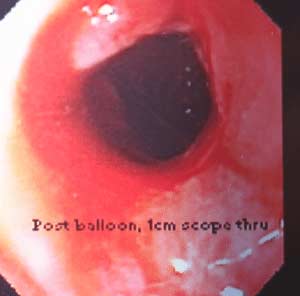
Fig. C : Lap band Patient with stricture where the band as removed at another facility and the scar tissue formed around the GE junction was not taken down. The patient had to be taken back to the operation room after his symptoms persisted even though the band had been removed 3 months prior.
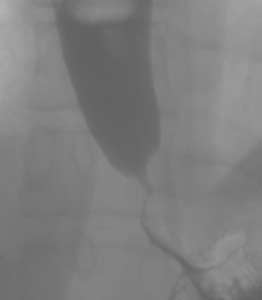
A corkscrew stomach of a Duodenal Switch done at another facility, with the patient presented with persistent reflux, nausea and vomiting for years after surgery. Fig. D
This is not an inclusive discussion of GERD and the treatment. Please see your healthcare providers if you are experiencing any symptoms pertaining to GERD or any other health care issue.