
1-818-812-7222 Office Hours: Monday Thru Friday: By Appointment only
Home » primary hyperparathyroidism
Tag: primary hyperparathyroidism
Types of Hyperparathyroidism: Primary, Secondary and Tertiary
February 20, 2026 4:05 pm
What Do the Parathyroid Glands Do?
To begin with, you have four parathyroid glands, located behind the thyroid gland in the neck. Among other functions, they are the main regulators of calcium, phosphorus and magnesium in the blood. In addition, they work closely with vitamin D, which the body needs to absorb calcium.
Primary Hyperparathyroidism
In primary hyperparathyroidism, the parathyroid glands themselves are overactive. Specifically, this can happen in two ways:- Adenoma: a benign tumor in one of the four glands. It usually needs surgical removal.
- Hyperplasia: all four glands are overactive and/or enlarged. In some cases, the surgeon needs to remove most of the four glands.
Secondary Hyperparathyroidism
In secondary hyperparathyroidism, something outside the glands drives the high PTH level. For example, the most common trigger is low calcium, which itself may result from low vitamin D, low calcium intake or poor absorption. Because the duodenal switch and gastric bypass reduce calcium and vitamin D absorption, weight-loss surgery patients are at higher risk.Tertiary Hyperparathyroidism
Tertiary hyperparathyroidism occurs only in specific groups, mainly patients with kidney failure and kidney transplant recipients. As a result of years of secondary hyperparathyroidism, the glands begin to work on their own, even after the original trigger is corrected.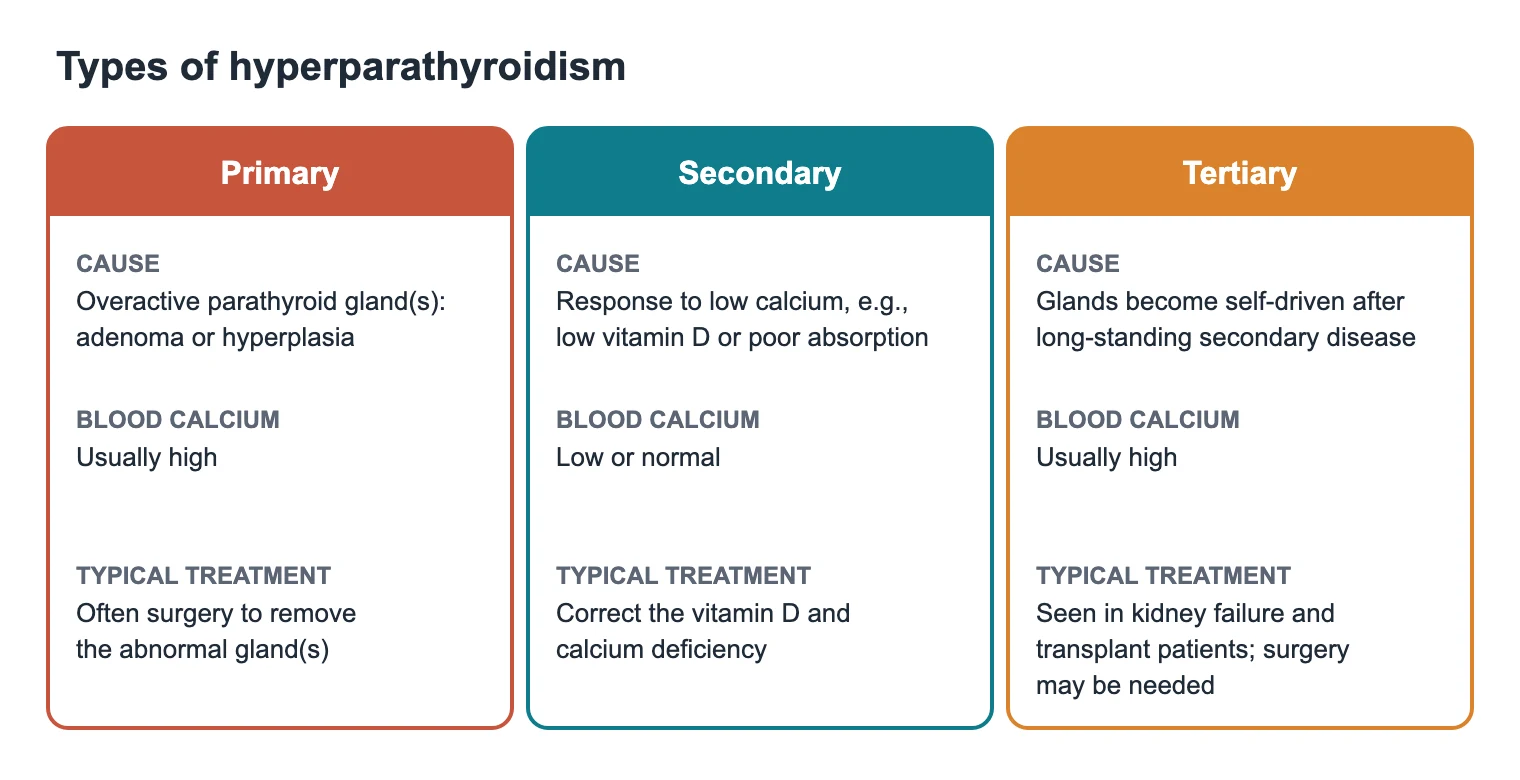
How the Types of Hyperparathyroidism Affect the Body
Regardless of the type, the end result is the same. The parathyroid glands aim to keep blood calcium normal, and they will do everything to achieve it. As a result, they:- Increase calcium absorption from the GI tract
- Break down bone to release calcium into the blood
- Increase calcium reabsorption by the kidneys, so less is lost in the urine
Telling the Types of Hyperparathyroidism Apart
Distinguishing primary from secondary hyperparathyroidism is critical. Primary hyperparathyroidism is more likely than not a surgical problem. In contrast, secondary hyperparathyroidism is a response to metabolic deficiencies, such as low calcium or low vitamin D, that need to be corrected, and correction takes time.How Are the Types of Hyperparathyroidism Diagnosed?
However, not every case requires surgery. Instead, lab tests and imaging provide the information needed to plan treatment:- Blood tests: PTH, calcium, vitamin D and alkaline phosphatase. See our guide to calcium lab results.
- Imaging: neck ultrasound, CT scan or a sestamibi parathyroid scan to locate an overactive gland.
Keep Up With Your Yearly Labs
For this reason, yearly blood work after weight-loss surgery helps catch changes in PTH, calcium and vitamin D sooner rather than later. Review our recommended blood work and lab orders.Related Articles
- Vitamin D and Liver Function Tests After Weight-Loss Surgery
- Magnesium Questions
- What Does an Elevated Alkaline Phosphatase Level Mean?
Recent Posts
- Copper: The Essential Mineral Your Body Cannot Live Without November 18, 2026
- Superior Mesenteric Artery Syndrome (SMAS) November 18, 2026
- Is Sucralose (Splenda) Bad for You? What the Science Says November 5, 2026
- Sleeve more cost effective than GLP-1 October 30, 2026
- Cholangitis: Causes, Risk Factors and Treatment May 24, 2026