
1-818-812-7222 Office Hours: Monday Thru Friday: By Appointment only
Written by Ara Keshishian, MD, FACS, FASMBS
Last updated: November 18, 2026
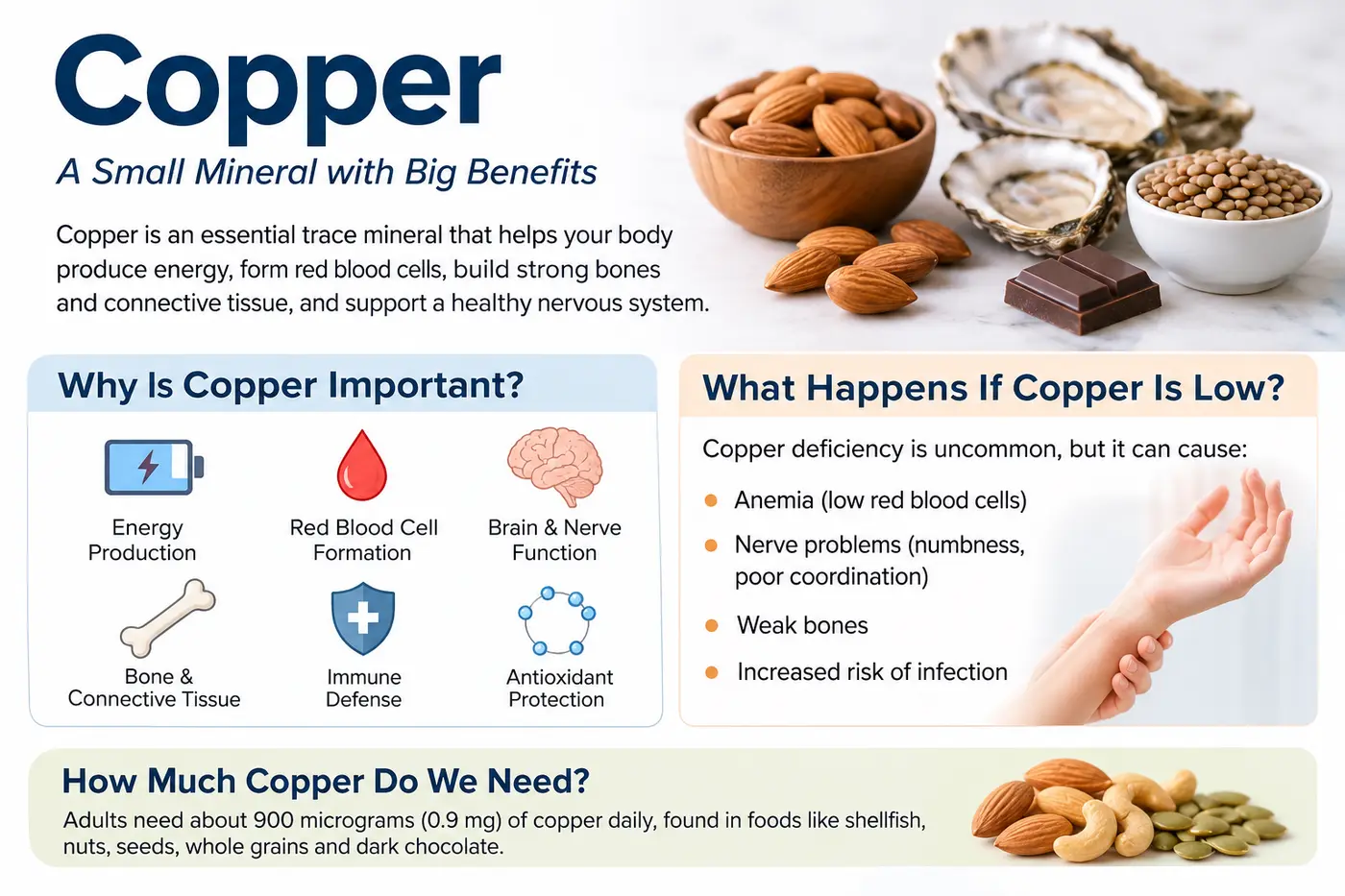
Copper Benefits: Why Is Copper Important to the Body?
Copper works mainly as a cofactor for a group of enzymes called cuproenzymes. In other words, these enzymes cannot do their jobs without it. The most important benefits of copper include:- Energy production: Copper is essential for cytochrome c oxidase, the mitochondrial enzyme that helps cells make energy (ATP).
- Iron metabolism and red blood cells: Copper-dependent enzymes move and release iron, so copper supports normal hemoglobin production and helps prevent certain types of anemia.
- Brain and nervous system: Copper helps make neurotransmitters and supports normal brain development and nerve function.
- Bone and connective tissue: The enzyme lysyl oxidase needs copper to build and stabilize collagen and elastin, which give strength to bones, blood vessels, skin and ligaments.
- Immune function: Copper supports normal immune cell activity and helps the body fight infection.
- Antioxidant protection: Copper is part of superoxide dismutase, an antioxidant enzyme that protects cells from oxidative damage.
What Happens When Copper Levels Are Low?
Copper deficiency is relatively uncommon. However, when it occurs, the consequences can be serious. For a deeper look, see our article on copper deficiency.Blood Disorders
- Anemia, which can look like iron deficiency
- Neutropenia (low neutrophil count)
- Higher risk of infection
Neurological Problems
- Peripheral neuropathy, causing numbness and tingling
- Difficulty walking and poor coordination
- Myelopathy, or damage to the spinal cord
- Symptoms that can mimic vitamin B12 deficiency
Bone and Connective Tissue Problems
- Reduced bone mineralization and osteoporosis
- Abnormal connective tissue formation
- More fragile bones
Who Is at Risk for Copper Deficiency?
- People who have had gastric bypass, duodenal switch or other bariatric surgery
- People with malabsorption disorders, including celiac disease
- Anyone taking high-dose zinc supplements, which block copper absorption
- People with poor nutritional intake, or on long-term nutritional support without enough copper
- People with rare inherited disorders of copper metabolism
Copper Benefits and Needs After Weight Loss Surgery
For example, the body absorbs copper mainly in the stomach and upper small intestine, the same areas that gastric bypass and duodenal switch bypass or change. As a result, bariatric patients need lifelong copper-containing supplements and regular lab checks. Learn more about copper metabolism and weight loss surgery and our recommended blood work and lab orders.How Much Copper Do You Need to Get the Benefits?
To get the full copper benefits, adults need about 900 micrograms (0.9 mg) of copper per day, according to the NIH Office of Dietary Supplements. Fortunately, most people get enough from food. Good sources include:- Shellfish, especially oysters
- Nuts and seeds
- Whole grains and legumes
- Mushrooms
- Dark chocolate
- Organ meats, especially liver
Can You Have Too Much Copper?
Yes. The goal is to keep copper levels normal, not simply to take more. On the other hand, too much copper can also cause harm, particularly in people with disorders of copper metabolism such as Wilson disease. For this reason, take copper supplements only as your doctor recommends. See also our article on vitamin toxicity.Conclusion: Small Amounts, Major Copper Benefits
Overall, copper shows how a very small nutritional need can have a large effect on health. Indeed, from energy production and nerve health to blood formation and strong connective tissue, copper is indispensable. Ultimately, understanding copper balance and copper benefits is an important part of protecting your metabolic, neurological and bone health, especially after weight loss surgery.Related Articles
Questions about your copper levels or supplements? Contact our office at 1-818-812-7222 to schedule an appointment. This article is for educational purposes and does not replace individualized medical evaluation.Recent Posts
- Copper: The Essential Mineral Your Body Cannot Live Without November 18, 2026
- Superior Mesenteric Artery Syndrome (SMAS) November 18, 2026
- Is Sucralose (Splenda) Bad for You? What the Science Says November 5, 2026
- Sleeve more cost effective than GLP-1 October 30, 2026
- Cholangitis: Causes, Risk Factors and Treatment May 24, 2026
Leave a Reply