Superior mesenteric artery syndrome (SMAS), also called Wilkie syndrome or SMA syndrome, is a rare cause of bowel obstruction in which the third part of the duodenum is pinched between two major blood vessels. It is very treatable once it is recognized, but because it is uncommon, many patients go months or years before anyone names it.
If you have been living with fullness after small meals, vomiting, and weight loss that keeps getting worse, this article explains what SMA syndrome is, why it happens, how it is diagnosed, and how surgeons treat it.
In short: SMA syndrome happens when the angle between the aorta and the superior mesenteric artery narrows, usually after rapid weight loss shrinks the fat pad that normally cushions the duodenum. Treatment starts with nutrition; surgery is reserved for patients who do not improve.
The Anatomy of Superior Mesenteric Artery Syndrome
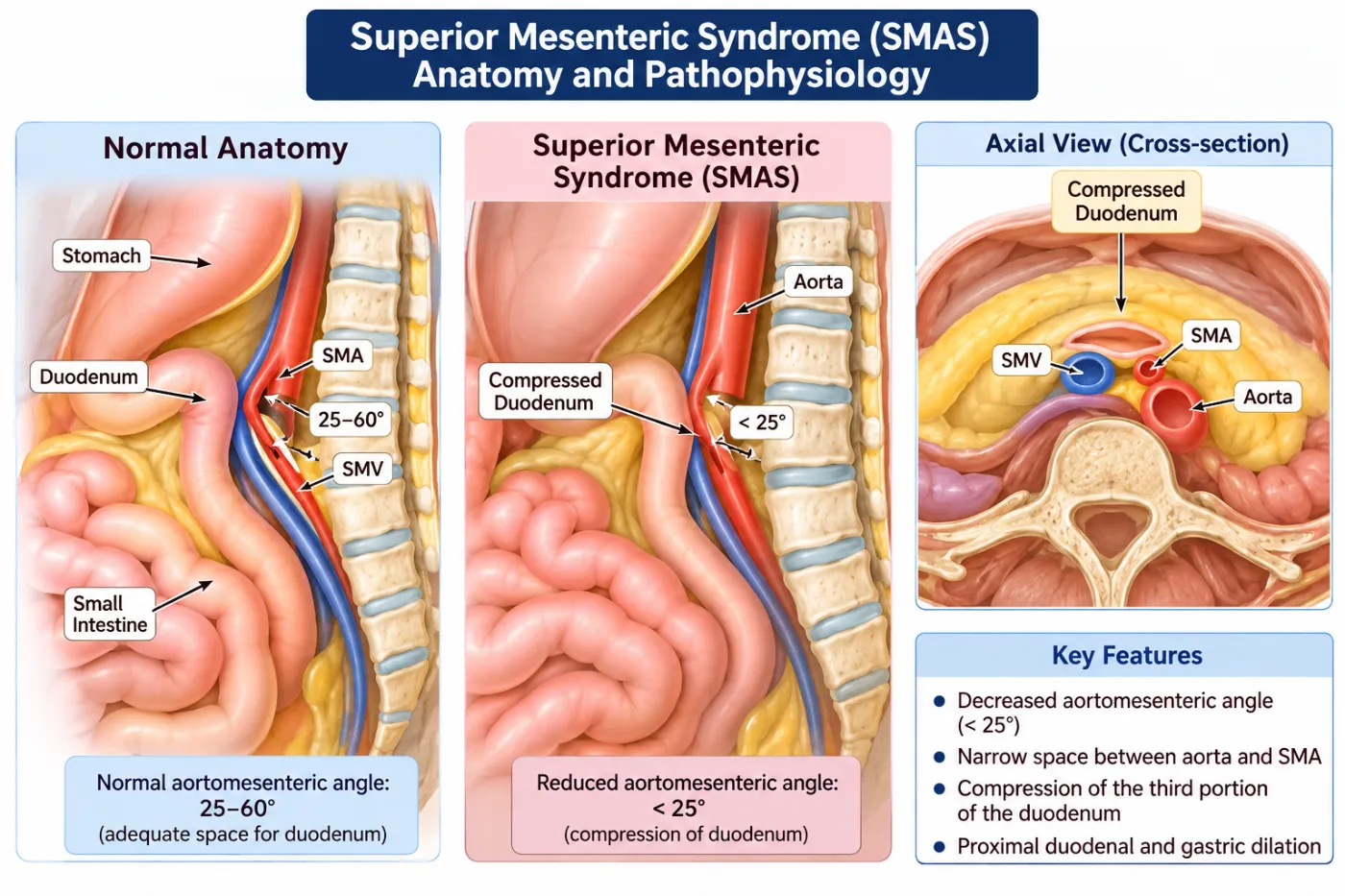
The aorta runs down the back of the abdomen, just in front of the spine. A few centimeters below the diaphragm, the superior mesenteric artery (SMA) branches forward from it to supply most of the small intestine. The third part of the duodenum, the first section of the small bowel after the stomach, crosses from right to left through the gap between these two vessels.
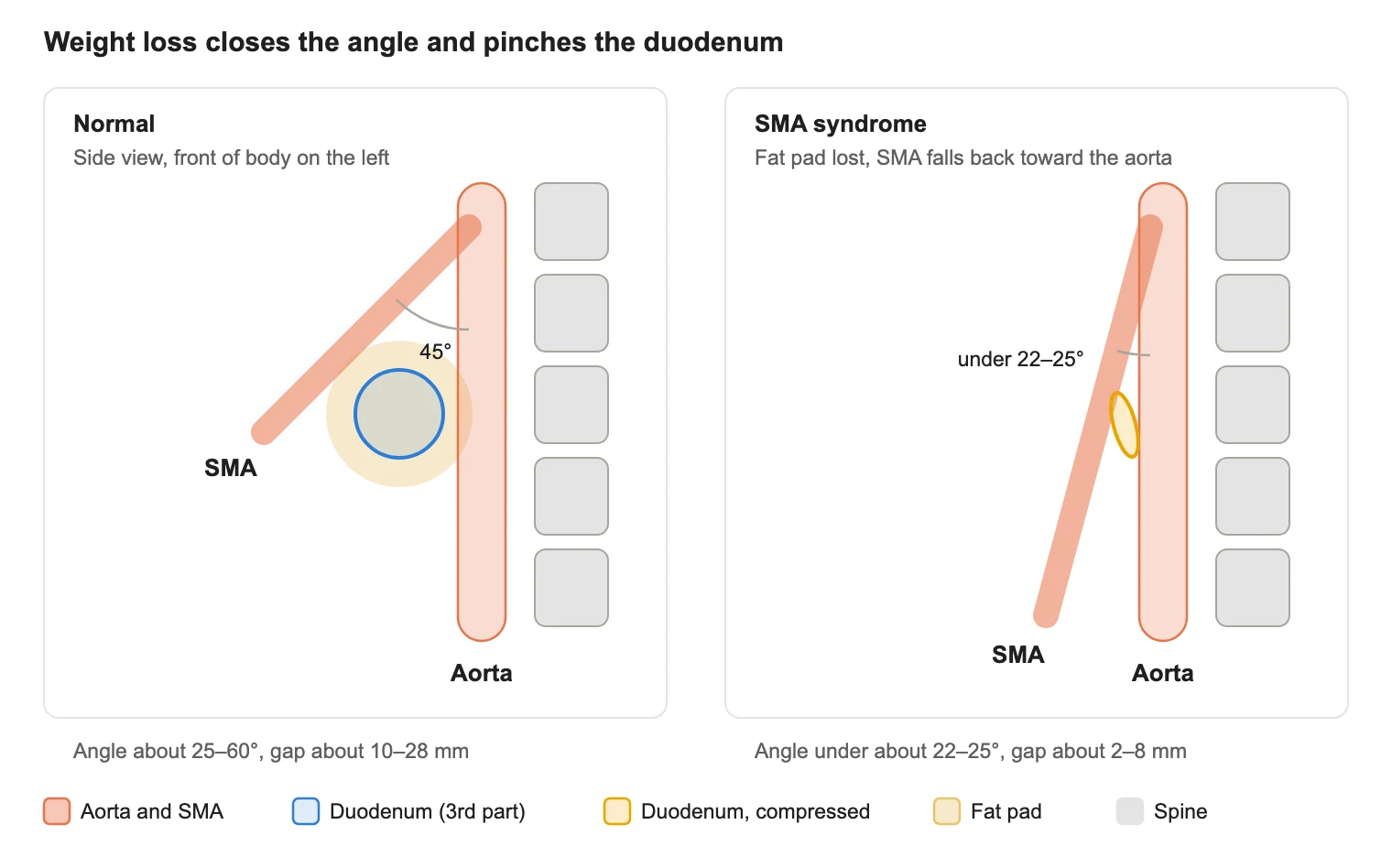
In most people, a cushion of fat and lymphatic tissue holds the SMA away from the aorta. When that fat pad shrinks, the SMA drops back toward the aorta, the angle closes, and the duodenum is compressed like a hose under a door. Food and digestive juices back up into the stomach and the first two parts of the duodenum, which stretch and dilate above the narrowing.
Normal anatomy vs superior mesenteric artery syndrome (illustrative, not to scale)
Key Facts for Clinical Interpretation
The defining feature of SMAS is compression of the third portion of the duodenum (D3) between the superior mesenteric artery (SMA) in front and the aorta behind.
Measurement
Normal
SMAS
Aortomesenteric angle
About 25–60°
Commonly below 22–25°
Aortomesenteric distance
About 10–28 mm
Commonly 2–8 mm
Typical imaging finding: dilation of the stomach and proximal duodenum, with abrupt narrowing at D3 where the SMA crosses.
Superior mesenteric artery syndrome: normal anatomy, reduced aortomesenteric angle, and axial view
What Causes SMA Syndrome?
Anything that removes the fat cushion or shifts the SMA can trigger the clinical picture. It is most common in young adults and slightly more common in women. Common triggers include:
Rapid or severe weight loss from cancer, burns, major trauma, malabsorption, prolonged illness, or bariatric surgery.
Eating disorders, particularly anorexia nervosa, where weight loss and SMA syndrome can feed each other.
Spinal surgery or casting, especially scoliosis correction, which lengthens the spine and stretches the vessels (sometimes called “cast syndrome”).
Body shape and anatomy: a tall, slender build, an unusually high crossing of the duodenum, or a short ligament of Treitz.
Prolonged bed rest in the supine position after injury or surgery.
Once symptoms start, they often worsen the cause: eating hurts, so weight falls further, the fat pad shrinks more, and the obstruction tightens. Breaking that cycle is the first treatment goal.
Symptoms of Superior Mesenteric Artery Syndrome
Symptoms can come on suddenly after a major illness or injury, or build slowly over months. They are typically worse after meals and include:
Feeling full after only a few bites (early satiety)
Upper abdominal pain or cramping, often 15 to 30 minutes after eating
Nausea and vomiting, sometimes of partly digested food or bile
Bloating and belching
Ongoing, unintended weight loss
Reflux symptoms that do not respond well to acid-reducing medication
Many patients notice that lying on the left side, lying face down, or sitting with knees pulled to the chest eases the pain. These positions let the bowel and SMA fall forward, slightly opening the angle.
Seek urgent care if you cannot keep fluids down, are vomiting repeatedly, feel dizzy or faint, or have severe abdominal pain. Prolonged vomiting can cause dangerous dehydration and electrolyte imbalance.
How SMA Syndrome Is Diagnosed
SMA syndrome is a diagnosis that needs two things together: the right symptoms and imaging that shows both the compression and a dilated duodenum above it. A narrow angle alone, in someone without symptoms, is not enough.
Test
What it shows
CT angiography or CT with contrast
The test of choice. Measures the aortomesenteric angle and distance, and shows the dilated stomach and duodenum with an abrupt cut-off where the SMA crosses.
MR angiography
Similar measurements without radiation; useful in younger patients.
Upper GI barium study
Contrast stops or slows at the third part of the duodenum, with back-and-forth movement above the narrowing.
Upper endoscopy
Rules out ulcers, tumors, or other causes of obstruction; may show a dilated duodenum with pulsation.
Doppler ultrasound
Can measure the angle and distance, but depends heavily on the operator.
On CT, an aortomesenteric angle below about 22 to 25 degrees and a distance of about 2 to 8 mm support the diagnosis when the duodenum above the crossing is dilated. These cut-offs vary slightly between studies, so clinicians should interpret the measurements alongside symptoms, not on their own.
Because eating disorders, functional dyspepsia, and gastroparesis can look similar, a careful evaluation matters. It is also worth checking for related compression syndromes, such as nutcracker syndrome and median arcuate ligament syndrome, which can occur in the same patients.
Treatment for Superior Mesenteric Artery Syndrome
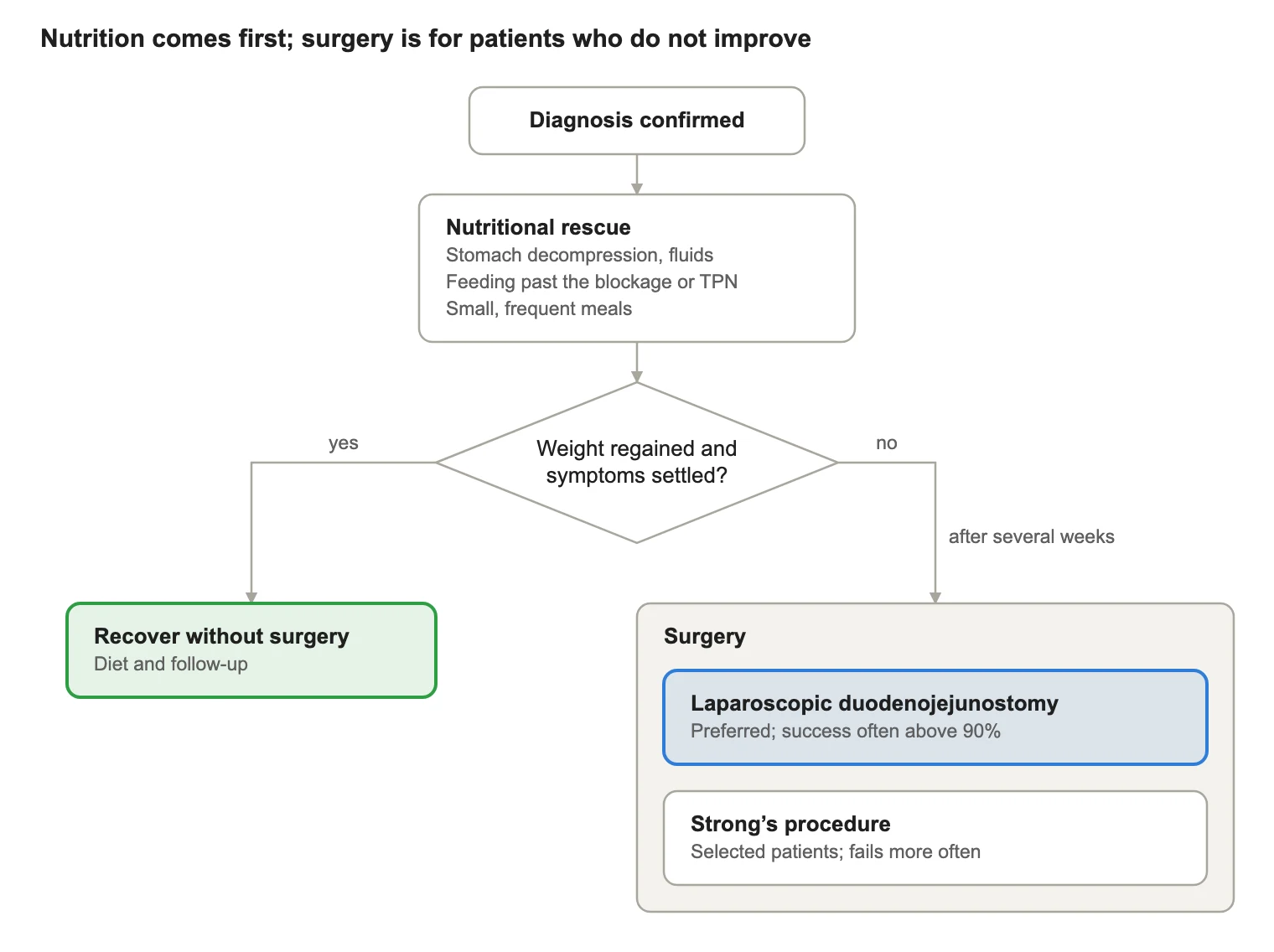
The aim is to relieve the obstruction and restore nutrition. Most patients start with non-operative care; surgery is offered when that fails or when the symptoms are long-standing and severe.
SMA syndrome treatment pathway: nutrition first, then surgery
Step 1: Nutritional Rescue
Decompression: a nasogastric tube to empty the stomach if vomiting is severe.
Fluids and electrolytes: correcting dehydration, potassium, and other imbalances.
Feeding past the blockage: a nasojejunal tube placed beyond the narrowing, or intravenous nutrition (TPN) when tube feeding is not tolerated.
Small, frequent liquid or soft meals, eaten while lying on the left side or leaning forward.
Treating the underlying cause, including specialist support for an eating disorder when relevant.
The goal is to rebuild the fat pad. As weight returns, the angle often reopens and symptoms settle. Conservative care succeeds in a meaningful share of patients, particularly when the syndrome followed a recent, identifiable weight loss.
Step 2: Surgery for SMA Syndrome
Surgery is considered when symptoms persist after several weeks of good nutritional support, when weight cannot be regained, or when the history is long and the duodenum is badly dilated.
Laparoscopic duodenojejunostomy is the most common operation and has the highest reported success rates, often above 90%. The surgeon joins the dilated duodenum directly to a loop of jejunum, creating a bypass around the compressed segment. It is usually done through small keyhole incisions.
Strong’s procedure divides the ligament of Treitz so the duodenum can drop down and away from the angle. It keeps the bowel intact but fails more often, so it suits only selected patients.
Gastrojejunostomy bypasses the stomach outlet instead; it is used less often today because it may not fully drain the duodenum.
The right option depends on your anatomy, how long you have had symptoms, and your overall health. Your surgeon will discuss the trade-offs with you.
Recovery and Outlook
Most people do well once the obstruction is relieved. After a laparoscopic bypass, patients typically start liquids within a few days, advance to soft food as tolerated, and go home when they are eating and drinking safely. Full recovery usually takes a few weeks.
A dilated duodenum can take time to regain normal movement, so some fullness or nausea may linger after surgery. Steady weight gain with a dietitian’s guidance and follow-up with your surgical team are part of recovery. Patients who also have an eating disorder or another compression syndrome do best with a coordinated team approach.
Frequently Asked Questions About SMA Syndrome
Is SMA syndrome the same as SMA thrombosis or mesenteric ischemia?
No. In SMA syndrome, the artery is healthy, and blood flow to the bowel is normal; the problem is that the artery presses on the duodenum. Mesenteric ischemia is a blockage of blood flow and is a different emergency.
Can SMA syndrome go away without surgery?
Yes, for many patients. Restoring weight and nutrition often reopens the angle, especially when the syndrome followed a recent illness or sudden weight loss.
Will the condition come back after surgery?
Recurrence after duodenojejunostomy is uncommon because the bypass works regardless of future weight changes.
Is superior mesenteric artery syndrome rare?
Yes. It occurs in a small fraction of people, and upper GI imaging is often missed, which is why it is often missed.
This article is for general education and does not replace personal medical advice. Please speak with your doctor about your own symptoms and treatment options.

Leave a Reply