
Category: Nutrition
Optimizing Pre-operative Health Status
November 12, 2014 1:23 pm
- Maintaining a healthy diet
- Cessation of ALL tobacco and alcohol use
- Do not use NSAIDS prior to surgery or after surgery until cleared by surgeon
- Getting plenty of rest
- Staying Hydrated
- Pulmonary embolus prevention exercises such as ankle circles and point and flex toes
- Maintaining or starting a regular activity level. Any amount of increase in activity will benefit you after surgery. Walking, squats, lifting weights with arms
- Full laboratory blood studies and vitamin levels as ordered by the surgeon
- Start and optimize your vitamins, calcium and other mineral and supplements. Vitamin D deficiency increases surgical complications. (Another Vitamin D article)
- Manage preexisting health conditions (diabetes, sleep apnea, high blood pressure etc..) Follow instruction in regards to what medication to stop or continue before surgery i.e. Aspirin, blood thinners, medications that interfere/interact with anesthesia, etc.
- Two forms of Birth Control if indicated.
Mental preparation:
- Have a clear understanding of the procedure
- Study all information provided to you regarding your surgery
- Remember that surgery is one of many tools to assist in weight loss and improved health. It does not fix other issues.
- Realistic expectation of the outcome of surgery
- The role of family involvement for support
- Be prepared with all the purchases for the post operative diet, vitamin and mineral supplements.
- There is also a number of other variables that will improve the long term outcome of the weight loss surgery:
- Investigate Protein Supplements for the highest bioavailability
- Try and eat whole, unprocessed foods
- Read labels on all food items
- Look for high protein recipes
- Network with supportive people who will provide a positive influence
- Long term success also depends on:
- Maintain daily protein requirements
- Maintain daily vitamins, calcium, minerals and other supplements
- Routine follow up with your bariatric surgeon.
- Routine laboratory studies to surveil vitamin and mineral levels.
- Get your medical advice from your surgeon.
- Get suggestions from other patients. Do not confuse this with medical advice.
Bloating and Excessive Gas
April 17, 2012 7:36 am
The relationship between the consumption of food, bloating, and excessive gas is a subject that comes up frequently. In our practice, this is a complaint usually raised 3 or 4 years after receiving the duodenal switch operation. It appears that patients eventually disregard the recommendations made for a healthier diet of low carbohydrate, high protein, hydration, supplements, and then everything else.
In general, carbohydrates, carbonated drinks, artificial sweeteners (such as Splenda®, sugar alcohols, etc.), vegetables, excessive amounts of food, and an intake of fat will cause significant gas and bloating. This is not to be taken out of context and assumed that one cannot consume any of these products. However a diet that has fruits and vegetables will cause significant gas and bloating. These can not be controlled by probiotics, antibiotics, or other products such as Beano.
Simple carbohydrates/sugars (sugar, candy, cakes, cookies, pies, regular soda pop, jelly, jam, syrup, ice cream, sherbet, and sorbet, etc.) are easily absorbed. Simple carbohydrates/sugars can increase diarrhea due to the Duodenal Switch allowing more undigested sugars/fuel for intestinal bacteria to feed upon, multiply and form gas. The end result can be gas, bloating, and diarrhea.
Complex carbohydrates have more structure than simple carbohydrates/sugar which are harder for the intestinal bacteria to break down and may cause less bloating, gas and diarrhea. Also, complex carbohydrates usually contain higher fiber content. The fiber in the colon will help to absorb water from the stool and can reduce diarrhea. However, this is not the case for all Duodenal Switch patients.
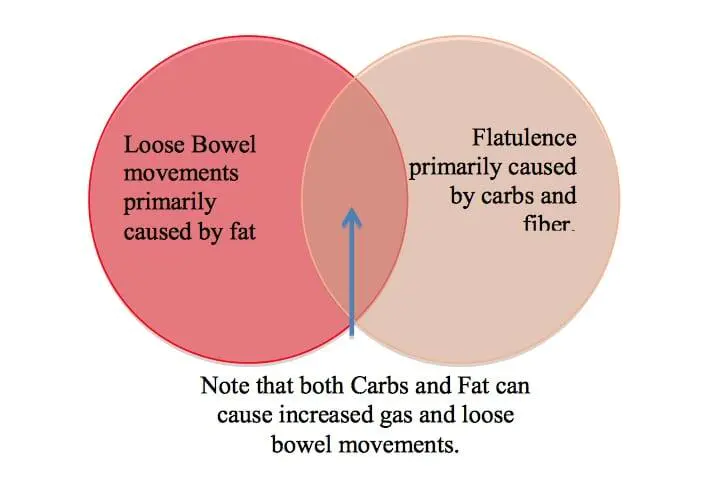
When a patient reports these problems, I recommend that the consumption of all carbonated drinks should be stopped. No patient should consume carbonated drink of any sort. Artificial sweeteners should also be avoided all together. A good alternative would be honey, maple syrup or Stevia. Minimize or reduce the carbohydrate intake.
It has been our experience in the majority of cases that excessive gas and bloating is a result of dietary indiscretion. In some patients, once the dietary sources have been ruled out, it should be further evaluated by a barium enema to rule out the diagnoses of a redundant colon.
The best approach would be to first go back to a high protein and low carbohydrate. This should allow a patient to rule out any dietary sources for the bloating and excessive gas. It is recommended to next be seen by your physician for a further workup.
To summarize, when a patient has excessive amount of gas, diarrhea and bloating, the first line of treatment is elimination of all of the possible causes. These include carbohydrates, fruits, vegetables, artificial sweeteners, carbonated drinks and milk products. I can not overemphasize the importance of this step prior to anything else such as antibiotics or probiotics.
Nutritional Deficiencies
January 14, 2012 8:23 am
Why am I hungry? A look at how hormones regulate our appetite?
November 17, 2011 9:21 pm
One of the main reasons why humans become hungry is because of the hormone ghrelin. Ghrelin is primarily secreted by the stomach, which responds to hunger and starvation. Once ghrelin gets into the blood, it circulates the body until it reaches the Vagus nerve, which sends a signal to your brain that tells you “I am hungry!” Actually, for people who have had their Vagus nerve divided (a Vagotomy), ghrelin no longer has a significant impact on hunger. This finding suggests that the Vagus nerve and ghrelin are needed for maximum stimulation of hunger. Also, ghrelin containing neurons are found in the arcuate nucleus, a region of the brain that regulates appetite. In order to stimulate hunger, these neurons send signals to other neurons that contain neuropeptide Y (NPY), which stimulates hunger. However, if the body wants to suppress hunger, it will send signals to neurons containing proopiomelanocortin (POMC). (i)
Now that we know a little about how ghrelin makes us hungry, lets see how the hormone leptin makes us full. Leptin is made in the fat cells (adipose tissue) of our body. The way leptin regulates hunger is by stimulating or not stimulating nerves in the brain. Just like ghrelin, leptin acts on the arcuate nucleus. When leptin is not present, NPY causes us to be hungry. When leptin levels are high, they block NPY and stimulate POMC nerves in the brain that make us full. However, one might ask, if we have more fat cells that produce leptin, why are we still hungry? The answer is that many obese individuals have genetic defects that block the function of leptin. The other is that too much leptin can cause negative feedback to fat cells, which tell the body “hey we have too much leptin, stop making it.” (ii)
Although the exact mechanisms of how ghrelin and leptin work are extremely complex, we see that the three main responses that are contributed to the presence of ghrelin (iii) (iv) are:
- Stimulation of appetite
- Reduction of metabolism
- Reduction of fat catabolism (fat breakdown)
In contrast to ghrelin, leptin’s main responses are:
- Suppression of appetite
- Increase in metabolism
- Increase immune function
The following table summarizes the information on ghrelin and leptin, its relationship with other GI hormones, and its levels after Sleeve Gastrectomy. (v)
| Hormone | Source | Mechanism of action in Obesity | Effect on Weight regulation | Levels after Sleeve Gastrectomy |
| Ghrelin | Stomach Fundus (mainly), Pancreas, small intestine (vi) | Stimulates Growth Hormone release, stimulate NPY, inhibits POMC, and opposes Leptin action | Stimulates Appetite, Reduces metabolic rate, and reduces fat catabolism (breakdown) | Reduced |
| PYY (peptide tyrosin tyrosine) | Is released by endocrine cells of distal ileum, colon, and rectum(vii) | Binds to NPY receptors, inhibits gastric motility, increases water and electrolyte absorption in the colon (vii) | Reduced appetite | Increased |
| Leptin | Fat cells (adipose tissue) | Inhibit NPY and activates POMC | Suppress Appetite | Reduced |
By: Chris Tashjian BS – Ara Keshishian MD, FACS, FASMBS
(i) Sato T, Nakamura Y, et al. Structure, regulation, and function of Ghrelin. Journal of Biochemistry. Oct 31, 2011.
(ii) Friedman JM, Halaas JL. Leptin and the regulation of body weight in mammals. Nature. 1998 Oct 22; 395 (6704): 763-70
(iii) Le Roux CW, Aylwin SJ, Batterham RL, et al. Gut Hormone profiles following baraitric surgery favor an anorectic state, facilitate weight loss, and improve metabolic parameters. Ann Surg. 2006; 243:108-114.
(iv) Hansen TK, Dall R, Hosoda H. et al. Weight loss increases circulating levels of ghrelin in human obesity. Clin. Endocrinology 2002; 56:203-206
(v) Melissa Gianos, et al. Understanding The Mechanisms of Action of Sleeve Gastrectomy on Obesity. Bariatric Times 8;5: S4-S6 (Supplement)
(vi) Ariyasu H, Takaya K et al. Stomach is a major source of circulating ghrelin, and feeding state determines plasma ghrelin-like immunoreactivity levels in humans. J Clin Endrocrinology Metabolism. 20001;86:4753-4758
(vii) Liu CD, Aloia T, et al. Peptide YY: a potential proabsorptive hormone for the treatment of malabsorptive disorders. American Journal of Surgery. 1996 Mar; 62(3) 232-6.
What is Real Hunger?
Zinc
January 01, 2011 1:39 pm
Benefits of Zinc
– Plays a role in immune function, protein synthesis, wound healing, DNA synthesis, and cell division. – Plays an important role in the immune system, which may explain why it is helpful in protecting against infections such as colds. – Plays a role in the regulation of appetite, stress level, taste, and smell. – It is essential for normal growth and development.Best Absorbed Form
Chelated zinc gluconateTake With
Take with food if needed, zinc can be hard on your stomach.Don’t Take With
Iron, copper, phosphorus, magnesium or calcium When zinc is combined with certain foods it may not be absorbed into your body. Avoid the following foods for approx 2 hours after you take zinc: bran, fiber-containing foods, whole-grain breads and cereals, and phosphorus-containing foods such as milk or poultry.Information on Zinc
Zinc is an essential trace mineral, which means that it must be obtained from the diet since the body cannot make enough. A daily intake of zinc is required because the body doesn’t have a zinc storage system. Zinc is eliminated in stool and is dependent on fat for absorption. [55] As a result it can be assumed that due to the larger and more frequent stools following DS increase zinc loss, and thus increase supplement requirements. [66] Research has shown that less than 50 mg a day is a safe amount to take over time. There has not been a lot documented on what happens if more is taken over a long period. Taking more than 150 mg per day may interfere with the body’s ability to use other minerals. [67]Relationship Between Zinc and Copper
A strong relationship exists between zinc and copper. Too much of one can cause a deficiency in the other. Long-term use of zinc (including zinc in a multivitamin) should be accompanied by copper. For every 15 mg of zinc, include 1 mg of copper. [67] High doses of zinc may lower HDL (“good”) cholesterol and raise LDL (“bad”) cholesterol. This may be due to a copper deficiency brought on by the long-term use of zinc. [67] Copper is also needed to help your body use iron.For More Information on Zinc
www.drugs.com University of Maryland Medical Center National Institute of HealthProbiotic
November 12, 2010 7:58 pm
The term “probiotic” is getting much attention in professional circles as well as in the advertising media but is still poorly understood by many. The term describes beneficial bacteria that are added to our diet to help populate our digestive system with a healthy population of good bacteria. It is becoming ever clearer that a healthy population of bacteria is very important for our overall health. Our gut is the most intimate contact between the interior of our body and the outside world much as our skin is. The gut must remain permeable to nutrients which we absorb from foods yet impermeable to invading bacteria and viruses. The bacterial population of our gut plays important roles in both of those functions. It is also very important in the function of our overall immune function. I will leave that for another time. The purpose today is to discus the use and function of probiotic products.
The human gut is populated by tens of billions of bacteria of a yet to be discovered number of species. In excess of six hundred have already been isolated and identified. Some of these species are beneficial, some are harmful and some are a bit of both. Unfortunately modern society tends to have a negative impact on the health and balance of the members of the probiotic population. Chlorinated water, antibiotics both as medications and in our food and even our food choices can cause an imbalance in this population. When this balance is severely disrupted it is termed “Disbiosis”. A disbiotic gut is not a happy thing. We perceive this disbiosis as digestive symptoms of some sort. We may have gas and bloating, constipation or diarrhea, or even both or all of the above. One of the unfortunate aftereffects of having bariatric (weight loss) surgery is it can allow the gut to become disbiotic more easily.
In the DS gut food reaches the large intestine far more nutrient rich than in the “normal” gut. This provides the population of bacteria living there much more food. Given more food the population can flourish. If this population is out of balance it is even more sensitive to poor food choices thereby making the symptoms of this imbalance even worse. This is why the DS patient needs to make prudent food choices and may well enjoy great benefit from proper doses of high quality probiotic products containing the correct species.
The problem is that not all probiotic products are what they say they are and not all probiotic products have the same species. Add to that the fact that each gut is individual. We may need to do some experimentation to find the right combination of dose and product.
Some people have what I term a McDonald’s mentality. A Big Mac in one town is exactly the same as one from a different town or, as another example, a gallon of Shell unleaded gasoline is essentially the same as a gallon of gas from the Chevron station. This is not the case with probiotic products. Some products contain only one species and some contain thirteen or more. These various species, with one exception fall, into two large groups these are Lactobacillus species which predominate in the small intestine and Bifidobacterium species which predominate in the large intestine. The one exception is actually not a bacterium at all but rather a specific yeast. This yeast is very important and beneficial. It is called Saccharomyces boulardii. Some patients have reported good results with single species products such as Align (B. infantus), Culturelle (L. rhamnosus) or Floristor (S. boulardii). My feeling is that these products are overly expensive as they are heavily advertised and that cost is built into the price. They also tend to be rather low dose.
We also need to address the correct dosage. It is important to read the label. Minimum “therapeutic” dosage is thought to be 20 billion colony forming units (CFU’s). I personally am using 50 billion CFU’s per day as maintenance. I have taken as much as 200b CFU’s per day. I am also aware of research going on that also is looking at similarly high dosage.
I think a good product to start with is “Primal Defense Ultra”. Make sure it is the “Ultra” as it is the stronger blend. It is reasonably priced and contains a total of 13 species including the very important S. boulardii. For DS patients experiencing a disbiosis creating very foul flatus and stool. This species as an ingredient is very important. The S. boulardii has very specific activity against some of the nastiest bad guys in our gut such as Clostridium difficile, Candida albicans and even Entameba histolytica and Giardia lamblia which have been shown to enhance the effectiveness of conventional therapy for these conditions. In less severe cases the probiotics alone may be sufficient to correct the disbiosis but more severe cases antibiotic therapy may be indicated.
As stated previously the dosage needs to be sufficient. Three caps per day of Primal Defense Ultra (PDU) is a commonly used dose. This provides a total of 45b CFU’s with 12b of that total as S. boulardii. This was the dose used in a recent case study looking at DS patients with recurring frank C.diff treated with antibiotic and S. boulardii. Statistically very significant benefit was shown.
Also as stated previously every gut is different. Some may do well on small doses and some may need more. Every patient needs to find the dose that works for them. We need to start slowly and work up. Some increase in gas and bloating may occur. Once the disbiosis is improved patients can experiment with different blends. It is suggested that there be several species of both the lacto and bifido groups. The only allergic reaction I have heard of is one patient who developed a slight rash which subsided after lowering the dose. You can find this is most health food stores but it is a much better deal on line. Typically about 90 caps for $37 vs. 218 caps for about $50. General rule of thumb is that the refrigerated brands are superior to the less expensive freeze dried ones. But, many do well with the less expensive brands. Again, you need to experiment.
Also as stated prudent food choices are extremely important. Things like lean protein, complex carbohydrates and whole grains. Avoidance artificial sweeteners and simple sugars and white flour are all prudent decisions.
By: David Caya, DC
Protein
October 23, 2010 6:33 am
Complete vs. Incomplete Protein
There are 20 amino acids that are the building blocks for all protein. The body can make eleven of them (non essential) and the remaining nine need to be taken in, which come from the diet (essential). Complete protein sources contain all the amino acids needed to build new proteins. Animal protein sources (meat, fish, poultry, milk, cheese, and eggs) are usually complete. Gelatin is the only incomplete animal protein. Soybeans are the only plant protein considered to be a complete protein. [37] Proteins lacking one or more essential amino acids are called incomplete proteins. Beans, grains, nuts, fruits and vegetables tend to be incomplete proteins. Incomplete proteins can be combined (by consuming different protein sources) to make complete protein. It was believed that these foods had to be eaten at the same time in order to be used by the body to build protein. Studies now show that the body can combine complementary proteins that are eaten within the same day. [38] Examples of combining incomplete proteins include: macaroni and cheese; yogurt with granola; peanut butter and toast. A patient needs a daily supply of amino acids to make protein because the body doesn’t store amino acids like it does fats or carbohydrates. If protein is not consumed in the diet, the body will use the only available source – muscle tissue – to get what it needs. Less muscle tissue further contributes to a slowed metabolism, and reduced fat-burning.Recommended Dietary Allowance (RDA) for Protein
The Institute of Medicine recommends that adults get a minimum of 0.8 grams of protein for every kilogram of body weight per day, for an unstressed body, to keep the body from slowly breaking down its own tissues [39]. That’s about 8 grams of protein for every 20 pounds of body weight. RDA of protein for women ages 19-70 is 46 grams per day. [39] RDA of protein for men ages 19-70 is 56 grams per day. [39] It has been estimated that Duodenal Switch patients’ malabsorption is 40% of their protein intake. As a result, surgeons generally recommend a daily protein intake of 80-120 grams to their post-op patients. [41-43], [51] The additional protein is also required any time the body is stressed above the baseline. This includes any illness, trauma, injury and post surgical state.Protein Content in Food

Protein Supplements
For most post-operative patients, after DS, it may be nearly impossible to get the required protein in by the means of meals. If patients are not able to get their daily protein requirements through their diet they should use protein supplements. Supplemented protein is bio available and is absorbed extremely quickly. Look for protein supplements that are low in carbohydrates. There are numerous protein supplements available commercially and IT is best to rotate the types of protein used.Myth or Fact: Can 30 grams of protein be absorbed at a time?
Does a person with an unaltered anatomy only absorb 30 grams of protein at a time? There is some scientific data to support this position. However it requires extrapolation of data. In a study [73] that when two groups of patients were given two different amounts of protein (30 grams and 90 grams), the amount for protein utilization as indirectly measured by muscle production (reflecting the ability to absorb protein and utilize it) did not increase or correlate with the amount of protein taken. The study concluded that it is probably more important to consume small volumes of protein more frequently versus a few meals with large protein content.Bioavailability of Protein Types
Bioavailability refers to the protein’s ability to be used by the body and it is measured by Biological Value (BV). The higher the BV, the more bioavailable the protein. The BV numbers below demonstrate how easily the body (pre-DS) can absorb these protein types. The last few protein types mentioned on the list would need to be blended to make a complete protein. Whey blended products, BV 100-159 Whey, BV 104 Egg, BV 100 Cow’s milk, BV 91 Egg white, BV 88 Beef, BV 80 Fish, BV 79 Chicken, BV 77 Casein, BV 77 Soy, BV 74 Potato, BV 71 Rice, BV 59 Wheat, BV 54 Beans, BV 49 Peanuts, BV 43 Post DS patients need to keep in mind that they do not absorb protein from food as well as an individual with a un-altered GI anatomy. Pre-digested (hydrolyzed) protein supplements (like whey) are more highly absorbed and help our bodies get the proper nutrients we need. Make sure the protein powder or drink states that it is pre-digested or hydrolyzed, and the best kind of protein would be a whey blend protein. Second best would be a 100% whey protein. Isolates, though good for a quick acting pick-me-up, are not sufficient alone for post-op DS patients on-going maintenance requirements.Protein Supplement Recommendations
Protein supplement preferences vary person to person. If possible try samples of the supplement before investing in a large container. Also, your tastes before and after surgery may differ, so wait until you are post-op before sampling. When post-op Duodenal Switch patients were asked about their favorite protein shake here are the overwhelming reported top 3 and how the nominators make it. Champion Nutrition Pure Whey Stack Chocolate – Put 1.5 scoops in 4-5 oz. water, shake well, and serve over ice. – Simply mix it with a fork with cold water and add ice. – In a blender mix 1 cup of milk or water, 1 heaping tsp of instant coffee, 2 scoops of protein powder, 4 ice cubes. – Mix it with ice and water, or ice and soy milk in a magic bullet for a shake! – Shake 6-8 oz. water Champion Nutrition Pure Whey Stack Banana Scream – Milk, whole banana, ice = Milk Shake. – Put 1.5 scoops of protein in 6oz Lactaid Milk, blend well in Magic Bullet, and serve over ice. – 2 scoops powder, 2 c. crushed ice, 1 c. half & half – all whizzed up to milkshake consistency in my blender. IDS Multi-Pro Whey Vanilla-Cinnamon – Mix slurry 1 1/2 scoops of protein powder in 4 oz. of cool water and 2 oz. of 1/2 & 1/2. Pour hot coffee into the slurry and stir. – A “glop” of DaVinci sugar free caramel sauce + 8 oz. water + ice, blended. – 1/2 cups half & half, 1/2 cup Oregon Chai Tea (I use slightly sweet but there is also sugar free), 1 scoop IDS Cinnamon Vanilla. Heat half & half with Oregon Chai until luke warm. Stir in powder, heat in 20 seconds intervals until hot. For Vitalady’s Protein Comparison Chart: Protein Comparison ChartCarbohydrates
October 23, 2010 6:31 am
A DS Carb Primer
By Kelly L. All carbohydrates (carbs) begin digesting in the mouth when it comes in contact with the enzyme amylase. Even complex carbs begin the process of breaking down into simpler types at this point. Since monosaccharides need no further digestion to be absorbed, the body begins absorbing, a very small percentage of the total, them as soon as they hit the mouth. Enzyme activity continues in the stomach but it is slowed by the contact with stomach acids. When carbs enter the small intestines this is where DS may assist in preventing some absorption of the more difficult to digest polysaccharides (starches). This reduced absorptive capacity is because of the separation of the secreted enzymes by the pancreas and the liver, from the food that is being delivered for breakdown. A type of enzyme, amylase, is secreted by the pancreas into the duodenum that cuts carbs down into simple sugars. As it passes further, more enzymes break the carbs down into even smaller bits until they are eventually converted to glucose and absorbed by the mucosa lining, villi, of the small intestinal walls. Because of the switch portion of the DS, the amount of time that a polysaccharide is in contact with pancreatic enzymes is reduced. This is probably why many people have gastrointestinal issues when eating starches. Also, glucose is absorbed by the villi in the intestine, so those with shorter common channels and those earlier out will also absorb less. As the body adjusts to the DS, a patients villi becomes thicker and more efficient to counteract the malabsorption; this may be a component of some weight regain years after DS.Carbs and Gas
By Diana C. Fruits comprise simple carbs (primarily fructose, which is a monosaccharide and doesn’t have to be digested at all) so they are fully absorbed in the small intestine, and fiber, which is indigestible by both our guts and our bacterial symbionts. Flour products contain starches, which are made up of long chains of monosaccharides — thus, polysaccharides — which are only partially digestible by our rearranged guts with the diminished contact with digestive enzymes. This results in some of the starch ending up in the colon where it is digested by our bacterial symbionts to produce gas. The more whole grain-y the complex carbs we put in our guts, the higher the fiber (indigestible) to starch ratio, and the less likely to cause issues. Other things that cause gas are specific starches that are indigestible in our guts, which our colon bacteria are happy to process, such as raffinose, inulin (the offensive starches in beans, broccoli, etc.) and retrograded starch, which is caused by cooking then cooling of amylose. The primary starch in white flour products, which produces a form of amylose is indigestible in our small intestine, but can be digested by our colon bacteria. This of course is a worse problem for DS patients who digest starches even less than others. For more information on gas and flatulence-producing foods: Natural Gas: Myths and FactsMore Information on Carbohydrates
Artificial Sweeteners and Cancer: Questions and AnswersOmega Fatty Acids
September 22, 2010 12:24 am
Fatty acids are a byproduct of fat metabolism. These are acids that are produced when fat is broken down in our body. Fatty acids are important in a number of metabolic functions in our body. They help move oxygen, keep skin healthy, prevent aging at a cellular level, promote weight loss by promoting cholesterol processing by the body, and prevent build up of plaques in blood vessels. Examples of different types of Omega fatty acids are Omega-3, Omega-6, and Omega-9.
Omega-3 and Omega-6 fatty acids are essential fatty acids (EFA) because unlike other fatty acids, our body is not able to make them. Omega-9 fatty acids can be produces in out body.
These EFA are involved more specifically in regulation of blood pressure, cardiovascular health and others.
I have looked and have not found any studies regarding any relationship (positive or negative) associating Duodenal Switch and Omega Fatty acids.
I would however make some educated guesses here: The fact is that the lipid profile improves significantly with the duodenal switch operation is known. The duodenal switch operation can be performed with limited or not gastrectomy to correct significant lipid disorders that are either non responsive to medical treatments, or in cases where the side effect of statin medications are debilitating.
With this known, I would guess that even if the Omega fatty acids are not absorbed as well at least some of the beneficial effects are not lost. I would recommend that a healthy diet be used to assure adequate absorption of EFA.
What is Strontium – What are BiphosphonatesExclusive Member Content
September 21, 2009 9:07 pm