
Home » medications
Tag: medications
Medication Absorption After Weight Loss Surgery
March 30, 2020 8:01 am
Weight loss surgical procedures, in one form or another, achieve the desired effect of weight loss by altering absorption of fat, protein, and carbohydrates. This results in decreased total absorption of required calories.
An unintended consequence is the altered absorption of medications. Frequently I am asked about the specific medication. Usually the answer is vague since the information is limited on specific medications. If the desired effect is not achieved, then it is probably not being absorbed well. Specially, if the same dose of the same medication working well before surgery.
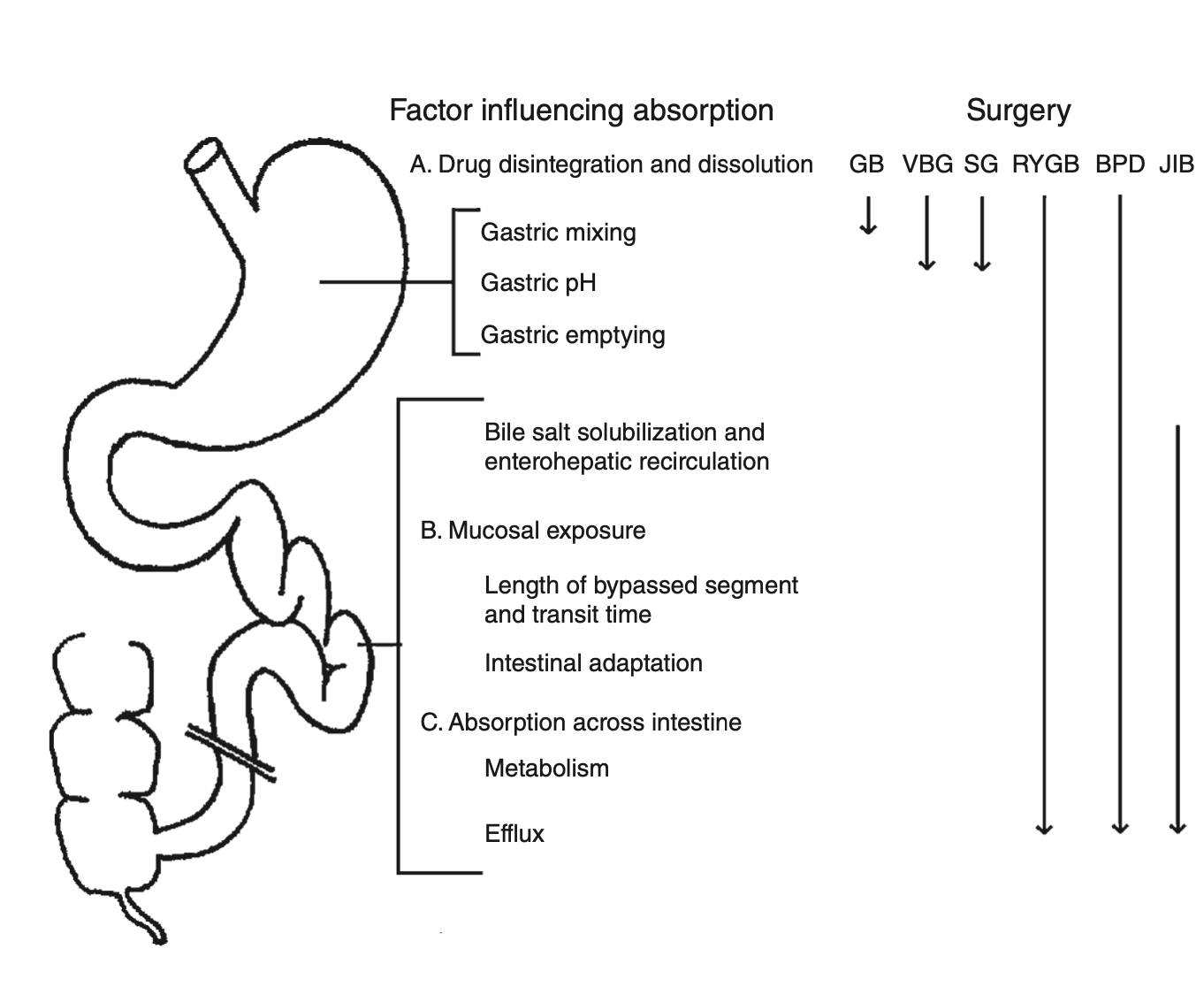
There is a summary article about the Theoretical absorption pattern of different weight loss surgical procedures.
Why Medications Absorb Differently After Surgery
- Less stomach acid: some medications need acid to dissolve.
- Less intestine for absorption: procedures like the duodenal switch and gastric bypass bypass part of the small intestine.
- Faster transit: medications may pass through before they are fully absorbed.
- Fat malabsorption: medications that are absorbed with fat may be absorbed less.
Medications That Often Need Attention
- Extended-release tablets may pass through before they release the full dose. Immediate-release forms are often preferred.
- Thyroid medication doses often need adjusting.
- Blood thinners such as warfarin need closer monitoring.
- Psychiatric medications, including antidepressants and lithium, may need dose changes.
- Birth control pills may be less reliable, so a non-oral method is usually recommended. See our article on birth control after weight loss surgery.
- Diabetes and blood pressure medications often need to be reduced as you lose weight.
Practical Tips
- Bring an up-to-date list of all your medications and supplements to every appointment.
- Ask your doctor or pharmacist whether a liquid, chewable or immediate-release form would work better.
- Never crush or split extended-release medications without checking with your pharmacist.
- Ask whether blood levels should be checked for medications that have a narrow safe range.
- Avoid NSAIDs unless your surgeon approves them.
Related Articles
Questions about your medications after surgery? Contact our office at 1-818-812-7222 to schedule an appointment.
- Copper: The Essential Mineral Your Body Cannot Live Without November 18, 2026
- Superior Mesenteric Artery Syndrome (SMAS) November 18, 2026
- Is Sucralose (Splenda) Bad for You? What the Science Says November 5, 2026
- Sleeve more cost effective than GLP-1 October 30, 2026
- Cholangitis: Causes, Risk Factors and Treatment May 24, 2026