
Post Op Dietary Regimen
October 23, 2008 3:20 am
How Fatty Foods Curb Hunger
October 20, 2008 12:19 am
Fatty foods may not be the healthiest diet choice, but those rich in unsaturated fats – such as avocados, nuts and olive oil – have been found to play a pivotal role in sending this important message to your brain: stop eating, you’re full.
A new study by UC Irvine pharmacologists shows that these fats trigger production of a compound in the small intestine that curbs hunger pangs. This discovery, the researchers say, points toward new approaches to treating obesity and other eating disorders. Daniele Piomelli, the Louise Turner
Arnold Chair in Neurosciences, and his colleagues have studied how a fat-derived compound called oleoylethanolamide regulates hunger and body weight. In their current work, which appears in the Oct. 8 issue of Cell Metabolism, they found that an unsaturated fatty acid called oleic acid stimulates production of OEA, which in turn decreases appetite.
Oleic acid is transformed into OEA by cells in the upper region of the small intestine. OEA then finds itsway to nerve endings that carry the hunger-curbing message to the brain. There, it activates a brain circuit that increases feelings of fullness. In previous studies, Piomelli found that increasing OEA levels can reduce appetite, produce weight loss and lower blood cholesterol and triglyceride levels. Piomelli believes OEA could be used in a variety of drugs because it is a key to the way the body naturally handles fatty foods and regulates eating and body weight. “We are excited to find that OEA activates cell receptors that already have been the focus of successful drug development,” he said. “This gives us hope for a new class of anti-obesity drugs based on the savvy use of natural appetitecontrolling mechanisms.”
Nearly 30 percent of Americans are obese, according to the Centers for
Disease Control and Prevention, which has declared obesity an epidemic disease. The occurrence of obesity has risen by almost 60 percent since 1991, and it greatly increases the risk of premature death, diabetes, heart disease, stroke and some cancers.
Piomelli’s study colleagues include Jin Fu and Giuseppe Astarita of UCI; Gary Schwartz and Xiaosong Li of Yeshiva University; and Silvana Gaetani, Patrizia Campolongo and Vincenzo Cuomo of the University of Rome. The National Institutes of Health, New York Obesity Research Center, the Skirball Institute of Biomolecular Medicine and the Italian Ministry of Research supported the study.
Eating almonds significantly decreased levels of two biomarkers for oxidative stress in a group of 27 male and female volunteers with elevated cholesterol. The study was conducted by scientists funded by the Agricultural Research Service, the Almond Board of California, and the Canada Research Chair Endowment.
Coauthor Jeffrey Blumberg is director of the Antioxidants Research Laboratory at the Jean Mayer USDA Human Nutrition Research Center on Aging (HNRCA) at Tufts University in Boston, Mass. He and colleagues reported the findings from this study in the Journal of Nutrition. HNRCA scientists analyzed blood and urine samples from the subjects who had consumed three different dietary treatments, consisting of the same amount of calories each, for one month. The study was a cross-over, randomized clinical trial, so eachsubject received each treatment in random order.
Treatments consisted of a “full dose” of almonds, defined as 73 grams daily (about 2.5 ounces), a “halfdose” of almonds plus a half-dose of muffins, and a full-dose of muffins as a control. The subjects consumed a low-fat background diet and were counseled on strategies to maintain weight and to consistently follow their usual exercise routines throughout each test phase.
The researchers wanted to investigate possible antioxidant effects from eating almonds. The team found that when the volunteers ate the full dose of almonds, their concentration of two biomarkers of oxidative stress– plasma malondialdehyde (MDA) and urinary isoprostanes–were significantly lowered. MDA decreased by nearly 19 percent compared to the start of the study in the full-dose almond group. Isoprostane decreased by 27 percent in both the almond groups when compared to the control period, suggesting a possible threshold effect for that biomarker. While this study helps to show the antioxidant benefit of eating almonds, further research is needed to shed light on the individual contributions of vitamin E and polyphenolic constituents, such as flavonoids, found in almonds and other tree nuts. The study did not demonstrate a minimum amount of dietary almonds that would result in a biological effect.
Flatulence – ‘Rotten Egg’ Gas
October 13, 2008 9:12 pm
Anyone with a nose knows the rotten-egg odor of hydrogen sulfide, a gas generated by bacteria living in the human colon. Now an international team of scientists has discovered that cells inside the blood vessels of mice — as well as in people, no doubt — naturally make the gassy stuff, and that it controls blood pressure.
Having discovered that hydrogen sulfide, or H2S, is produced in the thin, endothelial lining of blood vessels, the researchers, including scientists from Johns Hopkins, now report in Science that H2S regulates blood pressure by relaxing blood vessels. As the newest member of a family of so-called gasotransmitters, this messenger molecule is akin in function, if not form, to chemical signals like nitric oxide, dopamine and acetylcholine that relay signals between nerve cells and excite or put the brakes on mind-brain activities.
“Now that we know hydrogen sulfide’s role in regulating blood pressure, it may be possible to design drug therapies that enhance its formation as an lternative to the current methods of treatment for hypertension,” says Johns Hopkins
neuroscientist Solomon H. Snyder, M.D., a co-author of the paper. Conducting their investigations using mice missing a gene for an enzyme known as CSE, long suspected as responsible for making H2S, the researchers first measured
hydrogen sulfide levels in a variety of tissues in the CSE-deficient mice and compared them to normal mice. They found that the gas was largely depleted in the cardiovascular systems of the altered mice, engineered by Rui Wang, M.D., Ph.D., of Lakehead University in Ontario, and Lingyun Wu, M.D., Ph.D., of the University of Saskatchewan, Canada. By contrast, normal mice had higher levels — clear evidence that hydrogen sulfide is normally made by mammalian tissues using CSE. Next, the scientists applied tiny cuffs to the tails of the mice and measured their blood pressure, noting spikes of about 20 percent, comparable to serious hypertension in humans.
Finally, the team tested how blood vessels of CSE-deficient mice responded to the chemical neurotransmitter methacholine, known to relax normal blood vessels. The blood vessels of the altered mice relaxed hardly at all, indicating that hydrogen sulfide was largely responsible for relaxation. Because gasotransmitters are highly conserved in mammals, the findings of the research are believed to have broad applications to human physiology and disease.
“In terms of relaxing blood vessels, it looks like hydrogen sulfide might be as important as nitric oxide,” Snyder says, referring to the first gasotransmitter that two decades ago was discovered to regulate blood pressure.
Just because these two gas molecules perform similar functions, doesn’t mean they’re redundant, says Wang, the paper’s principal author. “Nature has added on layer upon layer of complexity to provide a better and tighter control of body function — in this case, of blood pressure.”
Studying gaseous messengers can be tricky, explains Snyder, an authority on nitric oxide (NO) whose lab in 1990 discovered that the enzyme triggering NO production is activated by a protein mechanism known as calcium-calmodulin. “When a nerve fires, it releases a bit of neurotransmitter. Then it fires again, very quickly, and releases more of the neurotransmitter, which is always in reserve and at the ready in large storage pools called vesicles. However, gasses can’t be stored; they diffuse. So every time there’s a nerve impulse, an enzyme must be activated to make it,” he says.”
Although CSE, the enzyme that activates hydrogen sulfide, was characterized more than half a century ago, the new work is the first to reveal that it is activated in the same way as the nitric oxide-forming enzyme, thus establishing how hydrogen sulfide regulates blood pressure by relaxing blood vessels. “It’s difficult to overestimate the biological importance of hydrogen sulfide or its implications in hypertension as well as diabetes and neurodegenerative diseases,” Wang says. “In fact, most human diseases probably have something to do with gasotransmitters.”
The research was supported by grants from the U.S. Public Health Service and the Canadian Institutes of Health Research as well as a Research Scientist Award.
Authors on the paper are Guangdong Yang, Lingyun Wu, Bo Jiang, Wei Yang, Jiansong Qi, Kun Cao, Qinghe Meng, all of the University of Saskatchewan, Canada; Wang of the University of Saskatchewan and Lakehead University, Canada; Shengming Zhang of Lakehead University, Canada; and Asif K. Mustafa, Weitong Mu and Snyder, all of Hopkins.
Sugar vs. Sugar Alcohol
October 01, 2008 10:00 pm
Sugar alcohols are carbohydrates which are also called “polyols.” Part of their chemical structure resembles sugar, and part of it resembles alcohol — hence the confusing name. Examples of common sugar alcohols are maltitol, sorbitol, isomalt, and xylitol.
Sugar alcohols occur naturally in plants. Some of them are extracted from plants (sorbitol from corn syrup and mannitol from seaweed), but they are mostly manufactured from sugars and starches.
Sugar alcohols are like sugar in some ways, but they are not completely absorbed by the body. Because of this, the blood sugar impact of sugar alcohols is less and they provide fewer calories per gram. Additionally, sugar alcohols don’t promote tooth decay as sugars do, so are often used to sweeten chewing gum. One, xylitol, actually inhibits bacterial growth in the mouth.
It’s important to note, however, that the different types of sugar alcohols act very differently in the body (see chart below).
| Sugar Alcohol | Calories/Gram | Sweetness Compared to Sucrose |
Sources |
| Sorbitol | 2.6 | 50% to 70% |
Sugar-free hard and soft candies, chewing gum, flavored jam and jelly spreads, frozen foods, and baked goods |
| Mannitol | 1.6 | 50% to 70% |
Chewing gum, hard and soft candies, flavored jam and jelly spreads, confections, and frostings |
| Xylitol | 2.4 | 100% | Chewing gum, hard candies, and pharmaceutical products |
| Erythritol | 0.2 | 60% to 80% |
Confectionery and baked products, chewing gum, and some beverages |
| Isomalt | 2.0 | 45% to 65% |
Hard and soft candies, ice cream, toffee, fudge, lollipops, wafers, and chewing gum |
| Lactitol | 2.0 | 30% to 40% |
Chocolate, cookies and cakes, hard and soft candies, and frozen dairy desserts |
| Hydrogenated starch hydrolysates (HSH) |
3.0 | 25% to 50% |
Sugar-free foods and candies, and low-calorie foods |
| Maltitol | 2.1 | 90% | Sugar-free chocolate, hard candies, chewing gum, baked goods, and ice cream |
The names of the individual sugar alcohols will be on the ingredient list of any product that contains them. They will be included in the amount of carbohydrate on the label, either in the total or on a separate line for sugar alcohols. If the product is labeled “sugar-free” or “no added sugar,” the manufacturer must show the sugar alcohol count separately. As I indicated above, sugar-free does not mean sugar alcohol free.
Though sugar alcohols have fewer calories than sugar, most of them aren’t as sweet, so more must be used to get the same sweetening effect. Still, there is a range of sweetness and impact on blood sugar among the sugar alcohols.
The presence of Sugar Alcohol is sugar free food is the dietary version of the Enron Accounting. The label may suggest there is no calories from Sugar, thus Sugar Free label, yet is contains calories from Sugar Alcohol. This is usually listed separately and usually in fine print. By Paying close attention to the ingredients of food purchased, patients can avoid some of the common problems that we see in the office. Inadequate weight loss, weight regain, gas , bloating etc.
Folic Acid
September 08, 2008 9:46 pm
Researchers in the United Kingdom and Texas are reporting a new, more detailed explanation for the link between low folate intake and an increased risk for colon cancer, the second leading cause of cancer
death in the United States.
Their study reinforces the importance of folate in a healthy diet. Susan Duthie and colleagues note that researchers have known for years that a deficiency
of folate, one of the B vitamins commonly called folic acid, increases the risk of birth defects. As a result, manufacturers enrich some foods with folate.
Scientists also have found that low folate in the diet increases the risk of developing colon cancer in adults. However, scientists lack an adequate explanation of how folate depletion affects the genes, proteins, and cells
involved in cancer. In this new research, scientists grew human colon cells in folatedepleted and folateenriched tissue culture. They found that folate depletion caused increased DNA damage and a cascade of other biological changes linked to an increased cancer risk.

- Folic acid, also called folate or folacin, is a B vitamin often lacking in the diet.
- When consumed in adequate amounts by women before and during pregnancy, folic acid reduces the risk of serious birth defects of the
brain and spine, called neural tube defects. - Folates also are needed for cell growth and blood production. As a fetus grows, it takes folates from the mother’s blood, which in turn
creates a shortage in the mother. - Because of their control over homocysteine, an amino acid
produced by the body, folates are thought to give some protection against heart disease. High levels of homocysteine in the blood may be a risk factor for heart attacks. - Additional health benefits associated with folic acid consumption include reduction in depression, colon, cervical, and breast cancers. It also may help prevent memory loss and susceptibility to Parkinson’s disease.
Where do I get it?
- Foods rich in folic acid include fortified breakfast cereals, enriched breads, pastas and grains, dried beans and peas, orange juice,
oranges, cantaloupe, avocados, green leafy vegetables, broccoli, lima
beans, nuts, and peanut butter. - Some cereals are fortified with 100 percent of the recommended daily amount of folic acid.
- Effective Jan. 1, 1998, enriched grain products, such as white bread and flour, pasta and rice, were required to be fortified with folic acid.
- Females of childbearing age need 400 micrograms from fortified foods
and/or supplements daily in addition to what they get from food. Because spina bifida and similar birth defects occur in the first two weeks of pregnancy, women need to build up their folate stores long before they become pregnant. Once they realize they are pregnant, it is too late. - Because 50 percent of pregnancies in the United States are unplanned, it is even more crucial for all women of childbearing age to continually
consume large intakes of folic acid. - Centers for Disease Control and Prevention (CDC) reported a 26 percent decrease in the incidence of neural tube defects following folic acid fortification.
- Adult men and older women need 400 micrograms (μg) of folate.
- To obtain 400 micrograms per day through diet, eat according to the Dietary Guidelines for Americans and include a highly fortified breakfast cereal. For individuals unable to get enough folic acid from the diet, a vitamin supplement is strongly recommended.
- Grain foods and breakfast cereals contribute over 62 percent of dietary folic acid, according to a study conducted by the Bell Institute of Nutrition.
| Food | Folic Acid μg/Serving |
| Ready-to-eat breakfast cereal | 100 – 400/serving; read labels |
| Enriched wheat tortilla | 98 / one 8″ tortilla |
| Lentils, cooked | 180 / cup |
| Black-eyed peas, dried, cooked | 105 / half cup |
| Pinto beans,chickpeas, cooked | 140 – 145 / half cup |
| Asparagus | 110 / 5 spears |
| Whole wheat pasta | 23 / half cup |
| Sunflower seeds, dry-roasted | 152 / half cup |
What is Stevia
September 05, 2008 11:56 pm
Stevia is one of the most health restoring plants on earth. What whole leaf Stevia does both inside the body and on the skin is incredible. Native to Paraguay, it is a small green plant bearing leaves which have a delicious and refreshing taste that can be 30 times sweeter than sugar. Besides the intensely sweet glycosides (Steviosides, Rebaudiosides and a Dulcoside), various studies have found the leaf to contain proteins, fiber, carbohydrates, iron, phosphorus, calcium, potassium, sodium, magnesium, zinc, rutin (a flavonoid), true vitamin A, Vitamin C and an oil which contains 53 other constituents. Quality Stevia leaves and whole leaf concentrate are nutritious, natural dietary supplements offering numerous health benefits.
Stevia is the sweetener of the future. Because the human body does not metabolize the sweet glycosides (they pass right through the normal elimination channels) from the leaf or any of its processed forms, the body obtains no calories from Stevia. Processed forms of pure Stevia can be 70-400 times sweeter than sugar. Whether these products are called Stevia, Stevioside, Rebaudioside, Stevia Extract, or Stevia Concentrate, if they are in their pure unadulterated form they do not adversely affect blood glucose levels and may be used freely by both diabetics and hypoglycemics. For people with blood sugar, blood pressure or weight problems Stevia is the most desirable sweetener.
In all of its current forms Stevia has a taste unique to itself. Along with its sweetness there is also a bitter component. The poorer the quality of the leaf the more bitterness is evident in the taste. In good consumer products, however, this bitter flavor disappears as does the slight licorice taste of whole-leaf products when appropriately diluted for consumption. Unlike artificial sweeteners, the sweet glycosides do not break down in heat which makes Stevia an excellent sweetener for cooking and baking.
The vast majority of reported health benefits, both from the research laboratory and consumer experience, comes from daily use of a water based whole leaf Stevia concentrate. Scientific research has indicated that Stevia effectively regulates blood sugar and brings it toward a normal balance. It is sold in some South American countries as an aid to people with diabetes and hypoglycemia. Since its introduction into the US, numerous people have reported that taking 20-30 drops with each meal brought their blood glucose levels to normal or near normal within a short time period. Obviously each individual’s condition is different and such experimentation should be done under the supervision of a qualified physician. An important benefit for hypo-glycemics is Stevia’s tonic action which enhances increased energy levels and mental acuity. Studies have also indicated that Stevia tends to lower elevated blood pressure but does not seem to affect normal blood pressure. It also inhibits the growth and reproduction of some bacteria and other infectious organisms, including the bacteria that cause tooth decay and gum disease.
This may help explain why users of Stevia enhanced products report a lower incidence of colds and flu and why it has such exceptional qualities when used as a mouthwash or added to toothpaste. Many people report significant improvement in oral health after adding Stevia concentrate to their toothpaste and using it, diluted in water, as a daily mouthwash. Stevia is an exceptional aid in weight loss and weight management because it contains no calories and reduces one’s craving for sweets and fatty foods. Hunger sensations are lessened when 10 or 15 drops are taken 20 minutes before meals. Preliminary research data indicates that Stevia may actually reset the hunger mechanism in people where the pathway between the hypothalamus and the stomach has become obstructed. If so, Stevia would help people to feel satiated sooner, helping them to eat less. Other benefits of adding Stevia to the daily diet include improved digestion and gastrointestinal function, soothed upset stomachs and quicker recovery’ from minor illness. Users have also reported that drinking Stevia tea or Stevia enhanced teas helped to reduce their desire for tobacco and alcoholic beverages. Stevia concentrate tablets are available for those who want the medicinal benefits of Stevia concentrate in an easy to swallow tablet form.
Stevia leaves vary widely in quality due to many environmental factors including soil, irrigation methods, sunlight, air purity, cleanliness, farming practices, processing and storage. There are also numerous species of Stevia with differing Stevioside/Rebaudioside content. Bacterial and fungal contamination is a serious problem and one must be careful about the original source of Stevia. Chinese Stevia leaves are a poor quality, containing only 5-6% of the sweet Steviosides/ Rebaudiosides, while Paraguayan leaves contain 9-13%. Stevia should be compared according to aroma, taste, appearance and sweetness. Leaves are available in tea bags (only from Wisdom of the Ancients at the time of writing) and make a delicious tea. Tea bags may be placed in any beverage desired and make a delightful lemonade. The sweet glycosides are released more rapidly in hot liquid than in cool liquid. You may want to place a tea bag in a small amount of hot water for a few minutes and then add the sweetened water to the beverage. A mild Stevia tea offers excellent relief for an upset stomach. After use, a Stevia tea bag placed over the eyes (similar to using a cucumber) for a few minutes effectively tightens the skin and smoothes out wrinkles. Ground Stevia is excellent when sprinkled lightly over cooking vegetables and meats, cereals and salads. Besides adding its own sweet taste it significantly enhances the flavor and nutritional value of the food. Ground Stevia can be used in many cooking and baking applications.
Refined Steviosides & Rebaudiosides are the sweetest form of Stevia and may be purchased in a semi-white powder form (usually referred to as an extract) or in a clear liquid made by adding the powder to water and a preservative. The powder may be added directly to food and beverage but in very tiny amounts. The liquid is used drop by drop.
Stevioside has over 50% of the commercial sweetening market in Japan, which consumes 90% of the world’s supply of Stevia leaves. The refined Chinese Stevioside product is only 80-91% pure and some samples have been found to be high in pathogens.
Although Stevioside is a desirable sweetener it does not have the extraordinary health benefits of the Stevia leaf or products made from whole leaf Stevia concentrate.
Water based whole leaf Stevia concentrate offers several exceptional benefits when used regularly in skin care. When applied as a facial mask it effectively softens and tightens the skin, smoothes out wrinkles and helps to heal various skin blemishes including acne. One simply smoothes the dark liquid over the entire face, allowing it to dry for at least 30-60 minutes. As it dries you will feel the skin tightening. A drop of the concentrate may be applied directly on any blemish, acne outbreak, lip or mouth sore. People report success from applying Stevia to a variety of problem skin conditions. Stevia concentrate is also effective when used on seborrhea, dermatitis and eczema. Reports indicate that when a few drops of the concentrate are placed in cuts and scratches there is a more rapid healing of the wound without scarring. This will sting for 30-40 seconds followed by a significant lowering of pain. The concentrate is easily washed away with soap and warm water. In Paraguayan experiments the Stevia concentrate was added to a unique native herbal soap made from edible oils extracted from the seeds and leaves of trees native to the Paraguayan rain forest. Marketed in the U.S. under the name Cream of Coco Hair & Body Shampoo, the soap blends well with the concentrate. Used together these two natural products help retard the graying process and retain natural hair color, eliminate dandruff and various scalp problems, and improve the health and luster of the hair. Many Americans today add the concentrate to this native soap or to their regular shampoo and report excellent results. Most people wash the hair first and then add Stevia concentrate to the second shampoo, allowing it to remain on the hair for a few minutes before rinsing.
There has never been a complaint that Stevia, in any of its consumable forms, has caused any harmful side effects in the 1500 years of use in Paraguay and about 20 years in Japan. Scientists who have studied Stevia state that it is safe for human consumption.
Following extensive research Dr. Daniel Mowrey reported: “More elaborate safety tests were performed by the Japanese during their evaluation of stevia as a possible sweetening agent. Few substances have ever yielded such consistently negative results in toxicity trials as have stevia. Almost every toxicity test imaginable has been performed on stevia extract [concentrate] or stevioside at one time or another. The results are always negative. No abnormalities in weight change, food intake, cell or membrane characteristics, enzyme and substrate utilization, or chromosome characteristics. No cancer, no birth defects, no acute and no chronic untoward effects. Nothing.”
This brief review of the Stevia plant and its worldwide uses in no way constitutes an endorsement of such uses. At this time the FDA permits Stevia to be imported, labeled and sold only for its approved use as a dietary supplement and in skin Care. The information contained is provided for educational purposes only. Medical advice is neither implied nor intended. Please consult your health care professional for medical advice.
Additional reading and information on Stevia here.
Loss of Sleep
September 05, 2008 2:36 am
Loss of sleep, even for a few short hours during the night, can prompt one’s immune system to turn against healthy tissue and organs.
A new article in the September 15th issue of Biological Psychiatry, by the UCLA Cousins Center research team, reports that losing sleep for even part of one night can trigger the key cellular pathway that produces tissue-damaging inflammation. The findings suggest a good night’s sleep can ease the risk of both heart disease and autoimmune disorders such as rheumatoid arthritis. Specifically, the researchers measured the levels of nuclear factor (NF)-κB, a transcription factor that serves a vital role in the body’s inflammatory signaling, in healthy adults. These measurements were repeatedly assessed, including in the morning after baseline (or normal) sleep, after partial sleep deprivation (where the volunteers were awake from 11 pm to 3:00 am), and after recovery sleep. In the morning after sleep loss, they discovered that activation of (NF)-κB signaling was significantly greater than after baseline or recovery sleep. It’s important to note that they found this increase in inflammatory response in only the female subjects.
These data close an important gap in understanding the cellular mechanisms by which sleep loss enhances inflammatory biology in humans, with implications for understanding the association between sleep disturbance and risk of a wide spectrum of medical conditions including cardiovascular disease, arthritis, diabetes, certain cancers, and obesity. John H. Krystal, M.D., Editor of Biological Psychiatry and affiliated with both Yale University School of Medicine and the VA Connecticut Healthcare System, comments: “The closer that we look at sleep, the more that we learn about the benefits of sleeping. In this case, Irwin and colleagues provide evidence that sleep deprivation is associated with enhancement of pro-inflammatory processes in the body.” “Physical and psychological stress brought on in part by grinding work, school and social schedules is keeping millions of Americans up at night,” said Dr. Irwin, lead author and director of the Cousins Center for Psychoneuroimmunology at the Semel Institute. “America’s sleep habits are simply not healthy. Our findings suggest even modest sleep loss may play a role in common disorders that affect sweeping segments of the population.” In other words, sleep is vitally important to maintaining a healthy body. And as Dr. Krystal notes, “these findings provide a potential mechanistic avenue through which addressing sleep disturbance might improve health.”
Dealing with the pain of abdominal surgeryExclusive Member Content
August 11, 2008 7:00 pm
Vitamin D to treat heart failure
July 03, 2008 9:40 pm
Strong bones, a healthy immune system, protection against some types of cancer: Recent studies suggest there’s yet another item for the expanding list of Vitamin D benefits. Vitamin D, “the sunshine vitamin,” keeps the heart, the body’s long-distance runner, fit for life’s demands.
University of Michigan pharmacologist Robert U. Simpson, Ph.D., thinks it’s apt to call vitamin D “the heart tranquilizer.” In studies in rats, Simpson and his team report the first concrete evidence that treatment with activated vitamin D can protect against heart failure. Their results appear in the July issue of the Journal of Cardiovascular Pharmacology. In the study, treatments with activated vitamin D prevented heart muscle cells from growing bigger – the condition, called hypertrophy, in which the heart becomes enlarged and overworked in people with heart failure. The treatments prevented heart muscle cells from the over-stimulation and increased contractions associated with the
progression of heart failure.
About 5.3 million Americans have heart failure, a progressive, disabling condition in which the heart becomes enlarged as it is forced to work harder and harder, making it a challenge even to perform normal daily activities. Many people with heart disease or poorly controlled high blood pressure go on to experience a form of heart failure called congestive heart failure, in which the heart’s inability to pump blood around the body causes weakness and fluid build-up in lungs and limbs. Many people with heart failure, who tend to be older, have been found to be deficient in vitamin D.
“Heart failure will progress despite the best medications,” says Simpson, a professor of pharmacology at the U-M Medical School. “We think vitamin D retards that progression and protects the heart.”
The U-M researchers wanted to show whether a form of vitamin D could have beneficial effects on hearts that have developed or are at risk of developing
heart failure. They used a breed of laboratory rats predisposed to develop human-like heart failure. The researchers measured the effects of activated Vitamin D (1,25 dihydroxyvitamin D3, a form called calcitriol) in rats given a normal diet or a high-salt diet, compared to control group rats given either of the same two diets, but no vitamin D treatment. The rats on the high-salt diet were likely to develop heart failure within months.
The rats on the high-salt diet, comparable to the fast food that many humans feast on, quickly revealed the difference vitamin D could make. “From these animals, we have obtained exciting and very important results,” Simpson says.
After 13 weeks, the researchers found that the heart failure-prone rats on the high-salt diet that were given the calcitriol treatment had significantly lower levels of several key indicators of heart failure than the untreated high-salt diet rats in the study. The treated rats had lower heart weight. Also, the left ventricles of the treated rats’ hearts were smaller and their hearts worked less for each beat while blood pressure was maintained, indicating that their heart function did not deteriorate as it did in the untreated rats. Decreased heart weight, meaning that enlargement was not occurring, also showed up in the treated rats fed a normal diet, compared to their untreated counterparts. Simpson and his colleagues have explored vitamin D’s effects on heart muscle and the cardiovascular system for more than 20 years. In 1987, when Simpson showed the link between vitamin D and heart health, the idea seemed far-fetched and research funding was scarce. Now, a number of studies worldwide attest to the vitamin D-heart health link.
The new heart insights add to the growing awareness that widespread vitamin D deficiency—thought to affect one-third to one-half of U.S. adults middle-aged and older—may be putting people at greater risk of many common diseases. Pharmaceutical companies are developing anti-cancer drugs using vitamin D analogs, which are synthetic compounds that produce vitamin D’s effects. There’s also increasing interest in using vitamin D or its analogs to treat autoimmune disorders.
In more than a dozen types of tissues and cells in the body, activated vitamin acts as a powerful hormone, regulating expression of essential genes and rapidly activating already expressed enzymes and proteins. In the heart, Simpson’s team has revealed precisely how activated vitamin D connects with specific vitamin D receptors and produces its calming, protective effects. Those results appeared in the February issue of Endocrinology. Sunlight causes the skin to make activated vitamin D.
People also get vitamin D from certain foods and vitamin D supplements. Taking vitamin D supplements and for many people, getting sun exposure in safe ways, are certainly good options for people who want to keep their hearts healthy. But people with heart failure or at risk of heart failure will likely need a drug made of a compound or analog of vitamin D that will more powerfully produce vitamin D’s effects in the heart if they are to see improvement in their symptoms, Simpson says.
Vitamin D analogs already are on the market for some conditions. One present drawback of these compounds is that they tend to increase blood calcium to undesirable levels. Simpson’s lab is conducting studies of a specific analog which may be less toxic, so efforts to develop a vitamin Dbased drug to treat heart failure are moving a step closer to initial trials in people.
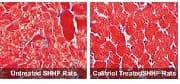
left: Heart muscle cells in untreated rats bred to develop heart failure show signs of disease: Cells are irregular in size and shape and show fibrotic lesions (areas in purple). Right: Heart muscle cells remain healthy in rats treated with calcitriol, the hormone that Vitamin D becomes in the body. (Credit: Image courtesy of University of Michigan Health System)
Exercise for Your Bone Health
Vital at every age for healthy bones, exercise is important for treating and preventing osteoporosis. Not only does exercise improve your bone health, it also increases muscle strength, coordination, and balance, and leads to better overall health.
Why Exercise?
Like muscle, bone is living tissue that responds to exercise by becoming stronger. Young women and men who exercise regularly generally achieve greater peak bone mass (maximum bone density and strength) than those who do not. For most people, bone mass peaks during the third decade of life. After that time, we can begin to lose bone. Women and men older than age 20 can help prevent bone loss with regular exercise. Exercising allows us to maintain muscle strength, coordination, and balance, which in turn help to prevent falls and related fractures. This is especially important for older adults and people who have been diagnosed with osteoporosis.
The Best Bone Building Exercise
The best exercise for your bones is the weight-bearing kind, which forces you to work against gravity. Some examples of weight-bearing exercises include lifting weights, walking, hiking, jogging, climbing stairs, tennis, and dancing. Examples of exercises that are not weight-bearing include swimming and bicycling. While these activities help build and maintain strong muscles and have excellent cardiovascular benefits, they are not the best way to exercise your bones.
Exercise Tips
If you have health problems – such as heart trouble, high blood pressure, diabetes, or obesity – or if you are over age 40, check with your doctor before you begin a regular exercise program. According to the Surgeon General, the optimal goal is at least 30 minutes of physical activity on most days, preferably daily. Listen to your body. When starting an exercise routine, you may have some muscle soreness and discomfort at the beginning, but this should not be painful or last more than 48 hours. If it does, you may be working too hard and need to ease up. STOP exercising if you have any chest pain or discomfort, and see your doctor before your next exercise session.
If you have osteoporosis, ask your doctor which activities are safe for you. If you have low bone mass, experts recommend that you protect your spine by avoiding exercises or activities that flex, bend, or twist it. Furthermore, you should avoid high-impact exercise in order to lower the risk of breaking a bone. You also might want to consult with an exercise specialist to learn the proper progression of activity, how to stretch and strengthen muscles safely, and how to correct poor posture habits. An exercise specialist should have a degree in exercise physiology, physical education, physical therapy, or a similar specialty. Be sure to ask if he or she is familiar with the special needs of people with osteoporosis.
A Complete Osteoporosis Program
Remember, exercise is only one part of an osteoporosis prevention or treatment program. Like a diet rich in calcium and vitamin D, exercise helps strengthen bones at any age. But proper exercise and diet may not be enough to stop bone loss caused by medical conditions, menopause, or lifestyle choices such as tobacco use and excessive alcohol consumption. It is important to speak with your doctor about your bone health. Discuss when you might be a candidate for a bone mineral density test. If you are diagnosed with low bone mass, ask what medications might help keep your
bones strong.
Aches? Pains? An Extra Dose Of Vitamin D May Provide ReliefExclusive Member Content
July 02, 2008 10:15 am