
Category: Uncategorized
Weight loss Surgery Coverage Changes
January 20, 2015 10:30 pm
Weight loss surgical procedures have been proven to be the only viable option for sustained weight loss when compared to all other modalities, including diet, exercise, behaviors modifications, appetite suppressant, and other less scientific approaches. Different weight loss procedures have had varying degree of success as measured with resolution of the co-morbidities and long term weight loss.


One such specific modification in policy involves primary and revision weight loss surgery.
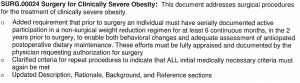
These policy changes have significant practical implications for those seeking surgical treatment for morbid obesity and associated co-morbidities.
First of all, they create a road block for those patients who are not able to provide documentation for the “…6 continuous months, in the 2 years prior to surgery, to enable both behavioral changes and adequate assessment of anticipated postoperative dietary maintenance.” It also places the responsibility on the surgeon by requiring that compliance with these requiremens are “…. fully appraised and documented by the physician requesting authorization for surgery.”
For all those who are not in California, please note that a lot of policies do start here and propagate to the rest of the country. I would propose that everyone take time to contact their state health insurance providers regulatory agency and voice their opposition to the proposed changes.
The state regulatory agencies are located here.
Telogen Effluvium: Hair Loss After WLS (Weight Loss Surgery)
September 14, 2014 12:56 pm
Telogen Effluvium is the premature pushing of the hair root into a resting state and can be chronic or acute. It is usually brought on by a shock to your body such as high fevers, childbirth, severe infections, severe chronic illness, severe psychological stress, major surgery or illnesses, over or under active thyroid gland, crash diets with inadequate protein, and a variety of medications. Most hair loss from medications, is this type of hair loss, and the related medications include retinoids, beta blockers, calcium channel blockers, antidepressants, and NSAIDS (including ibuprofen). Supplements that can also cause or increase telogen effluvium are higher doses of iron and Vitamin A.
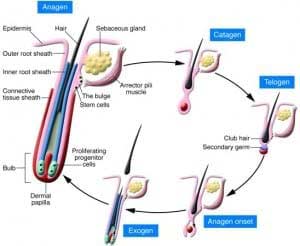
The hair begins to fall out in differing amounts and can start weeks to months after the initial shock to the body or medication initiation. The hair loss can continue up to 6 weeks and typically slows at 8 weeks after the start of the hair loss.
Weight loss surgical patients experience this due to the stress of surgery and the low protein state directly after surgery. Although there is no specific treatment for Telogen Effluvium, there are steps that can be taken to potentially slow the hair loss and help support the new hair growth.
The most important steps to take are to maintain your protein supplementation at a minimum of 80-100 grams of protein daily and hydration (at least 64 ounces daily) after weight loss surgery.

Protein, particularly L-lysine, are the building blocks of hair and nails, without adequate protein your body will forgo making hair and nails to maintain critical muscle mass. Also hydration is important to flush the body of toxins, due to fat breakdown in the liver during the rapid weight loss phase, that will prevent further new hair growth.
Vitamin B6 and B12 deficits can also contribute to hair loss. Multivitamin supplementation is essential to maintaining the required levels of these vitamins. The recommended multivitamin supplementation is two multivitamins daily that are equivalent to Centrum brand multivitamin.
Some people add Zinc supplements to increase hair production. However, if you are adding Zinc it is advised to also add a Copper supplement as they compete with each other for absorption. Copper is important for red blood cell production and a copper deficiency can exacerbate iron deficiency anemia. Inactivity can also decrease zinc levels, therefore exercise/activity will naturally maintain zinc levels.
Biotin is also a B vitamin that can be helpful in new hair growth.
Folicure is a supplement tablet that contains many vitamins and minerals that some people find helpful for hair re-growth. They also manufacture a shampoo that can be used.
There are many shampoos and topical treatments that people use and report satisfaction in their results. However, it is important to note that a topical treatment may make your hair appear thicker but the hair regrowth will only be supported by internal nutritional maintenance. Minoxidil is a liquid vasodilator medication applied to the scalp that is the exception to this rule and can help with hair regrowth. However, Minoxidil will not work to it’s optimal level in the absence of adequate nutritional status.
We always go back to our basics after weight loss surgery of hydration, protein and exercise to maintain health of body and hair.
Mission Statement
August 14, 2014 1:15 pm
Mission Statement for Central Valley Bariatrics and Dr. Ara Keshishian “The best patient that I can have is the most knowledgeable patient”
This is one of the “lines” that I use during my teaching and consultations sessions. I firmly believe that a patients should have all the pertinent information before they decide to proceed with a treatment plan. Be the treatment is medical in nature or surgical the patient needs to have all the scientific facts before an informed decision is made.
Part of my duty is to provide the information in a scientific and concise fashion in non-medical terms. Additional resources, such as this blog, FB group (The one managed by our office, and those maintained by others) along with the Webinar hosted by us, all serve to complement each other for providing a forum for exchange of information.
The value of information exchanged between patients can not be underestimated. Patients who have walked the path can provide a much more practical experience that I can ever share with a patient. The information shared between patient can and should carry a wider range of topics. It is to be noted however, that no information exchanged between patients should replace the advice of a patients’ surgeon.
For most of us that offer weight loss surgery, we realize that there is a lot more to the care of our patients that just to “cut” and hope for the best! The best outcome is dependent as much on the follow up care as it is to the surgery itself.
I personally believe that the care should be compassionate, respectful, caring and professional. There is no reason why the advice given should include disrespectful, or otherwise demeaning comments, suggestions or innuendoes. These have always been the guiding principals based on which we will conduct our practice on the Facebook, our blog and in person. No one, be patients, my office staff or myself should tolerate any personal threats, foul language or disrespect. For those who may see values to demeaning and inflammatory discussion tones, I wish you the best in other venues.
Ara
Weight Loss Tongue Patch !
April 22, 2014 7:35 pm
It is surprising to come across procedures such as “Weight Loss Tongue Patch” that are being performed now. Chugay et.al. (American Journal of Cosmetic Surgery, Vol.31, No. 1, 2014 26-33) reported a series of 81 patients with a mean weight loss of 16 lbs. (range 0-16.8). They concluded “While maintaining a strict low-calorie diet plan and adhering to a regular exercise regimen, patients using a tongue patch can achieve significant weight loss over a 30-day period, with relatively minimal procedural risk.
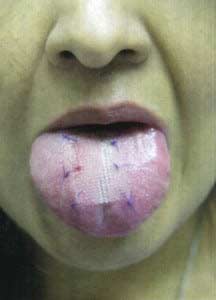
The “logic” of this procedure is that placing a mesh on the tongue makes swallowing painful and difficult. The patient is forced to maintain a liquid diet and this causes thus weight loss reported above.
The science and research of weight loss surgical procedures has centered around the metabolic aspect of obesity. Over the years we have moved away from the simple notion of obesity being only a function of over eating and lack of physical activity. The premise that obesity is a disease of energy imbalance is unproven to say the least.
In my opinion, this is a step backward in the surgical treatment of obesity. I always tell my patients to do their research before signing up for a procedure. This procedure is similar to tried and failed wiring of the jaws. It only created a short-term weight loss that is no more effective than any diet. The notion that a patient should be punished with pain to loose weight should not be tolerated by anyone.
Emergencies of Adjustable Gastric Banding
November 14, 2012 2:07 am
Adjustable Gastric Banding (AGB) procedures have been presented and promoted as innocuous and low risk in nature. AGB still carries significant risks although its perioperative complication rate appears to be less compared to other weight loss surgical procedures. Such risks include permanent and potentially life-threatening damages or other complications if proper treatment isn’t sought in an urgent manner.
Often times a patient’s complaints are minimized and blamed on behavior or their presumed non-compliance. Quite frequently they are only referred to a surgeon after exhaustive workup has been completed and mostly reported back as normal. These workups include upper GI series and endoscopic studies. Nevertheless, the complication(s) with which a patient may have been presented with still continue.
I would like to discuss two such examples in which patient care may have been delayed.
The first patient was a 45-year-old male who had the AGB procedure completed approximately two years prior to her first visit to our office. He presented complaints of abdominal pain and worsening reflux. He had had multiple adjustments at his primary surgeon’s office and was told to be in the optimal “green zone” for the band. He had lost approximately 45% of his excess weight, but continued to have significant debilitating reflux.
An upper endoscopy was reported to be normal and consistent with a properly placed band. An upper GI performed months later identified a dilated esophagus, requiring the band to be removed. In hindsight, the band should have been completely emptied upon the patient’s first complaints of abdominal pain and reflux.
The next patient visited a local emergency room with acute onset of nausea and vomiting. She was sent home with a diagnosis of gastroenteritis and instructed to follow up with her primary care physician. She returned back to the emergency room within 36 hours with a progressively worsening nausea and vomiting. She was admitted and underwent an upper endoscopy after which a surgical consultation was obtained. The patient was taken to the operating room with a diagnosis of “slipped band”, and had to have the band removed emergently. Looking back at this case, the abdominal x-ray was suspicious for a slipped band. She should have been referred for surgical care at the time of her first emergency room visit.
Ultimately, the burden of proof is on the medical provider treating the patient with an AGB to ensure that there is no slippage when the patient presents with acute changes in his or her condition. The AGB may still “appear” to be in the proper place and adjusted with the patient still having symptoms of reflux, inadequate weight loss, and abdominal pain. These patients would require surgical intervention and probably removal of the band.
As indicated earlier, the patients’ complaints should not be discounted as being a compliance issue and instead should be referred for surgical evaluation.
Duodenal Switch Procedure
September 16, 2012 1:16 pm
The Duodenal Switch procedure is a restrictive and malabsorptive weight loss surgery. Also, referred to as Gastric Reduction Duodenal Switch (GRDS).
Duodenal Switch Anatomy
1 – Restrictive Component
Approximately 70% of the stomach is removed along the greater curvature. This is also called a Vertical Sleeve Gastrectomy (VSG). The remaining stomach is fully functioning, banana shaped and about 3 – 5 oz. in size; which restricts the amount you can consume. The pylorus, part of stomach, continues to control the stomach emptying into the small intestine; as a result patients do not experience “dumping”. The upper portion of the duodenum remains in use; food digests to an absorbable consistency in the stomach before moving into the small intestine. Compared to gastric bypass procedures, this allows for better absorption of nutrients like vitamin B12, calcium, iron and protein. A benefit of removing a portion of the stomach is it greatly reduces the amount of ghrelin producing tissue and amount of acid in the stomach. Ghrelin is the “hunger hormone” and by reducing the amount the hormone produces, the appetite is suppressed. The stomach will stretch over time; 9-12 months post-op, it will eventually double in size and patients will be able to consume approximately 50% of what they did before surgery. The restrictive component of the Duodenal Switch procedure is not reversible.
2 – Malabsorptive Component
The intestines are re-routed so that food from the stomach, alimentary limb, and the digestive juices, biliopancreatic limb, that are needed for the absorption of fat and proteins can travel separate paths; this is so they don’t mix until they meet up towards the end of the small intestine.
The common channel, also known as the common tract or common limb, is the point from where the alimentary and biliopancreatic limbs meet in the small intestine to move into the large intestine. The common channel is where a DS patient’s food, bile and digestive juices mix; the majority of the fat, protein and the associated nutrients are absorbed. Since the common channel makes up such a small portion of the small intestine the dietary starches, fats and complex carbohydrates may not fully absorbed.
The most commonly quoted absorption percentages following DS are approximately 20% of fats, 60% of protein, 60% of complex carbohydrates, but 100% of simple carbohydrates. The 2005 study by Gagner et al. [68] demonstrated that DS surgery decreased fat absorption by 81%. The Bariatric Nutrition: Suggestions for the Surgical Weight Loss Patient review reports information from a study by Slater et al. stating that “After BPD/DS procedures, the amount of protein should be increased by ~ 30% to accommodate for malabsorption, making the average protein requirement for these patients approximately 90 g/d.” [65]
The malabsorption of fats interferes with absorption of the fat-soluble vitamins A, D, E & K. As a result all Duodenal Switch patients are required to take vitamin and mineral supplements for life. Patients must be diligent with the required supplements and have blood work monitored regularly. Also, they must adjust their supplements as needed to maintain normal levels of these vitamins and minerals.
The intestinal switch portion of the Duodenal Switch procedure is fully reversible.
Metabolic Effect
There is no dispute that Duodenal Switch produces the best-sustained weight loss, and has the best resolution rate for most comorbidities of all weight loss surgical procedures. These results cannot be simply explained by the restrictive and the malabsorptive component of DS. The general consensus is: that there are a number of hormonal regulatory changes involving Ghrelin, GLP-1, Enteroglucagon, Insulin, and others hormones (enzymes) that regulate the complex endocrine pathways.
Hess Method
Many often hear Duodenal Switch procedure patients using the term “Hess Method” [1] when discussing common channel length. Dr. Hess in Dublin Business News Monthly calculated the length of the alimentary limb by multiplying the total small bowel length by 40%. The remaining 60% of intestine carries the digestive juices through the biliopancreatic limb. The length of the common channel is approximately 10% of the total length of the small bowel. “Hess Method” refers to following Dr. Hess’s calculation for determining the limb lengths and common channel length, but other factors are taken into consideration; like the patient’s age, weight, BMI and goals. Each patient has a different length of common channel and alimentary loop designed to achieve the best results. “Length Measurement in Duodenal Switch” is discussed and explained in detail at https://www.dssurgery.com/procedures/streaming-media.php
Not all surgeons use the “Hess Method”, but some surgeon’s use a standard measure for the common channel of 100 cm and 150 cm, which is often used.
Ask a surgeon how he/she determines common channel length.
Appendix and Gallbladder
Some surgeons will remove the appendix because there is almost no extra effort that is placed in removal of the appendix, since the small bowel is measured from the junction of the colon and the appendix.
Few surgeons routinely remove the gallbladder because there is a 30-50% chance of gallstones forming after rapid weight loss. [56-57] For patients whose gallbladder is not removed often, medication is prescribed to help reduce the instance of gallstones from 30% to 2%. [57] One other compelling reason why the gallbladder should be removed is because of the inaccessibility of the biliary tree by a specialized endoscopic technique ERCP. The medication that is also prescribed has frequent side effects that limit their use and compliance with patients.
Staged Duodenal Switch
Duodenal Switch is sometimes performed in two stages when the surgeon determines it is too risky for the patient to undergo the whole procedure at once. This is usually a result of a patient’s age, BMI, comorbidities or for a more difficult revision surgery. The surgeon will perform stage one, restrictive component, then when the patient has lost some weight and the other health issues clear up then stage two, intestine switch, is performed.
For more information on the Duodenal Switch procedure:
Central Valley Bariatrics Graphical Comparison of Weight Loss Surgery Procedures
What is my target weight?Exclusive Member Content
August 24, 2012 12:31 am
Nasal Methicillin Resistant Staphylococcus Aureus Predicts Site Infection In GI Surgery
August 06, 2012 12:27 am
Dr. Papaconstantinou of White Memorial Hospital in Temple, Texas has studied the relationship between the presence of colonized nares with Methicillin Resistant Staphylococcus Aureus (MRSA) and the incidence of the type of the infection after a gastrointestinal surgery.
He studied 1137 patients. He compared the postoperative infection rate of patients that were positive for MRSA, Negative for MRSA and a third group that was Methicillin Sensitive Staphylococcus Aureus (MSSA). He found that the infection rate for MRSA group was 14%, the highest of all the groups. There was no correlation however when other risk factors were accounted for.
The most significant finding however was the type of the infection present in MRSA patients. With positive nasal swab for MRSA, the most common organism causing the wound infection was MRSA (70%). In patients that were MRSA negative for the nasal swabs, the rate of MRSA wound infection was low at only 8.5%.
An additional finding was that the finding of MRSA positive nasal swab was a predictor for prolonged hospitalization.
There was no reported difference in the postoperative death rate in the MRSA positive or negative group.
It is important, however, to remind ourselves that this is a single study and more studies are needed to look at these variables in different surgical procedures.
The long-term outcome of the Adjustable Gastric Banding Esophageal Dilation after Gastric banding
July 07, 2012 12:35 am
The initial short-term data available for Adjustable Gastric Banding (AGB- Lap Band and Realize Band in the US) was promoted as a minimally invasive procedure with an equal outcome and low risk compared to the more commonly performed gastric bypass or the most successful procedure, the Duodenal Switch operation.
Over the years the data that has been published has drawn a completely different picture. The weight loss has not been as anticipated or sustained in majority of the patients who have had the AGB. Furthermore, the incidence of complication has been far worse than initially presented.
Common complaints that the patient reported with AGB includes inadequate weight loss, symptoms of reflux, abdominal pain, and significant solid or food intolerance. The general consensus and treatments have been tailored towards adjustment of the band either by adding fluid to tighten, to hopefully promote weight loss or by removing fluid from the band to reduce the restriction and resolving the reflux and/or deep abdominal pain. This only is after a mechanical or placement issue has been ruled out.
Most recently published data (Poster presentation ASMBS 2011 San Diego, CA.) shows that majority of the patients who developed esophageal dilatation, will require conversion to a different bariatric surgery. Furthermore, the consensus developing is that the placement of band should not be performed since there are better alternatives that can yield much better results with a safety profile that is better than that of the AGB.
As I have summarized previously, if long term data is reviewed the complication rate of the AGB is much higher that initially reported. I think there has been selective reporting of the data performed to promote a procedure that in the very short term may look attractive, however, over time, complications surface. Almost all patients with AGB procedures are sent home the same day, and in the first few months some weight is lost and almost no complication of reflux, indigestion, or other esophageal motility problems are reported. Yet when the same patient data is collected past the 12 months then there is increase in the reported cases of the complication of the banding procedures. This has lead to European and South American Centers that have lead the wave of the AGB placement to make a reversal of course and now recommend that other surgical procedures be offered to patients instead of the temporary fix of the AGB.
With our own practice we have significantly reduced the AGB placements. It is impossible to recommend a procedure that its results cannot be backed up with scientific data. We also find ourselves, spending a significant amount of time correcting the information that most patients have obtained from non-medical sources and even in some cases from other health care providers that is just not correct.
These are some of the examples of the information that I would like to clarify and explain to patients since they are deceiving and inaccurate.
“The band is reversible.”
Let’s take the concept of the “reversibility”. Can anyone name a procedure that a patient may need to have it done as a cure to an ailment with a condition of reversibility? Would anyone like to have a reversible hip replacement? Appendectomy? Or Cancer surgery? The point that I am raising is that the option of reversibility all by itself is not a meaningful measure other than it can be removed. One has to ask why I would want it removed. The answer is that it has a high complication rate that surface later on and in almost all cases requires band removal.
“It has minimal risk.”
The issue of the risk is one that I also emphasize. I think is inadequate to discuss the option of the risk in vacuum with no discussion of the benefits of each procedure. In majority of the cases patients indicate that the AGB can be done as outpatient (correct) with minimal down time (correct). The long-term outcome however is not there and I would recommend that the patient have no surgery since the long term complication of the banding is significant for any marginal benefit of weight loss.
“Patients have complications with the gastric stapling.”
There is a general misunderstanding that all procedures that have to do with weight loss are either the “gastric banding or the stapling type”. It is critical that we all appreciate that there are a number of different surgical procedures, that have different outcomes and each one of them needs to be examined for suitability for each patient
Bloating and Excessive Gas
April 17, 2012 7:36 am
The relationship between the consumption of food, bloating, and excessive gas is a subject that comes up frequently. In our practice, this is a complaint usually raised 3 or 4 years after receiving the duodenal switch operation. It appears that patients eventually disregard the recommendations made for a healthier diet of low carbohydrate, high protein, hydration, supplements, and then everything else.
In general, carbohydrates, carbonated drinks, artificial sweeteners (such as Splenda®, sugar alcohols, etc.), vegetables, excessive amounts of food, and an intake of fat will cause significant gas and bloating. This is not to be taken out of context and assumed that one cannot consume any of these products. However a diet that has fruits and vegetables will cause significant gas and bloating. These can not be controlled by probiotics, antibiotics, or other products such as Beano.
Simple carbohydrates/sugars (sugar, candy, cakes, cookies, pies, regular soda pop, jelly, jam, syrup, ice cream, sherbet, and sorbet, etc.) are easily absorbed. Simple carbohydrates/sugars can increase diarrhea due to the Duodenal Switch allowing more undigested sugars/fuel for intestinal bacteria to feed upon, multiply and form gas. The end result can be gas, bloating, and diarrhea.
Complex carbohydrates have more structure than simple carbohydrates/sugar which are harder for the intestinal bacteria to break down and may cause less bloating, gas and diarrhea. Also, complex carbohydrates usually contain higher fiber content. The fiber in the colon will help to absorb water from the stool and can reduce diarrhea. However, this is not the case for all Duodenal Switch patients.
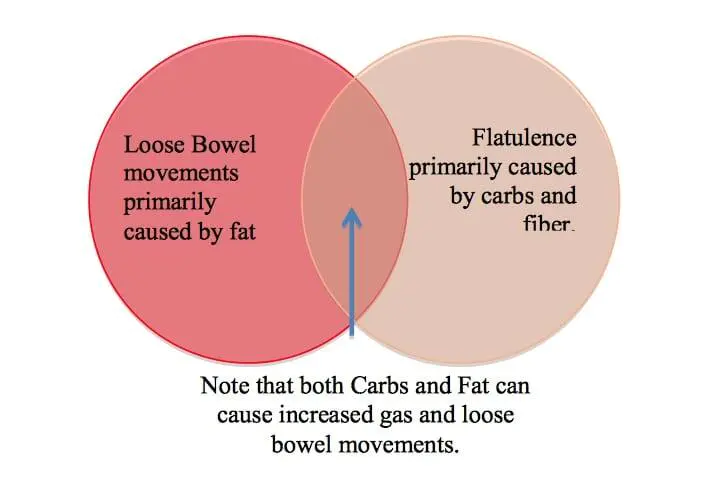
When a patient reports these problems, I recommend that the consumption of all carbonated drinks should be stopped. No patient should consume carbonated drink of any sort. Artificial sweeteners should also be avoided all together. A good alternative would be honey, maple syrup or Stevia. Minimize or reduce the carbohydrate intake.
It has been our experience in the majority of cases that excessive gas and bloating is a result of dietary indiscretion. In some patients, once the dietary sources have been ruled out, it should be further evaluated by a barium enema to rule out the diagnoses of a redundant colon.
The best approach would be to first go back to a high protein and low carbohydrate. This should allow a patient to rule out any dietary sources for the bloating and excessive gas. It is recommended to next be seen by your physician for a further workup.
To summarize, when a patient has excessive amount of gas, diarrhea and bloating, the first line of treatment is elimination of all of the possible causes. These include carbohydrates, fruits, vegetables, artificial sweeteners, carbonated drinks and milk products. I can not overemphasize the importance of this step prior to anything else such as antibiotics or probiotics.