
Category: Uncategorized
Duodenal Switch is a Safe Operation for Patients who have Failed Other Bariatric Operations
May 07, 2015 7:06 am
Obesity Surgery, 14, 1187-1192
Duodenal Switch is a Safe Operation for Patients who have Failed other Bariatric Operations
Ara Keshishian, MD, FACS; Karin Zahriya, MD, FACS; Teny Hartoonian, MD; Chris Ayagian, MD
Department of Surgery, Delano Regional Medical Center, Delano, CA, USA
Background: The incidence of morbid obesity and its surgical treatment have been increasing over the last few years. With this increase, there has been a rise in the number of patients who have had less than desirable outcome after bariatric operations. We perform the duodenal switch (DS) in patients for whom other weight loss surgical procedures have failed, because of inadequate weight loss, weight regain or significant complications, such as solid intolerance or dumping syndrome.
Method: From November 1999 to March 2004, 46 revisional surgeries were performed at our institution. The data was prospectively collected and reviewed, based on a number of parameters. Operative details, perioperative morbidity, and results are reported.
Results: 46 patients had their original bariatric surgical operation revised to DS. This resulted in complete resolution of their presenting complaints. The %EWL was 69% at the time of publication, with a mean lapsed time of 30 months.We had no mortality. Anastomotic leak occurred in 4 patients, 2 in our first
8 patients. We also noted that the majority of the patients were not aware of all the surgical procedures available to them at the time of their original operation.
Conclusion: In patients in whom gastroplasty, gastric bypass or both have failed to provide adequate weight loss, or worse have resulted in complications, DS can be performed as a safe revisional operation. The revision of other failed bariatric operations to DS results in both weight loss and resolution of the complications.
Introduction
Since its inception in the 1960s, weight loss surgery has been the only option for morbidly obese patients who have been unable to lose and maintain adequate weight loss through conventional non-surgical methods. In 1991, the NIH released a consensus on gastrointestinal surgery for severe obesity[1],which sparked further interest in the surgical treatment of morbid obesity, leading to an increase in the number of bariatric operations. This increase and the occasional failure and complications after these surgical procedures have resulted in an increased need for revisional surgery.
Bariatric procedures can be classified into three groups: those that restrict food intake, those that limit absorption, and those that utilize some degree of both components. Restrictive operations create a tiny neogastric pouch and a restrictive gastric outlet to decrease food intake.
Vertical banded gastroplasty (VBG) partitions the stomach along the lesser curvature, creating a channel restricted by an externally placed band. The upper pouch is approximately 5 cm long with a diameter of 1.5 cm and accommodates a volume of 20-40 ml. Gastric banding is another restrictive procedure, extensively performed in Europe and Australia, and recently in the United States. The published data varies significantly, with some reports showing <50% loss of excess body weight 9 years following the procedure.[2]
Roux-en-Y gastric bypass (RYGBP) is primarily restrictive, but also limits absorption of calories and nutrients to a varying degree. This procedure involves division of the stomach to create a tiny proximal pouch with approximate volume 15 ml. This pouch is then anastomosed to a Roux-en-Y jejunal limb, bypassing the stomach, pylorus and duodenum, adding a limited malabsorptive component. Although the original descriptions of RYGBP defined the Roux-limb to be <100 cm, in almost all of the RYGBP revisions, we have measured the Roux-limbs to be >100 cm.
The biliopancreatic diversion with duodenal switch (DS) is a hybrid operation involving both components of weight loss surgery. In the DS, a lateral gastrectomy provides a restricted gastric volume of approximately 100 cc, while excess fat absorption is limited by shortening the functioning length of the intestine. This involves diversion of the biliopancreatic secretions by partitioning the bowel into two limbs – an alimentary channel, and the biliopancreatic (afferent) limb. These two limbs of small bowel are reconnected to form the common channel.[3][4] DS appears to be the most effective bariatric operation to date. It produces the most sustained weight loss, without the unwanted side effects present with other bariatric operations (i.e. dumping syndrome, marginal ulceration, and solid food intolerance).[5][6] This is accomplished without any increase in the perioperative morbidity and mortality rate.
Restrictive operations have had varying results in long-term weight loss and complications.[7] Van Gemert et al.[5] reported a 12% incidence of revision after RYGBP and a 56% incidence of revision after VBG.[8] The need for revision after gastric banding has also been reported.[2][9]
Revision of failed bariatric procedures has resulted in morbidity rates of 12-41%. The perioperative revision complication rate has been three times higher when compared to a primary procedure. Gagner reported a morbidity rate of 22%.[10]
Behrns et al.[11] studied the choice of procedure for revisional surgery. They reported that when the primary operation had been a VBG, the most effective second operation was the RYGBP. The question arises as to what revisional surgery should be performed for failed RYGBP. The majority have been revised to a distal RYGBP. [11][12][13][14] However, Fobi et al.[14] showed that this was accompanied by only moderate weight loss and a protein malnutrition rate of 23%. Owens[15] and Schwartz[16] advised against revision of an operation performed satisfactorily, to one of the same type, because it is unlikely to produce a significant benefit.
Between November 1999 and March 2004, we performed 614 primary DS operations with excellent weight loss and minimal (<2%) hypoalbuminemia. During the same period, we elected to perform the DS as our revision operation of choice on 47 referred patients, and the data on the latter are hereby presented.
Methods
From November 1999 to March 2004, 47 patients were referred to us for revision to a DS, a period when 614 primary DS operations were performed. The primary operation for the patients seeking revision had been VBG (16), RYGBP (26), and both (5). The five patients with both procedures had an initial VBG, later revised to a RYGBP and were now presenting for their second revision. All of our patients who underwent revisional surgery had either regained all (31) or some (>50% – 7) of their original weight loss, or had failed to lose sufficient weight (9). The other presenting complaints were: severe dumping syndrome (20); intolerance to solid foods (16); persistent nausea and vomiting (4); and severe gastroesophageal reflux disease (14) (Table 1).
In this series, all 19 patients who had severe dumping syndrome had also regained a significant amount of weight. This appears to contradict the notion that dumping syndrome is a beneficial sideeffect of RYGBP as a behavior modification tool.
All patients were assessed by the surgeon, and had psychological, nutritional and medical evaluations. Extensive preoperative education was carried out to
[table id=1 /]
ensure adequate informed consent, and to bolster postoperative compliance. The work-up before revisional surgery included: complete metabolic panel; mineral, vitamin and lipid profile; liver function tests; upper GI series, and upper endoscopy.
Surgical Technique
The revision of any previous bariatric operation to DS involves a thorough study of the patient’s existing anatomy. The work-up includes review of prior medical records whenever available, as well as a detailed examination of the patient, followed by an upper GI series and an endoscopy performed at our institution by the operating surgeon. The peritoneal cavity is entered through a midline laparotomy incision.
Revision from VBG to DS entails exposure of the greater curvature of the stomach by ligation of the short gastric vessels. The stomach is then accessed through a gastrotomy at the greater curvature. A linear stapler is then used to divide the band through the gastrotomy and the distal end of the vertical partitioned stomach. Lateral vertical subtotal gastrectomy is accomplished over a 39-Fr bougie. The gastrectomy resection line includes the previous VBG staple-line, to prevent ruminant gastric tissue with compromised blood supply.
Revision of the RYGBP to DS involves a significantly greater degree of planning. The earlier open Roux-en-Y procedures were more likely to have left behind a larger stomach pouch with an intact left gastric artery than those performed laparoscopically. The reason for this is that most of the pouches were based on the greater curvature (horizontal), and little dissection was performed involving the lesser curvature. With the laparoscopic RYGBP procedures, the gastrojejunostomy anastomosis has been performed on the lesser curvature, and the left gastric artery has been frequently transected. Without the short gastric arteries, the pouch relies on the esophageal branches for its blood supply. The Lap-RYGBP patients have smaller pouch sizes and are exposed not only to an increased risk of leaks, but also have the potential for occurrence of stricture as a result of the tenuous blood supply. This may explain the high incidence of gastro-jejunostomy strictures needing balloon dilatation after lap- RYGBP.
Revision of RYGBP to DS involves taking down the gastro-jejunostomy anastomosis without compromising the blood supply of the proximal gastric pouch. The greater curvature of the bypassed stomach is then mobilized by ligation of the short gastric vessels to the level of the splenic hilum. The gastric continuity is then reconstructed by linear or circular staple firing between proximal stomach pouch and the gastric fundus of the mobilized bypassed stomach through a gastrotomy opening on the greater curvature. The staple-line is then over-sewn by a 3- 0 Vicryl® in a running fashion. A lateral vertical subtotal gastrectomy is then performed over a 39-Fr bougie. This gastrectomy now includes both the previous gastric pouch and the bypassed stomach in continuity.
Small bowel continuity is restored by first taking down the Roux-limb, and reconnecting it in a sideto- side fashion at the previously placed biliopancreatic limb. The total length of the small bowel is measured on the anti-mesenteric side. The common channel and alimentary limbs are then based on the percentage of the total length of the bowel (8%-12% for common, and 35%-45% for the alimentary). All of the small bowel entero-enteric anastomoses, with the exception of the duodeno-ileostomy anastomosis, are done in a side-to-side fashion as previously described.[17]
The duodenal switch is then performed by first dividing the duodenum 5 cm distal to the pylorus. The alimentary tract is then pulled through a retrocolic plane to the right of the middle colic artery, and an end-to-side anastomosis is created between the end of the transected proximal duodenum and the anti-mesenteric side of the small bowel, with a linear stapler, reinforced with a 3-0 Vicryl® in a running fashion.
All patients also undergo liver biopsy, appendectomy and cholecystectomy at the time of the revision operation. A feeding jejunostomy tube is routinely inserted in the biliopancreatic limb distal to the ligament of Treitz, in all revisional operations.
Results
The mean age of the patients was 47.3 (33-64), 3.3 years older than the average age for primary DS. Average pre-revision body mass index (BMI) was 47.3 kg/m2 (range 24.5-73.7), and average pre-revision weight was 128.3 kg (range 76.0 to 214.3). This is comparable to averages of 50.6 kg/m2 and 143.4 kg respectively, for primary DS. The average time elapsed between the primary operation and revision was 11.8 years (range 2.7 to 23). The female to male ratio was 9:1 compared with 6:1 in our primary DS patients.
A questionnaire administered to all revision patients at the time of the initial presentation, revealed that 96.2% of patients had been unaware of other surgical weight-loss options at the time of their primary operation, even though at the time the other bariatric operations were available.
The findings on preoperative radiological and endoscopic evaluation are shown in Tables 2 and 3. [table id=2 /] [table id=3 /].
The average operative time for revisional patients was 3.5 hours (2.3-5.7), and the average length of stay was 4.8 days. For primary DS, this has been 1.7 hours and 3.2 days, respectively.
Peri-operative complications included leaks in four patients (8.5%), one wound infection (2.1%), and one hernia (2.1%). All four of our patients who had leaks had undergone a previous RYGBP. Two of the four patients had undergone both a VBG and a RYGBP, and DS was their second revision. Two leaks occurred in the first 8 patients, and the remaining 2 in the following 38 patients. Two of the leaks were at the site of gastro-gastrostomy anastomosis, and the other two were located at the site of the lateral gastrectomy, just proximal to the gastro-gastrostomy anastomosis. Two of the four patients with leaks required further surgical interventions to completely resolve their complications. The other two were treated with enteral feeding and NPO, with drainage by means of the closed suction drains placed at the time of the operation. There has been no protein malnutrition and no deaths. The leak-rate for our primary DS patients has been 0.9%
Following a mean elapsed time of 30 months since revision to DS, the average BMI has dropped from 48.9 to 29.2 kg/m2 and the %EWL has been 67%. Mean weight has fallen from 128 kg to 80 kg (P<0.0001). The presenting complications of the original surgery have resolved in 100% of patients who underwent revision to DS. The BMI has remained stable after revision of failed VBG and RYGBP at 2.4 years after the DS. The data is summarized in Table 4.[table id=5 /]
Discussion
As more patients undergo bariatric surgery for treatment of morbid obesity, an increase in the number of patients with the need for revision are encountered. In our experience, the most common indication for re-operative surgery was inadequate weight loss (15 out of 35 patients, 43%). This has been confirmed by others. The reason could be due to a technical failure (eg. anastomotic dilatation, staple-line disruption). In the majority of the patients, however, we found no clear technical explanation for the failure of the operation. In restrictive operations such as VBG, patients recognize the smaller capacity of their postoperative stomach, and frequently modify their diet to comprise mainly high-calorie liquids or foods such as ice-cream and milkshakes.[7] Intolerance to solid foods related to stricture or stenosis also makes patients resort to this type of diet. Gawdat[18] found that 61% of revised patients had had no abnormality found at the time of the revisional operation.
The average BMI of our patients at the time of their primary operation had been 51.8 kg/m2. Problematic weight loss in the super-obese has led to the proposition that some degree of malabsorption should be incorporated into bariatric operations in these patients.[19] We agree with this, and we recommend that the DS be the primary operation of choice for patients with super-obesity.
Revision from a primary restrictive operation to DS involves complete conversion of the previous operation to essentially normal anatomy before the DS operation is completed. This necessitates working on a gastric pouch or remnant with tenuous blood supply. Paying heed to this danger during the operation has allowed us to limit our complication rates to those of previously published data. It is evident from our experience that the rate of complications such as leaks is increased in revisional operations. Complication rates are higher after RYGBP revision, and 100% of our leaks occurred in patients with prior RYGBP.
Gastric bypass has been shown to have better weight loss than VBG, justifying previous revision of failed VBG. However, DS has been shown to have better overall and long-term weight loss than the RYGBP. Therefore, our revision patients should have better results than if they had been revised to another to RYGBP.
With regards to patients with failed RYGBP, the options promoted by others have been to revise to another RYGBP, or to add a malabsorptive component by lengthening the Roux-limb (i.e. distal gastric bypass). Neither option has been very successful. As reported by Fobi[14] and by Sugerman,[20] problems with protein malnutrition occasionally follow distal RYGBP. Others have opted to manage these patients with strict diets and anorectic drugs. These modalities failed before weight-loss surgery in these patients, and are unlikely to be beneficial at this stage. Our decision to convert failed RYGBP patients to DS has led to good weight loss results. Additionally, we have encountered no issues of protein malnutrition, partly because a larger stomach is left with DS compared to RYGBP.[21][22] The average size of the stomach remaining after primary DS or after DS for previously failed bariatric surgery is approximately 100 cc.
Conversion to DS resulted in weight loss in all patients, with an average weight loss per month of 5.4 kg (range 0.3-16.1). However, the increased risk of complications following the re-operation implores serious consideration of the primary reason for the revision. We believe that if the presenting complaint is exclusively that of weight gain or inappropriate weight loss, the increased risk does not warrant revision in patients whose preoperative BMI is lower than the guidelines set by the National Institutes of Health.1 However, in patients presenting with primary surgical complications, such as dumping syndrome, intolerance to solids or persistent nausea and vomiting, where the patient’s quality of life has deteriorated, DS is a highly successful procedure. Our data indicates that 100% of initial complaints were resolved following revision.
The other major consideration in revisional bariatric surgery is patient education. In this study, 96.2 % of the patients claimed that they were unaware of other weight-loss surgical options at the time of their primary operation. One could possibly question the validity of the informed consent at the time of the original operation. Our program incorporates an extensive preoperative education plan geared towards explaining the DS procedure in detail, clarifying the general risks of surgery, the resulting change in anatomy and the long-term follow- up requirements, including supplementation requisites to maintain vitamin, mineral and nutritional levels within normal limits. Patients undergoing DS as their primary operation are in addition required to attend group meetings for all other surgical procedures, in order to assure adequate informed consent. The surgeon has the duty to provide the patient with the information necessary for the patient to make an educated decision as to whether to consent to the recommended operation. For a patient to properly make that decision, all major surgical options, their advantages and disadvantages must be discussed. Patients who are fully aware of all their weight loss surgery options, will better select their primary operation, and will likely decrease their need for future revisional surgery. In our practice, we recommend that our patients not only attend group meetings but also seek a second opinion regarding other bariatric surgical procedures.
References:
[1. Gastrointestinal surgery for severe obesity. National Institutes of Health Consensus Development Conference Draft Statement. Obes Surg 1991; 1: 257-66]
[2. Martiknainen T, Pirinen E, Alhava E et al. Long-term results, late complications and quality of life in a series of adjustable gastric banding. Obes Surg 2004; 14: 648-54]
[3. Hess, DS, Hess DW. Biliopancreatic diversion with a duodenal switch. Obes Surg 1998; 8: 267-82]
[4. Marceau P, Hould FS, Simard S et al. Biliopancreatic diversion with duodenal switch. World J Surg 1998; 22: 947-54]
[5. Biron S, Hould FS, Lebel S et al. Twenty years of biliopancreatic diversion: what is the goal of surgery? Obes Surg 2004; 14: 160-4]
[6. Rabkin RA. The duodenal switch as an increasing and highly effective operation for morbid obesity. Obes Surg 2004; 14: 861-5]
[7. Arribas del Amo D, Martinez Díez M, Elía Guedea M et al. Vertical banded gastroplasty: is it durable operation for morbid obesity? Obes Surg 2004; 14: 536-8]
[8. van Gemert WG, van Wersch MM, Greve JWM et al. Revisional surgery after failed vertical banded gastroplasty: Restoration of vertical gastroplasty or conversion to gastric bypass. Obes Surg 1998; 8: 21-8]
[9. Chevalier JM, Zinzindohoué F, Douard R et al. Complications of laparoscopic adjustable gastric banding for morbid obesity: experience with 1,000 patients over 7 years. Obes Surg 2004; 14: 407-14]
[10. Gagner M, Gentileschi P, De Csepel J et al. Laparoscopic reoperative bariatric surgery: lessons learned to improve patients selection and results. Ann Surg 1993; 218: 646-53]
[11. -]
[12. Jones KB Jr. Revisional bariatric surgery – safe and effective. Obes Surg 2001; 11: 183-9]
[13. Benotti PN, Forse RA. Safety and long-term efficacy of revisional surgery in severe obesity. Am J Surg 1996; 172: 232-5]
[14. Fobi MAL, Lee H, Igwe D Jr et al. Revision of failed gastric bypass to distal Roux-en-Y gastric bypass: A review of 65 cases. Obes Surg 2001; 11: 190-5]
[15. Owen BM, Owen ML, Hill CW. Effect of revisional bariatric surgery on weight loss and frequency of complications. Obes Surg 1996; 6: 479-84]
[16. Schwartz RW, Strodel WE, Simpson WS. Gastric bypass revision: Lessons from 920 cases. Surgery 1988; 104: 806-12]
[17. Keshishiam A, Zahriya K. Stapled Roux-en-Y anastomosis: an illustrated technique. Obes Surg 2003; 13: 450-2]
[18. Gawdat K. Bariatric reoperations: are they preventable? Obes Surg 2000; 10: 525-9]
[19. Dolan K, Hatzifotis M, Newbury L et al. Comparison of laparoscopic adjustable gastric banding and biliopancreatic diversion in super-obesity. Obes Surg 2004; 14: 165-9]
[20. Sugerman HJ, Kellum JM, De Maria EJ. Conversion of proximal to distal gastric bypass for failed gastric bypass for superobesity. J Gastrointest Surg 1997; 1: 517-25]
[21. Yashkov YI, Oppel TA, Shishlo LA et al. Improvement of weight loss and metabolic effects of vertical banded gastroplasty by an added duodenal switch procedure. Obes Surg 2001; 11: 635-9]
[22. Rabkin RA, Rabkin JM, Metcalf B et al. Nutritional markers following duodenal switch for morbid obesity. Obes Surg 2004; 14: 84-91]
GERD, Nausea and Vomiting- Don’t ignore it!
April 28, 2015 11:30 am
Gastroesophageal Reflux Disease is a serious matter and should not be left untreated. It is know as heartburn or reflux and if you are experiencing more than twice a week you should be evaluated by a physician to investigate the cause. Listed below are some of the causes and end results of not treating GERD.
Esophagitis – An irritant that can be acid, bile, food and digestive enzymes coming back up the esophagus can cause irritation and swelling in the esophagus. If left untreated, it can damage the lining of the esophagus to the point of erosion and scarring. Bile Reflux may also be a cause of esophagitis and Duodenogastroesphogeal reflux (DGER). Bile Reflux information here.
Esophageal Stricture – Scar tissue can cause the lumen of the esophagus to become smaller and narrow. This stricture makes it difficult or painful to swallow foods. If a stricture is narrow enough food may become stuck and require intervention for removal and treatment. This can also put a person at risk for choking. The treatment includes ballon dilation with an endoscope and in cases where it recurs surgery may be required.
Esophageal Ulceration– If GERD is left untreated it can progress to actual ulcerations in the esophagus. Patients may cough up or vomit blood or see it in their stool as dark tarry or coffee ground type stool.
Gastric Stricture– After weight loss surgery such as sleeve gastrectomy, RNY Gastric Bypass, Duodenal Switch, SADI/Loop, Adjustable Gastric Banding, or other gastric surgeries a narrowing of the inner opening of the stomach can result from scar tissue forming. This will require a surgical procedure to rectify. The symptoms can be food intolerance, full feeling, nausea and/or vomiting. (See pictures below)
Hiatal Hernia– An anatomical weakening or enlargement of the opening of the diaphragm muscle where the esophagus meets the stomach. This defect can allow a portion of the stomach to slide or roll into the chest cavity. This then causes reflux of gastric juice and content. Hiatal Hernia’s can also form on weight loss surgical patients. There are several examples within this blog here.
Breathing Difficulties– The acid aspiration while sleeping can make asthma and other breathing difficulties worst and can cause coughing and other issues.
Dental Issues – The acid, food, digestive enzymes backing up into the esophagus and mouth can cause dental issues such as erosion and tooth decay. In regards to dental issues after weight loss surgery there are also other vitamin and mineral deficiencies that can cause oral health issues. Dental Issues after WLS here.
Lower Quality of Life– GERD can affect a person’s quality of life. If you are in discomfort from acid reflux or having food intolerance it can make life difficult. It can also alter food choices and impact nutrition.
Barrets Esophagus– Pre-cancerous changes in the bottom portion of the esophagus due to long term acid exposure from gastric reflux. Diagnosis requires and endoscopic procedure (EGD) and biopsy.
Esophageal Cancer– There is a significant rise in the western world in esophageal adenocarcinoma. The main risk factors are alcohol use, smoking, untreated GERD, and poor diet.
Reflux and difficulty with swallowing caused by stricture is not normal. These problems are quite frequently encountered as complication of Adjustable gastric banding, with slipped band or a band that is too tight and scarred in placed resulting is belt effect. This results in the esophagus not being able to empty and propel the food down. The end result is significant reflux, with difficulty swallowing, nausea, vomiting etc. Similar problems are seen with Gastric bypass where the anastomosis between the stomach pouch and the small bowel RNY limb is too narrow. In Gastric Sleeve and Duodenal Switch operations, is the sleeve is made too narrow, or misshaped (hour glass, funnel, cork screw) it will result in the patient having reflux and symptoms of stricture. One specific problem with the new operation of SADI is the concern for risk of bile reflux, similar to the BillRoth I procedure.
Gastric bypass patient with stricture at the gastro-jejunostomy before and after balloon dilation. Fig A
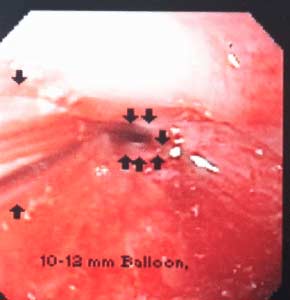
After balloon dilation. Fig B
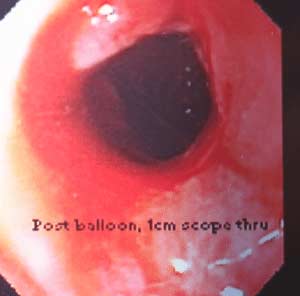
Fig. C : Lap band Patient with stricture where the band as removed at another facility and the scar tissue formed around the GE junction was not taken down. The patient had to be taken back to the operation room after his symptoms persisted even though the band had been removed 3 months prior.
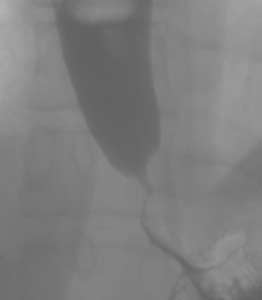
A corkscrew stomach of a Duodenal Switch done at another facility, with the patient presented with persistent reflux, nausea and vomiting for years after surgery. Fig. D
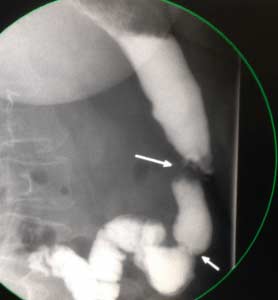
This is not an inclusive discussion of GERD and the treatment. Please see your healthcare providers if you are experiencing any symptoms pertaining to GERD or any other health care issue.
Adjustable Gastric Band Removal & Hiatal Hernia Repair
April 21, 2015 6:30 pm
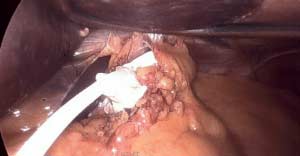
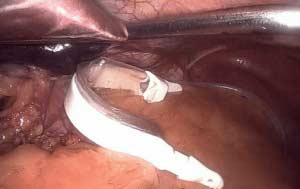
The band in place and after being taken down
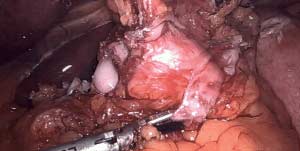
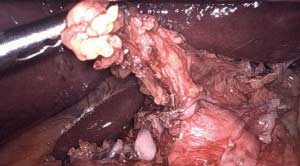
The dissection of the wrap over the band that shows erosion
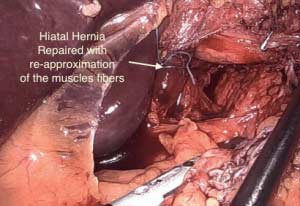
Part of the hiatal hernia repair.

The band and the port removed.
Feeding Tube
April 20, 2015 11:43 am
Feeding tubes are catheters that are placed in the lumen of the gastrointestinal tract. They are used to provide or supplement the nutritional intake. The feeding tubes can be placed in the stomach (gastrostomy tube, G-tube) or the small bowel (jejunostomy tube J-tube). Patients who are having a revision of gastric bypass, VBG, or other weight loss surgical procedure that involves the stomach in our practice will have a feeding jejunostomy placed. The reasoning behind this is that in the unlikely event of a leak, or if the patient cannot tolerate adequate water or protein early on, this provides a way of getting hydration and nutrients. In the case of a patient with a small leak drained by the drainage tubes in place, a re-operation may be avoided if adequate nutrition can be provided to the patient by the feeding tube. Given that the J tube is placed in the small bowel, the patients usually require small, frequent feeding-hydration throughout the day.
The jejunostomy tubes are easily removed in the office.
Gastrostomy tubes are placed in the stomach. They can be placed endoscopically in an intact GI tract (they can not be placed in a gastric bypass patient without taking the patient to the operating room for a surgical approach). These tubes are easy to place, and large volumes of food and hydration can be administered simultaneously.
Additional information is also available here.
Different surgeons have different practice philosophies and approaches. After the revision of hundreds of failed gastric bypasses to the duodenal switch operation, It is my opinion that the benefits of a feeding jejunostomy far outweigh the short-term care issues associated with it.
Zinc InformationExclusive Member Content
April 17, 2015 7:22 am
Copper InformationExclusive Member Content
April 17, 2015 7:21 am
Shared Success Story- Dr. D. Brown
April 13, 2015 11:38 am
I had Roux-en-Y (RNY) gastric bypass surgery in February 2004. I was told it was the “Gold Standard” procedure and it was the only one my insurance would approve (according to the surgeon’s office). I lost around 130 pounds with some minor bounce back. Kept it off for 7 years. I had so much energy; I decided to go back to school to become a doctor.
In medical school I really began to regain, for a total of 75 pounds over 5 years. I tracked food and found that if I ate more than 1300-1400 calories daily, I was gaining. I had absolutely no sugar dumping or satiety or restrictive effects left from the RNY Gastric Bypass, only my metabolism’s memory of starvation mode.
In fact, I never had one incident of dumping syndrome; I only felt satiety for the first 2 years and was able to eat well over 2 cups of food per meal by year 7. Lack of dedicated exercise, extreme stress (time, financial & academic) as well as poor food choices all contributed to my regain. However, the RNY Gastric Bypass surgery only has an average long-term excess weight loss of around 50%, so that still makes my weight regain close to the acceptable range.
Finally, I looked into revision surgery. Not only is surgery always a major decision, but also a revision to a DS is a very technically complicated surgery. I extensively researched all the options to make the right decision. The Duodenal Switch surgery has the best long-term statistics for maintained weight loss in all the medical studies (close to 75% excess weight). The major feature is nutrient malabsorption. The amount is dependent on an individual basis but most fat and some protein calories are not absorbed. There is an initial restrictive component as well. With the nutrient malabsorption also comes vitamin/mineral malabsorption. However, RNY also causes vitamin malabsorption and I was already taking vitamins, so what’s a few more? I am just 4 weeks post-op now and am still in trial-&-error mode, but I have found a safe plan for returning back to work. I really could not have afforded any complications and am so glad that I placed my trust in Dr. Keshishian.
Dr. D. Brown
Starting wt: 274.0
Vitals for 4-16-15 (4 weeks post DS)
wt = 249.0
T = 97.7
P = 88
BP = 108/80
Evaluations of Gallbladder Disease And Function
April 11, 2015 7:03 am
Gallbladder disease can include both anatomical and functional condition. We are familiar with gallstones. Bile acids, Lecithin (a phospholipid), and cholesterol are present in the Bile. When the proportional percentage of each one of them is outside a very narrow range, gallstones are formed. Approximately 75% of the gallstones are formed because of the supersaturation of the content of the gallbladder with cholesterol which results in cholesterol stone formation. The rest are pigmented stones.
Gallstones are usually identified by ultrasound and they are seen as shadows.
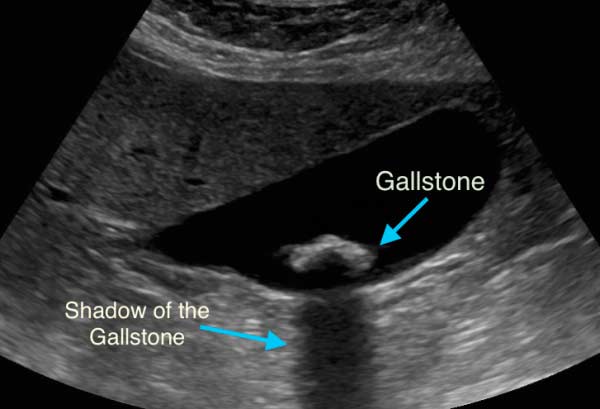
There are patients that have a normal gallbladder ultrasound result that continue to have signs and symptoms of gallbladder disease, such as abdominal pain in the right upper quadrant, nausea and vomiting with fatty meals, and bloating to name a few. These patients should be evaluated by a dynamic HIDA scan.
A dynamic HIDA scan study evaluates the function of the gallbladder, by creating a movie of the gallbladder, where as an ultrasound takes pictures of the gallbladder.
In a dynamic HIDA scan, and contractility of the gallbladder is reported in form of ejection fraction (%EF). This represent the amount of gallbladder contraction in response to the stimulation by a fatty meal mediated thru cholecystokinin (CCK). A normal EF is greater that 35%. Anything less than than with the sign and symptoms of gallstones, should be highly suspect for acalculous cholecystitis. Calculus because there is no stone.
(The bright white collection represents the filling of the gallbladder)
This short movie represents the uptake of the radio nuclear material in the gallbladder and its normal secretion in the small bowel.

These are the static images before the injection of CCK.
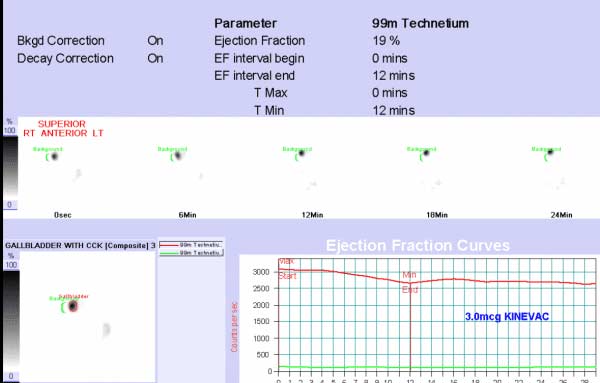
Following the injection, digital subsection of the images measure the amount of nuclear activity of the gallbladder before and after contraction and an Ejection Fraction is calculated.
Vitamin K1
April 08, 2015 7:16 pm
Vitamin K1 is a found in dark green leafy vegetables, asparagus, brussels sprouts, some grains, olive oil, prunes, soy bean oil, and canola oil. The body has limited storage capacity for Vitamin K and uses a recycle system to reuse it.
Vitamin K1 is a fat-soluble vitamin that after Duodenal Switch is not as easily absorbed due to the limiting contact of the food product with the bile until the common channel. Bile is needed to absorb fatty acids and fat-soluble vitamins.
Duodenal Switch patients in need of Vitamin K1 supplements should take “Dry” or water miscible type of Vitamin K1, such as Biotech brand. The patients laboratory studies will determine if a patient requires Vitamin K1 supplement. Duodenal Switch patients should have laboratory studies drawn and evaluated at least on a yearly basis. Vitamin K works in a delicate balance with other supplements and should be monitored by a physician, in at risk people.


Vitamin K1 is most know for it’s coagulation effect and the clotting cascade. Vitamin K1 works with calcium and proteins in order to accomplish coagulation synethesis. Care should be taken with Vitamin K supplementation and anti-coagulation (blood thinners) therapy. Please see your physician regarding any supplementation of Vitamin K and blood thinner medications.
A discovery of Vitamin K dependent proteins has led to research on Vitamin K1 in bone health. Bone matrix proteins, specifically osteocalcin, undergo gamma carboxylation with calcium much the way coagulation factors do; this process also requires Vitamin K. Osteocalcin is a Gla-protein that is regulated by Vitamin D. The calcium binding ability of osteocalcin requires several Vitamin K carboxylations to exert it’s effects on bone mineralization.
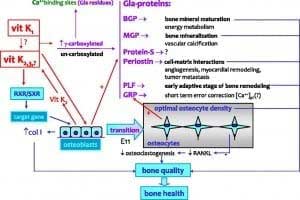
In adults, the causes of Vitamin K1 deficiency include the following :
Chronic illness
Malnutrition
Alcoholism
Multiple abdominal surgeries
Long-term parenteral nutrition
Malabsorption
Cholestatic disease
Parenchymal liver disease
Cystic fibrosis
Inflammatory bowel disease
Medications: Antibiotics (cephalosporin), cholestyramines, warfarin, salicylates, anticonvulsants, Cefamandole, cefoperazone, salicylates, hydantoins, rifampin, isoniazid, barbiturates, and certain sulfa drugs, higher Vitamin E can antagonized Vitamin K)
Massive transfusion
Disseminated intravascular coagulation (DIC) – Severe
Chronic kidney disease/hemodialysis
Additional information: https://lpi.oregonstate.edu/infocenter/vitamins/vitaminK/
Intake of Vitamin K1 and K2 and bone fracture risk
As always, discuss with your physicians and/or surgeon any changes in medications and supplements. This is not meant to be an all inclusive discussion of Vitamin K.
BADAS-Bowel Associated Dermatosis Arthritis Syndrome
April 05, 2015 9:51 am
https://www.mayoclinicproceedings.org/article/S0025-6196(12)60341-3/fulltext
https://www.ncbi.nlm.nih.gov/pubmed/6694433
https://www.ncbi.nlm.nih.gov/pubmed/21332683