
Home » Volvulus
Category: Volvulus
Colonic Volvulus
March 15, 2025 11:23 am
A volvulus is when a loop of intestine twists around itself and the mesentery that supports it, resulting in a bowel obstruction that can compromise intestinal blood flow. For this reason, it tends to be a surgical emergency which requires prompt attention; failure to recognize the signs and symptoms of intestinal volvulus may lead to bowel ischemia and perforation. A volvulus can develop anywhere along the intestine, however for this blog we will discuss types of Colonic Volvulus.

The most common forms of volvulus in the gastrointestinal tract are sigmoid and cecal volvulus, both colonic volvulus. Sigmoid volvulus is responsible for 80% of intestinal obstructions.
Volvulus can occur anywhere in the large and small GI tract. This is caused by a bowel twist around an anchor position, which may be the mesentery. Think about how the loose skin hangs lower with weight loss. We see the mesentery fat thinning, which causes the bowel to twist around it. A very high degree of suspicion is needed to make the diagnosis.

High-fiber diets and chronic constipation are common risk factors because they cause increased gas and sigmoid colon elongation. Worldwide, the incidence of men is much higher than in women, which may be explained by the mesenteric shape, which tends to be longer and has a narrower base. In weight loss surgical patients specifically, such as Duodenal Switch, increased gas and diarrhea are shared in patients with carbohydrate and fiber-rich diets. In some cases, they are recommended to have a high fiber diet by other providers who may not be aware that this may only complicate the problem and exacerbate the symptoms. The solution would not include adding fiber but eliminating the underlying food items causing the increased gas and diarrhea.
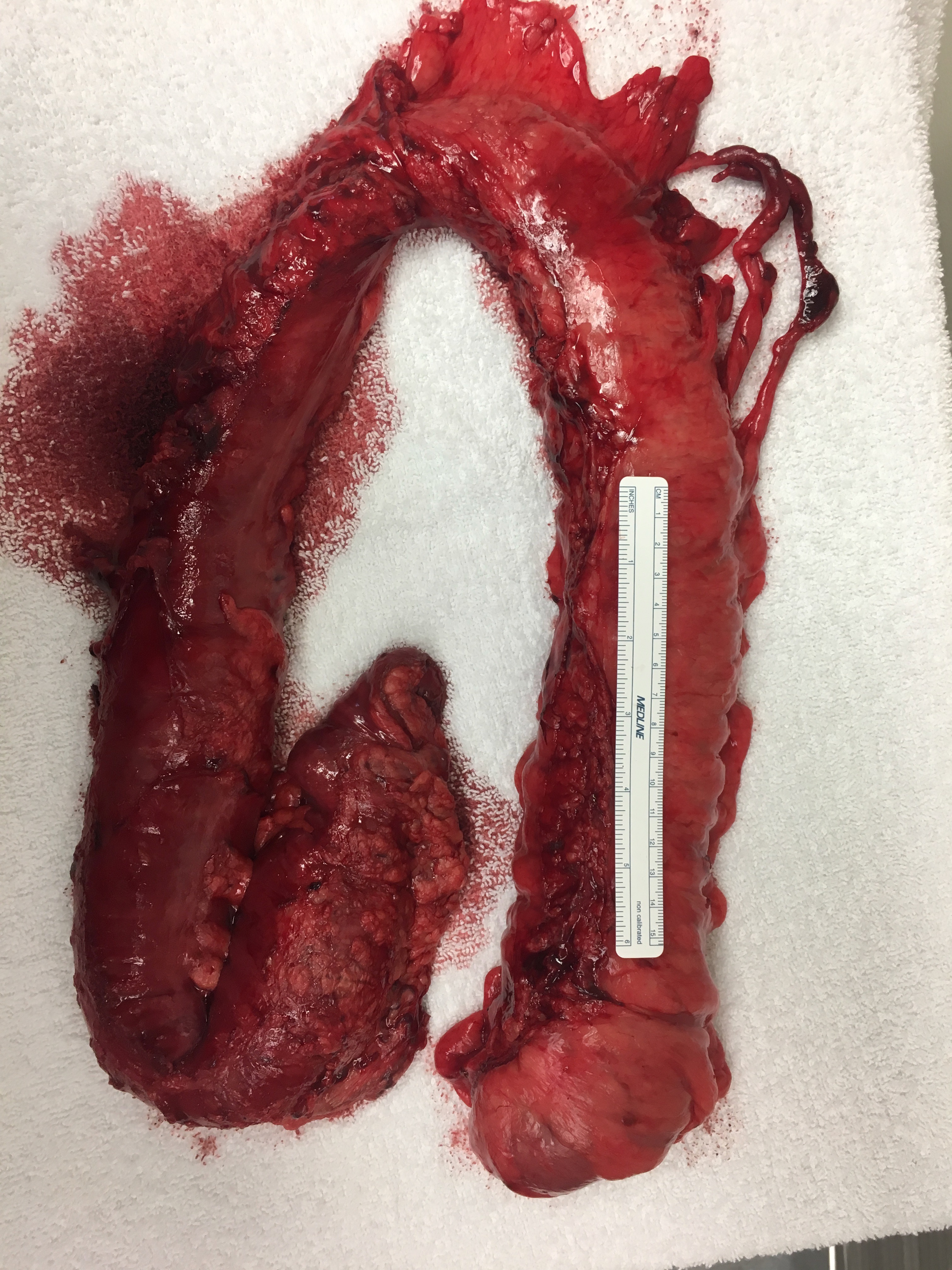
A definitive diagnosis is made with a CT scan, and the treatment is generally a bowel resection. However, in the case of a sigmoid volvulus, an urgent endoscopic detorsion may be attempted first, only if there are no signs of ischemia. The risk of recurrence following endoscopic detorsion alone is as high as 90% and carries a high risk of mortality up to 35%, therefore definitive elective sigmoid resection is recommended.
Here is a short video of an operation.
We want to thank Miguel Rosado, MD, for his significant contributions provided in this Blog.
- Cholangitis May 24, 2026
- Bile Reflux Gastritis May 19, 2026
- Sphincter of Oddi Dysfunction April 26, 2026
- Types of HyperParathyroidism February 20, 2026
- Vitamin D level and Liver Function Test (LFT) elevation February 8, 2026